
Tesla stock today (TSLA) climbed above $404 in Wednesday trading after a major Wall Street upgrade from Bank of America reignited investor optimism around the company’s autonomous vehicle ambitions. The bullish call placed a $460 price target on Tesla shares and emphasized that the company’s long-term value could increasingly come from its robotaxi network, Full Self-Driving technology, and future robotics initiatives.
The move pushed Tesla shares up roughly 3–4% in early market trading, building on gains seen in pre-market activity. The rally arrived even as Tesla continues to face pressure from slowing global vehicle sales and increasing competition in the electric vehicle market.
Bank of America upgrades Tesla to “Buy”
Bank of America analyst Alexander Perry upgraded Tesla from a neutral rating to a buy, citing the company’s expanding role as a technology and AI platform rather than just an automaker. Perry assigned Tesla a $460 price target, which represents about 17% upside from the previous closing price of $392.43.
The analyst’s bullish thesis centers on Tesla’s ability to dominate emerging autonomous transportation markets. In the valuation model used by Bank of America, Tesla’s future robotaxi service accounts for roughly 52% of the company’s overall valuation. Other innovations also contribute meaningfully, with Full Self-Driving software representing about 19% and Tesla’s humanoid robot program, known as Optimus, adding additional potential value.
According to the analysis, Tesla could rapidly become a leading player in robotaxi services as the technology matures and regulatory approvals expand. Additional context on the upgrade and market reaction was reported in a Yahoo Finance report covering the Bank of America upgrade.
Robotaxi expansion planned across new cities
Tesla’s robotaxi ambitions are already moving beyond the concept stage. The company began testing a robotaxi service in Austin, Texas last year and plans to expand the network to seven additional cities in 2026.
The expansion strategy relies heavily on Tesla’s software platform and self-driving technology. CEO Elon Musk has repeatedly said the long-term goal is to create a massive autonomous ride-hailing network capable of competing with traditional transportation platforms.
If Tesla successfully deploys its autonomous software at scale, the robotaxi fleet could dramatically change the economics of vehicle ownership. Musk has previously suggested that Tesla owners might eventually be able to add their vehicles to the robotaxi fleet when not in use, potentially creating a network consisting of millions of cars.
However, that vision still depends on major advancements in autonomous driving capabilities and regulatory approvals across multiple regions.
Cybercab production becomes key milestone
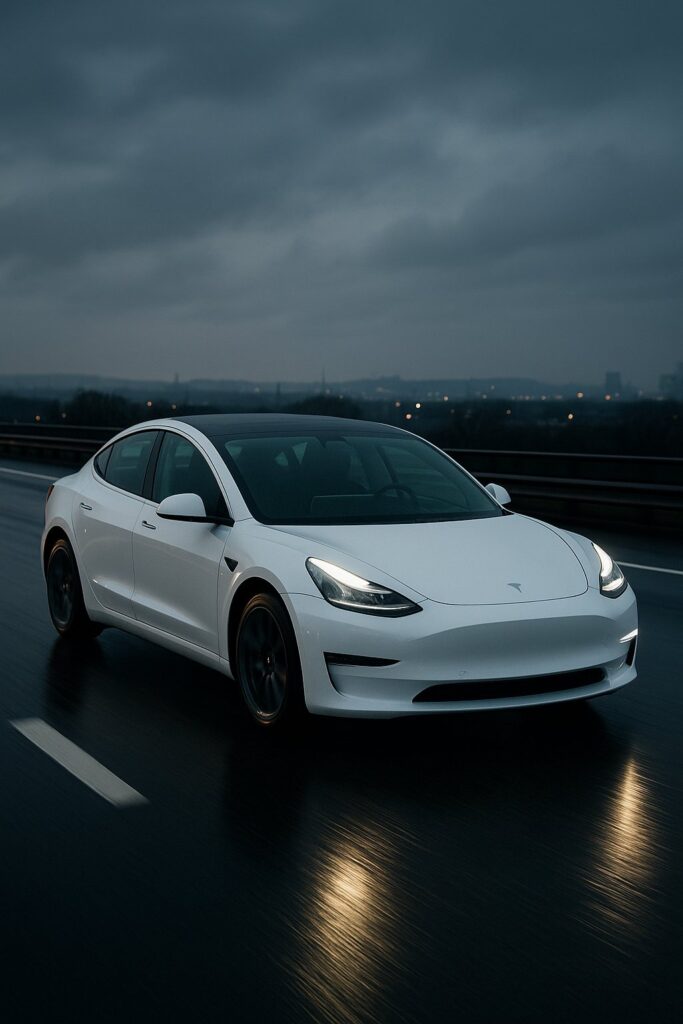
Another major component of Tesla’s robotaxi strategy is the upcoming Cybercab, a vehicle designed specifically for autonomous ride-hailing services. The model is expected to play a central role in Tesla’s dedicated robotaxi fleet.
Mass production of the Cybercab is scheduled to begin in April 2026, according to comments made by Elon Musk earlier this year. Early signs of production activity have already emerged.
Photos shared online by drone operator Joe Tegtemeyer show approximately 20 Cybercab vehicles parked outside Tesla’s Austin factory, suggesting that early manufacturing work may already be underway.
The speed at which Tesla can move Cybercabs from production lines onto public roads could become one of the most important indicators of whether its robotaxi strategy succeeds.
New manufacturing process could reshape production
The Cybercab will reportedly be manufactured using Tesla’s new “unboxed” production technique. Instead of assembling vehicles sequentially on a traditional production line, the unboxed system allows major sections of the car to be built simultaneously and then combined at the final stage of assembly.
Tesla believes the approach could significantly reduce production costs and speed up manufacturing timelines. Analysts are watching closely to see whether the system can deliver the efficiency improvements Tesla expects.
If successful, the manufacturing strategy could help Tesla scale its robotaxi fleet far more quickly than conventional vehicle production methods would allow.
Tesla stock performance and market outlook
Despite Wednesday’s rally, Tesla shares remain about 20% below their all-time high of $498.83, which was reached in late December. The stock is currently rebounding from support near its 200-day moving average, an important technical level often watched by institutional investors.
So far in 2026, Tesla shares have declined about 13%, reflecting concerns about slowing electric vehicle sales across multiple global markets.
The company has increasingly positioned itself as an AI and robotics platform, arguing that long-term growth will be driven less by vehicle deliveries and more by software, automation, and mobility services.
For investors, the central question now revolves around timing. If Tesla can successfully deploy robotaxis, scale Cybercab production, and improve autonomous driving technology, the company could unlock an entirely new revenue stream that extends well beyond its traditional EV business.

Make Swikblog your go-to source on Google for reliable updates, smart insights, and daily trends.