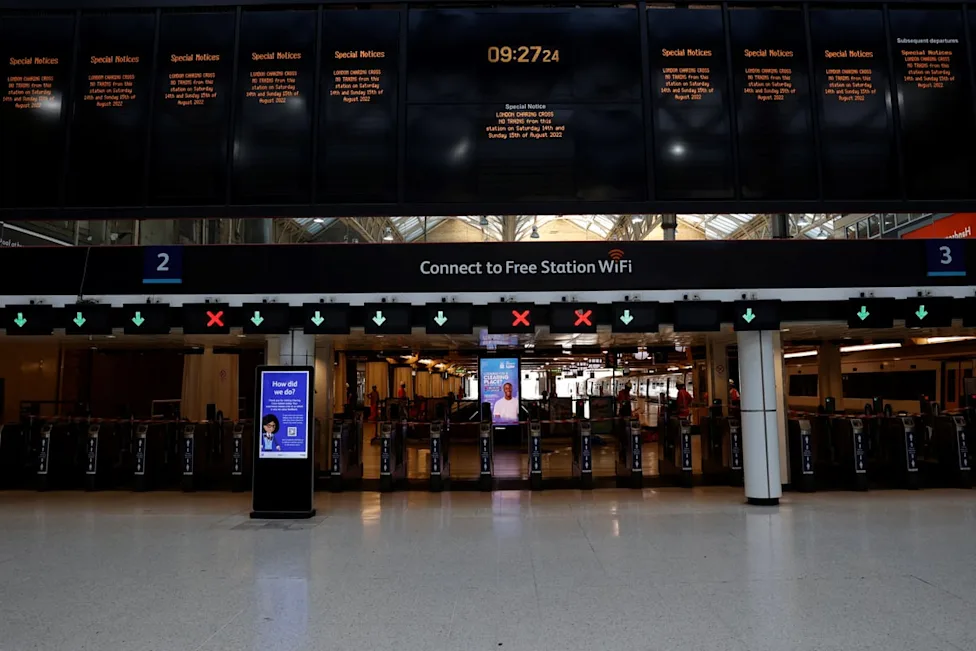

Two of central London’s busiest railway stations will close for 22 consecutive days this summer, creating major changes for passengers travelling on Southeastern services from Kent, East Sussex and south-east London.
London Charing Cross and Waterloo East will have no train services from Sunday, July 26, until Sunday, August 16, 2026, while engineers complete a £20 million programme of track renewal, platform reconstruction, drainage improvements and bridge repairs.
Trains that normally continue to Charing Cross will instead be diverted to London Victoria, London Cannon Street and London Blackfriars. Some services will terminate at London Bridge, meaning many passengers will need to change their usual route or allow more time to reach central London destinations.
Full closure dates passengers need to know
The main closure will run continuously for 22 days, covering much of the school summer holiday period. No trains will call at Charing Cross or Waterloo East between July 26 and August 16.
Additional weekend closures are also planned before and after the main engineering blockade:
- Saturday, July 18 and Sunday, July 19: preparation work
- Sunday, July 26 to Sunday, August 16: main 22-day closure
- Saturday, August 22 and Sunday, August 23: follow-up work
- Saturday, October 10 and Sunday, October 11: final supporting work
Travel arrangements may differ on the additional weekends, so passengers should check the timetable for their specific date rather than assume the main diversion plan will apply throughout.
How Southeastern services will change
Services will continue operating into London, but many trains will use alternative terminals. Victoria, Cannon Street and Blackfriars will take diverted services, while London Bridge will become the final stop for some journeys.
This will matter most for passengers who normally walk from Charing Cross to destinations around Trafalgar Square, Covent Garden, the Strand or the West End. Arriving at another terminal could add an Underground journey, bus connection or longer walk.
Passengers should use the official Southeastern journey-planning service before travelling to confirm their departure time, destination terminal and any required changes.
Summer weather or unrelated incidents could add further pressure to altered services. Travellers can find useful background in this report on London train disruptions during extreme heat.
What the £20 million upgrade includes
The work involves replacing approximately 1,800 metres of track between Charing Cross and Waterloo East. Engineers will also install 16 new sets of switches and crossings, which allow trains to move safely between different tracks and platforms.
The existing equipment dates from 1990. Renewing infrastructure that has been in service for around 36 years is intended to improve reliability and reduce the risk of faults on the busy approach to Charing Cross.
Switches and crossings are particularly important near a major terminus because several trains may need to be directed across different lines within a short period. A failure in this area can disrupt more than one route, even when the original fault is limited to a small section of track.
At Waterloo East, drainage will be upgraded to protect the track bed and help trains continue operating safely at full line speed. Good drainage reduces the risk of water weakening the materials beneath the rails and creating longer-term maintenance problems.
Parts of Charing Cross station will also be rebuilt. New foundations and platform surfaces will be installed at the country end of the platforms to maintain safe and accessible passenger areas.
Hungerford Bridge and pedestrian link repairs
The programme extends beyond track and platforms. Structural repairs will be carried out on the 175-year-old Hungerford Bridge, which carries trains across the River Thames into Charing Cross.
Engineers will also work on the pedestrian bridge connecting Waterloo East with London Waterloo. The link is widely used by passengers changing between Southeastern and South Western Railway services.
Combining these projects within one closure allows teams to work on modern railway equipment and Victorian-era structures at the same time. It also reduces the need for repeated closures in future.
Passengers connecting through Waterloo should remain alert to wider changes across the region, including those previously reported during Southern England rail disruption affecting London Waterloo.
Read More:
- EU Entry/Exit System: Why airport delays are affecting travel across Europe
- ETIAS delayed to 2026: What the €20 EU travel authorisation means for visitors
- Visit the Swikblog homepage for more latest news
Why Network Rail chose one long closure
Southeastern train services director Scott Brightwell said completing the programme through shorter closures could have required around 60 separate weekend shutdowns or four to five closures lasting nine days each.
A continuous 22-day blockade allows machinery and engineering teams to remain on site, rather than repeatedly stopping work, reopening the railway and setting up the work area again.
The summer holiday period was selected because passenger numbers are expected to be around 20 per cent lower while schools are closed. However, tourists, workers, event visitors and occasional passengers may still face significant changes.
Refunds and advice before travelling
Southeastern says passengers affected by the closure will be able to claim refunds for all ticket types, including journeys completed using reasonable alternative routes.
A dedicated refund form is expected to become available on the operator’s website from Sunday, July 26. Passengers should keep their tickets, booking confirmations and details of any additional journey costs.
Before buying a replacement ticket, travellers should check whether their existing fare is accepted on an alternative rail or Underground route. Regular commuters should review their journey before the first weekday of the closure, while anyone travelling to an airport, appointment or timed event should allow a larger connection margin.
Charing Cross and Waterloo East are expected to reopen after the main closure, but further shutdowns on August 22 and 23 and October 10 and 11 mean disruption will continue beyond the 22-day programme.

Make Swikblog your go-to source on Google for reliable updates, smart insights, and daily trends.