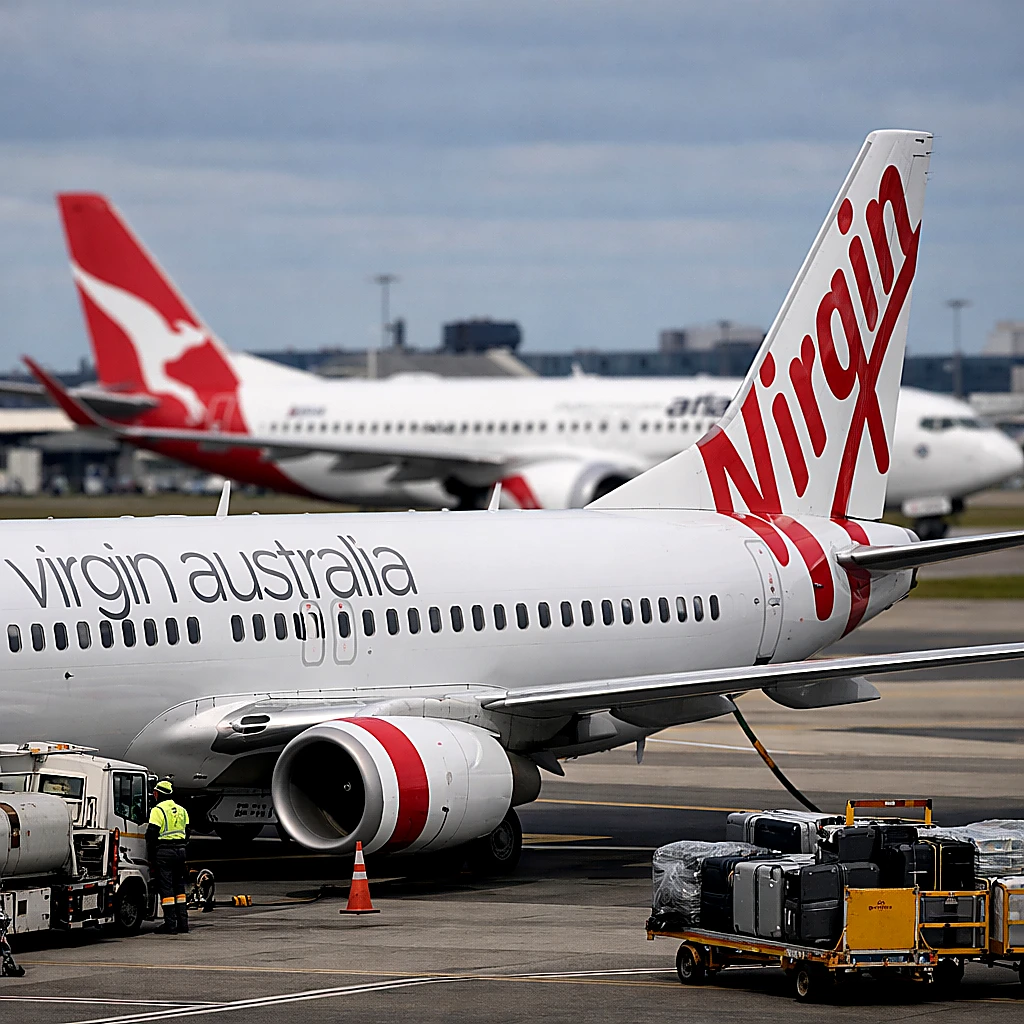

Virgin Australia will trim its domestic flight capacity in the coming months as surging jet fuel costs threaten to add up to $40 million to its expenses, highlighting growing pressure on airlines as a global energy shock ripples through the aviation sector.
The airline said it would reduce flights by around 1% in the three months to June 30, opting to consolidate services to ensure fuller planes rather than cut routes entirely. The move comes as fuel prices across Asia and Oceania have surged by roughly 150%, the sharpest regional increase globally, driven by supply disruptions linked to escalating tensions in the Middle East.
Virgin’s adjustment follows similar action from Qantas, which has warned of up to $800 million in additional fuel costs and has already suspended several regional routes while permanently axing others. The coordinated response from Australia’s two largest carriers signals a broader shift in strategy as airlines attempt to protect margins in an increasingly volatile cost environment.
Fuel shock reshapes airline strategy
The current surge is being driven not only by crude oil prices but by a dramatic spike in refining margins — the cost of converting crude into jet fuel — which have risen as much as six-fold since the start of the energy crisis. Refining margins have climbed from around $20 per barrel in February to peaks near $120, leaving airlines exposed even where crude prices have been partially hedged.
Virgin said it had hedged the majority of its crude oil exposure and about 71% of its refining margins through to the end of the financial year in June, cushioning some of the immediate impact. However, that protection drops sharply thereafter, with only about 15% of refining margins currently hedged beyond June, increasing its exposure to ongoing volatility in global fuel markets.
“The price of jet fuel has been extremely volatile and more than doubled since late February,” the airline said, noting the sharp rise would significantly impact costs in the June quarter despite existing hedging measures.
The disruption stems in part from instability in key oil transit routes, particularly the Strait of Hormuz, a critical artery for global energy supply. With supply uncertainty feeding into refining costs, airlines are facing a dual shock — higher crude prices and elevated processing costs.
Industry data from the International Air Transport Association shows the region has experienced the steepest rise in jet fuel prices worldwide, underscoring the scale of the challenge facing carriers operating in Asia-Pacific markets.
Fares expected to rise as capacity tightens
Airlines have limited options to absorb such rapid cost increases, and the early response suggests a combination of capacity discipline and pricing adjustments. Virgin indicated it would rely on “operational levers” including fare increases and further capacity changes if needed, while Qantas has already confirmed ticket prices will rise.
Aviation analysts say marginal routes — particularly those with thinner demand or regional exposure — are most at risk. In some cases, route exits can leave smaller carriers as sole operators, raising concerns about reduced competition and potential fare increases in affected markets.
Globally, the trend is similar. US carrier Delta Air Lines has warned it expects to spend an additional $2.5 billion on fuel in a single quarter, with executives indicating that higher costs will inevitably be passed on to consumers.
For travellers, the impact is likely to be gradual but noticeable. Fewer flights on certain routes may reduce flexibility, while stronger demand combined with tighter capacity is expected to push fares higher, particularly during peak travel periods.
Virgin’s relatively modest reduction reflects a cautious approach, but it also signals that airlines are preparing for sustained cost pressure rather than a short-term spike. With hedging protection declining later in the year and fuel markets remaining unpredictable, further adjustments across the industry appear increasingly likely.
You may like Mega Millions winning numbers for April 14, 2026: $120M jackpot.

Make Swikblog your go-to source on Google for reliable updates, smart insights, and daily trends.