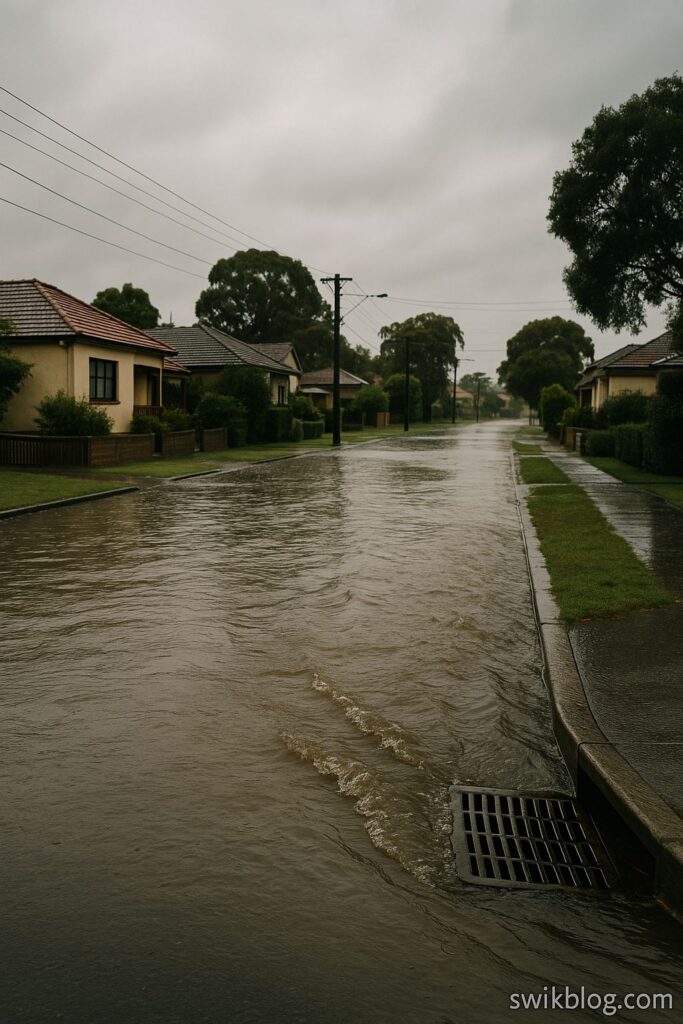

Sydney does not need overflowing rivers to experience flooding. In the right conditions, intense rainfall can overwhelm streets, drains and low-lying areas in minutes, often catching residents off guard. Flash flooding has become a familiar risk across the city, particularly during severe storms that deliver large volumes of rain in a short time.
This explainer builds on broader weather coverage published by Swikblog and focuses on why flash flooding is becoming more common in Sydney, how it develops so quickly, and what residents should understand before heavy rain arrives.
What flash flooding actually means
Flash flooding occurs when water builds up faster than it can drain away. Unlike river flooding, it can happen far from waterways and escalate rapidly. Roads, car parks, underpasses and suburban streets are often affected first, sometimes within minutes of intense rainfall beginning.
Why Sydney is especially vulnerable
Sydney’s landscape and urban design play a major role. Many suburbs sit in natural low points or along creek systems that respond quickly to rain. Large areas of concrete and asphalt prevent water from soaking into the ground, forcing runoff into stormwater systems that can struggle during short, intense downpours.
According to Australia’s official weather agency, intense rainfall over short periods is a key driver of flash flooding events. The Bureau of Meteorology regularly highlights this risk during severe thunderstorm warnings.
Heavier rain falling in shorter bursts
While total rainfall varies year to year, storms are increasingly delivering rain in concentrated bursts. These sudden downpours place pressure on drainage infrastructure and increase the risk of surface flooding, even when rivers remain within their banks.
Places that tend to flood first
Flash flooding risk is often about terrain rather than postcode. Locations that commonly become hazardous include:
- Low-lying streets and road dips
- Underpasses and tunnels
- Creek crossings and drainage channels
- Steep suburban roads where water flows downhill rapidly
- Built-up areas with limited natural drainage
Understanding weather warnings
Flash flooding is often linked to severe thunderstorm conditions, particularly when heavy rainfall is expected over a short period. Residents are encouraged to monitor local alerts issued by the NSW State Emergency Service, which provides practical advice during rapidly changing conditions.
The biggest danger during flash floods
Driving through floodwater remains one of the most dangerous mistakes during severe weather. Water depth is difficult to judge, road surfaces may be damaged beneath the surface, and even shallow moving water can overwhelm vehicles. Emergency agencies consistently advise drivers to turn around and avoid flooded roads.
What residents can do before heavy rain
- Clear gutters and nearby drains where it is safe
- Move vehicles away from low-lying areas
- Plan alternative travel routes that avoid underpasses
- Charge essential devices in case of power disruptions
- Store valuables higher if flooding has occurred before
What to do if flash flooding develops
- Avoid driving or walking through floodwater
- Move to higher ground if water is rising nearby
- Stay away from drains, culverts and fast-moving water
- Follow local emergency advice if conditions worsen
A simple way to understand flash flooding
Flash flooding is like turning a tap on faster than a sink can drain. The problem is not just how much rain falls, but how quickly it arrives compared to how fast water can flow away.
The key takeaway for Sydney residents
Flash flooding is often short-lived but highly dangerous. The greatest risk usually occurs during the peak of a storm and in the hour that follows. Staying informed, avoiding unnecessary travel and making cautious decisions during intense rainfall can significantly reduce danger.
About this story: This article was prepared by the Swikblog News Desk using publicly available guidance from Australian weather and emergency agencies. Swikblog focuses on clear, verified explainers that help readers understand complex events beyond headlines and make informed decisions during high-risk situations.

Make Swikblog your go-to source on Google for reliable updates, smart insights, and daily trends.