An all-SEC quarterfinal where quarterback decisions, receiver separation and red-zone toughness could decide who keeps playing.
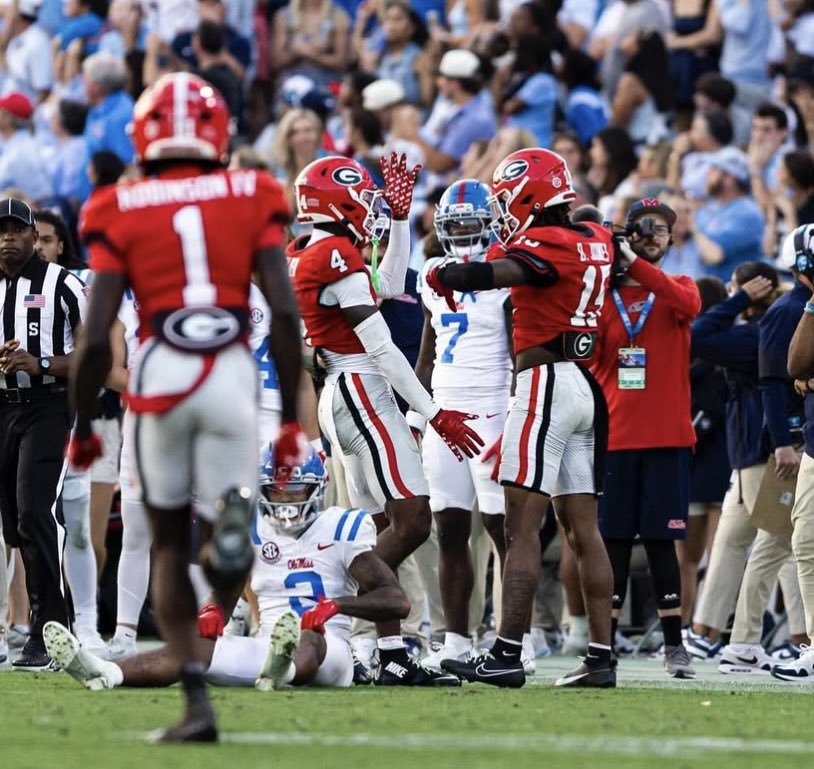
The College Football Playoff doesn’t reward style points. It rewards the teams that stay clean when the game tightens. That’s why Mississippi vs Georgia feels like a classic postseason test: two SEC programs, one ticket forward, and a night where the most important plays may look ordinary on the highlight reel.
Not for volume, but for choices: the throw they don’t force, the run they take at the right time, the calm response after a negative play.
Mississippi’s engine: Trinidad Chambliss and the dual-threat math
Mississippi’s offensive identity begins with quarterback Trinidad Chambliss and the problems he creates for disciplined defenses. Chambliss has produced 506 rushing yards with eight rushing touchdowns this season, and that mobility matters more in the CFP, where pass rush accelerates and coverage windows shrink.
In the regular-season meeting with Georgia, Mississippi’s clearest rushing success came when Chambliss became part of the ground plan. He averaged 4.7 yards per carry and scored two touchdowns in that game, while top back Kewan Lacy was held to 2.6 yards per carry. If the Rebels are serious about controlling Georgia’s front, they’ll likely return to that blueprint: make the quarterback a runner in key moments, especially in the red zone.
Mississippi pass-catchers: Deuce Alexander and Dae’Quan Wright as chain movers
Georgia’s defense is built to erase easy throws, so Mississippi’s receivers and tight ends have to win the “small” battles: releases, spacing, and contested catches at the sticks. Two names to track closely are Deuce Alexander and Dae’Quan Wright.
Alexander has been productive recently, posting 181 receiving yards across his previous two games, and he profiles as the kind of underneath-to-intermediate target that can keep Mississippi on schedule. Wright, meanwhile, has been reliable as a drive extender, topping modest yardage marks in three of his last five games and posting 64 yards in the first round. If Chambliss is forced to win from the pocket for stretches, these are the outlets that can keep drives alive.
Georgia’s attack: Gunnar Stockton’s efficiency and Zachariah Branch’s ceiling
Georgia doesn’t need a track meet. The Bulldogs are at their best when the quarterback plays with control and the offense stays ahead of the chains. That places the spotlight on Gunnar Stockton, who can steady the game with rhythm throws and quick decisions. One detail that matters: Stockton hasn’t consistently cleared high passing totals in recent weeks, so Georgia’s passing game has leaned on efficiency rather than volume.
The most dangerous piece in that aerial plan is leading receiver Zachariah Branch. Branch hasn’t topped certain yardage thresholds in four straight games, but Georgia’s staff will keep dialing up chances for him because he changes the geometry of the field. If Mississippi gives single coverage, Branch can punish it; if the Rebels roll help his way, it can open space for everyone else.
Also keep an eye on Dillon Bell, coming off a 45-yard showing in the SEC Championship. Bell’s role matters because playoff defenses often force offenses to win with secondary options — the second read, the outlet, the tough catch on third down.
The run-game tension: Nate Frazier and Georgia’s patience
Georgia’s run game is central to how it compresses opponents, and Nate Frazier is the back Mississippi must tackle cleanly. Even when Georgia isn’t ripping off explosives, the Bulldogs remain comfortable taking four and five yards, trusting the cumulative effect. Mississippi’s mission is to prevent “easy” second-and-manageable situations that keep Georgia’s playbook wide open.
What could decide it
1) Red-zone execution. Mississippi’s best Georgia drives may end inside the 20, where Chambliss’ legs become a scoreboard threat. Georgia’s best possessions may be the ones that finish with touchdowns instead of settling.
2) Third-down throws. This game is built for tight coverage and late hands at the catch point. Alexander and Wright for Mississippi, Branch and Bell for Georgia — those “move-the-sticks” targets could quietly swing momentum.
3) Turnover discipline. In CFP football, one forced throw is often the whole story. The quarterback who resists panic tends to survive.
For official CFP bracket and game information, use the College Football Playoff site. For broader FBS schedules and context, the NCAA FBS hub is a reliable reference.

Make Swikblog your go-to source on Google for reliable updates, smart insights, and daily trends.