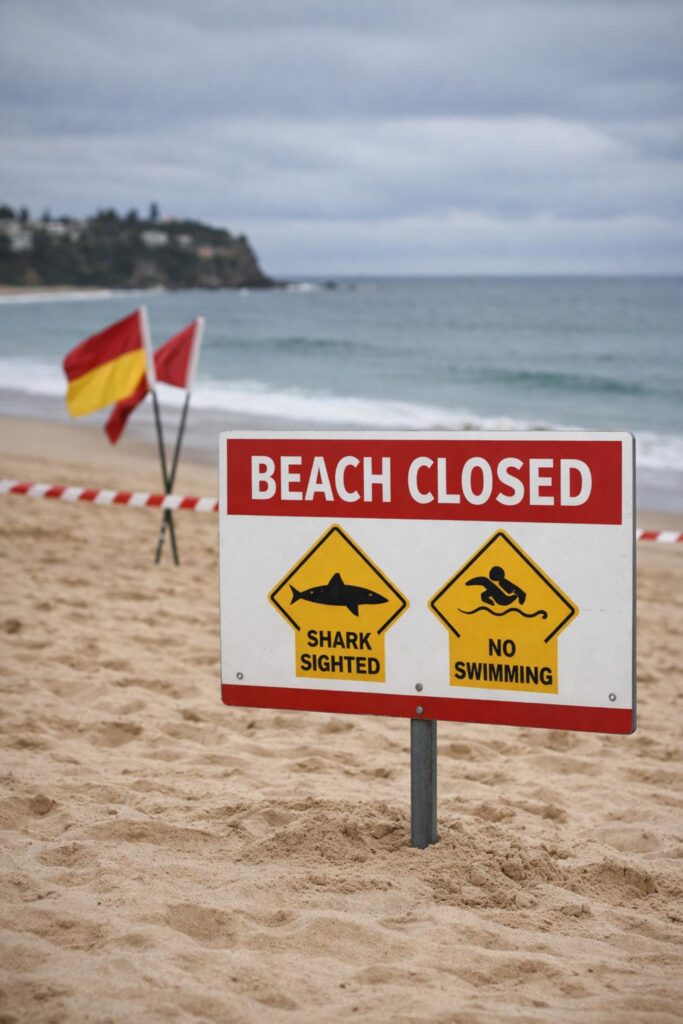

Sydney’s famous stretch of sand has been hit with a sudden jolt of fear and uncertainty after a cluster of shark attacks over the past two days triggered widespread beach closures across the city’s north — and prompted officials to urge swimmers to avoid the ocean altogether until conditions improve.
The shutdowns came after multiple attacks in and around Sydney’s Northern Beaches, followed by a separate incident farther north on the New South Wales coastline. While shark encounters remain rare in Australia overall, the speed and proximity of these incidents has rattled communities at the height of summer, when beaches are typically packed with families, surfers, and holiday crowds.
What happened: a fast-moving chain of incidents
Authorities moved to close beaches after a series of reported attacks in a short window — including cases involving both surfers and swimmers. In the most serious Sydney incident, a surfer suffered critical injuries, with quick action by people on the beach credited for helping keep him alive until paramedics arrived. Another child was also critically injured in a separate attack, intensifying the urgency of the closures and safety warnings.
These attacks weren’t isolated to one stretch of water. Beyond Sydney, another surfer was injured in an incident on the state’s Mid North Coast, adding to the sense that conditions along parts of the NSW coastline had turned especially risky over a very short period.
In response, officials closed numerous beaches — including large sections across Sydney’s Northern Beaches council area — and increased warnings for anyone considering entering the water.
Why now? Heavy rain, murky water — and the “perfect storm” problem
One detail keeps coming up in official warnings and expert explanations: the water has been heavily affected by recent rainfall.
When heavy rain hits coastal areas, runoff flows into rivers, estuaries, and the ocean. That can quickly turn the water murky and low-visibility, particularly near river mouths and enclosed harbour areas. Murky water doesn’t just make it harder for people to see what’s around them — it can also reduce visibility for sharks, increasing the risk of a mistaken bite when surfers or swimmers are in the same zone as bait fish and other prey.
There is also a species angle. Bull sharks, which are commonly mentioned during summer warnings, are known for their ability to move through brackish water and into estuaries. After heavy rain, those brackish conditions can expand, especially around harbour entrances and river-influenced beaches.
That combination — runoff, low visibility, shifting prey patterns — is why safety messaging often changes rapidly after storms. It’s also why lifeguard services and local authorities sometimes take the step of closing beaches even when the broader risk is still statistically low.
What beach closures mean for locals and tourists
For Sydney, beach closures can feel like a citywide circuit breaker. Northern Beaches closures affect major surf and swimming locations, including popular areas that draw visitors from across Australia and overseas.
On normal summer days, beach closures are usually targeted — a single beach shut for a short period while drones or lifeguards check for shark activity. This time, the response broadened quickly, with closures spanning multiple beaches as authorities assessed conditions and attempted to reduce risk across a large area.
Officials also pointed to another factor that often gets overlooked in shark headlines: water quality after heavy rain. Runoff can carry debris and pollution into coastal swimming areas, and authorities frequently warn that swimming after storms can raise the risk of illness — even aside from shark activity.
What you should do right now (practical safety steps)
If you’re in Sydney or heading to the NSW coast in the next few days, the safest approach is simple: treat the closures and warnings as non-negotiable. Sharks can move quickly, and conditions that raise the risk can change hour-to-hour after storms.
NSW’s official SharkSmart guidance recommends common-sense steps that reduce risk, such as swimming at patrolled beaches, staying between the flags, and leaving the water immediately when there’s an alarm or a credible sighting. You can read the latest safety advice directly via the NSW Government’s SharkSmart “Staying Safe” guidance.
Other widely shared safety habits include avoiding swimming at dawn and dusk, staying out of the water when it’s murky, and avoiding areas near river mouths after rain — but the most important thing is to follow local signage and lifeguard instructions at the beach you’re actually visiting.
Why this story feels bigger than the numbers
Australia averages roughly a couple dozen shark bites a year, and fatalities are relatively uncommon compared with other beach dangers. Yet stories like this spread fast for a reason: they hit a nerve. Beaches aren’t just recreation in Sydney — they’re identity, routine, and community.
When several incidents happen within days, people naturally start scanning the water differently. Parents tighten their grip on kids’ hands. Surfers weigh whether a session is worth it. Tourists change plans. Even locals who know shark encounters are rare can feel a sudden shift in confidence when an attack occurs at a familiar beach.
That’s why beach safety agencies also focus on what helps people make calm decisions. One of the clearest messages from NSW surf lifesaving leaders this week has been to consider swimming in a local pool until the ocean settles — especially while water quality and visibility remain poor.
In the days ahead, the key variables will be weather, water clarity, and ongoing monitoring by lifeguards and authorities. Beach reopenings typically depend on local assessments — including patrol capacity, sightings, and whether conditions have improved.
For now, if you’re looking for the latest developments across NSW’s coastline and how authorities are responding, you can also follow updates through surf lifesaving channels and local beach alerts. (If you’re a regular beachgoer, it’s worth checking official notices before you leave home — closures can change quickly.)
If you want a wider roundup of the NSW attack surge and what it means for beachgoers, you can also read our full coverage here: Fourth Shark Attack in NSW in 48 Hours: What We Know and What to Do Next.
Note: This article is for general information only and is not a substitute for official safety instructions. Always follow lifeguard directions, signage, and local authority alerts.

Make Swikblog your go-to source on Google for reliable updates, smart insights, and daily trends.