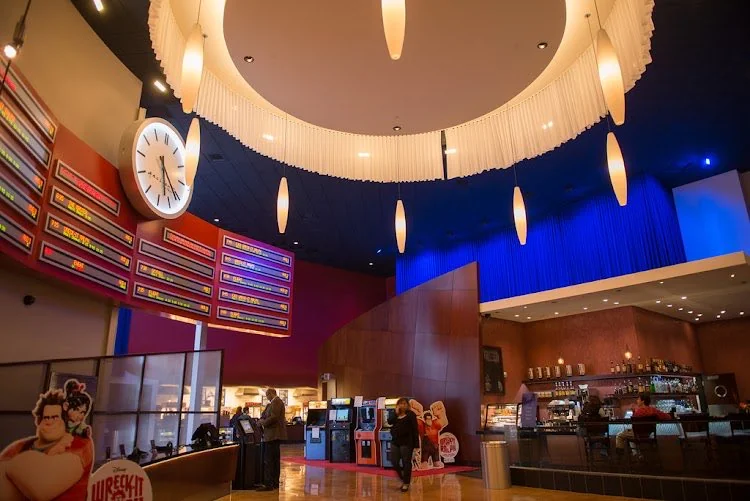

The long-vacant former AMC theater on South College Mall Road has finally changed hands, ending more than a year of speculation around one of Bloomington’s most visible empty commercial buildings. The nearly eight-acre property at 1351 South College Mall Road sold for $5.28 million, but the buyer is not sharing any immediate redevelopment plans—leaving residents and nearby businesses to wonder what the prime parcel will become.
The purchaser, Curry Limited Partnership, closed on the site on January 30. The building has remained dark since AMC ended operations in September 2023, when the chain cited the theater’s age and rising maintenance demands. Over time, patrons had noticed signs of wear—small details that often foreshadow a larger operational decision when upkeep costs begin to outpace revenue.
While local closures feel intensely personal—especially for a place tied to weekend routines and family traditions— they also reflect a broader reshaping of moviegoing habits. Streaming and shifting release strategies have changed how audiences discover new titles, and older suburban multiplex sites are often the first to face hard math when reinvestment decisions arrive. Industry trend tracking frequently points to how cinemas are adapting, and the National Association of Theatre Owners remains one of the central references for nationwide exhibition updates.
A sale price that turns heads
The $5.28 million purchase price stands far above the property’s $1.6 million assessed value, a gap that can surprise anyone accustomed to equating assessments with market reality. In practice, assessed values are designed for tax purposes and often lag behind real-world pricing—especially when a site has location-driven upside.
Even though the building itself shows its age, the parcel’s position near established retail corridors and steady traffic flow gives it an underlying advantage. For investors, the value can sit in the land, zoning flexibility, and the rarity of large contiguous parcels in built-out areas—more than the structure currently standing.
The transaction also lands below the $6.3 million paid back in 2007, a detail that hints at how the economics of older entertainment properties have shifted over time. The past two decades brought big changes: operating costs rose, consumer entertainment choices expanded, and the appeal of maintaining aging theater footprints became harder to justify for some chains.
Who bought it, and why that matters
Curry Limited Partnership was established in 1998 and lists Cary K. Curry as registered agent and general partner. The partnership operates Curry Auto Center on East Buick Cadillac Boulevard, roughly half a mile north of the former theater site, and it is known locally for holding additional commercial properties.
That automotive background has naturally fueled speculation about the property’s next use. Some see a path toward an auto-related expansion; others imagine a redevelopment aimed at retail, services, or a mixed commercial concept that could refresh the surrounding strip. However, the partnership has not provided a clear direction yet.
Why the future remains unclear
A limited partner, Joseph Curry, has acknowledged there have been internal discussions about the property, but has also emphasized that there are no immediate plans. In commercial real estate, that silence can mean a few things: the buyer may be studying traffic patterns and tenant interest, evaluating demolition versus reuse, or holding the land as a longer-term asset until market conditions offer a better return.
Any significant change will likely require permits, reviews, and community input. Local officials typically favor projects that support jobs and fit the area’s commercial rhythm, especially when a parcel sits so close to other established businesses. The site’s size gives it flexibility, but redevelopment timelines often move slowly—first through planning, then through financing, then through approvals.
What the site could become
The nearly eight-acre footprint opens a wide range of possibilities. The simplest outcome could be a “hold” strategy: maintain the property, limit near-term spending, and wait for the right buyer, tenant, or partnership deal. Another scenario is a phased commercial redevelopment—retail and services that draw steady daily traffic rather than relying on weekend spikes the way a movie theater once did.
For Bloomington, the question is not only what fills an empty building, but how the next use fits the neighborhood. A redevelopment that complements nearby corridors could bring consistent activity back to a space that has been visually “stuck” since the projectors switched off.
Until a plan becomes public, the former cinema remains a landmark of uncertainty—yet the sale itself signals that the site is no longer idle in the background. Whether it becomes a fresh retail hub, an automotive expansion, or a different kind of commercial anchor altogether, the next chapter will reshape a highly visible corner of Bloomington’s business landscape.

Make Swikblog your go-to source on Google for reliable updates, smart insights, and daily trends.