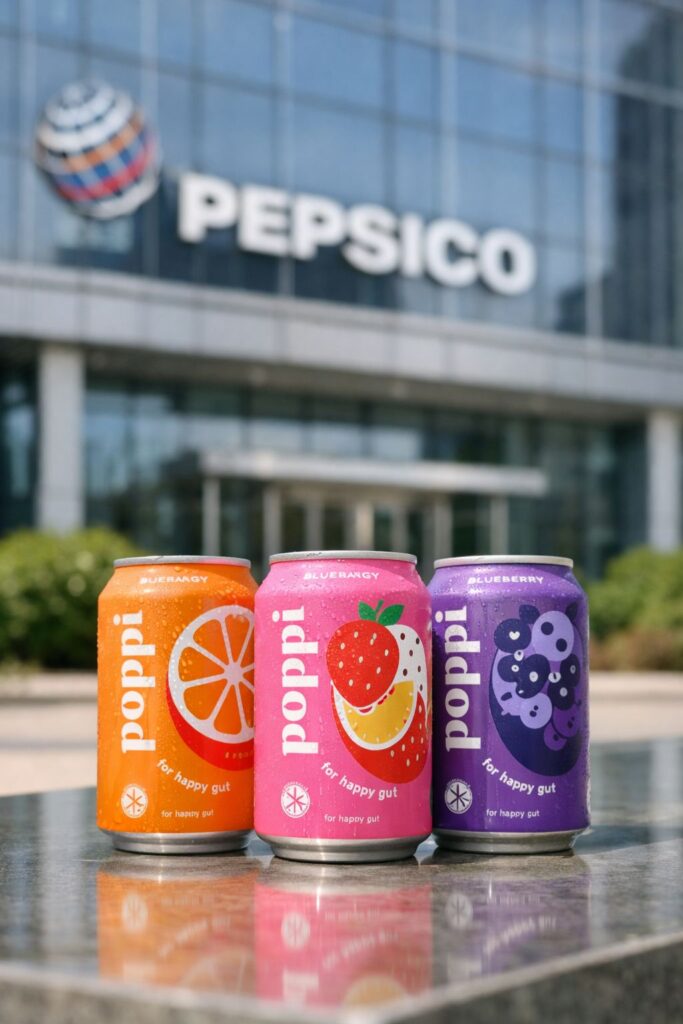

PepsiCo (NASDAQ: PEP) stock fell to $159.98, down 0.11%, as investors evaluated the company’s $1.95 billion acquisition of prebiotic soda brand Poppi and what the move could mean for the beverage giant’s long-term strategy. The slight decline reflects cautious investor sentiment as markets digest how the deal could reshape PepsiCo’s beverage portfolio and exposure to the fast-growing functional drinks category.
The acquisition marks a significant step for PepsiCo as it moves deeper into health-focused beverages. Poppi, a low-sugar soda infused with prebiotics and fiber, built a strong following among younger consumers seeking alternatives to traditional soft drinks. The brand initially started as a farmers’ market beverage before evolving into a digital-first startup that gained national recognition through social media marketing and direct-to-consumer growth.
For PepsiCo, the deal represents more than simply acquiring another beverage label. It is part of a broader strategy to adapt to changing consumer preferences as health-conscious shoppers increasingly seek drinks that offer functional benefits such as digestive health and reduced sugar content.
PepsiCo expands functional beverage strategy with Poppi
The Poppi acquisition strengthens PepsiCo’s presence in the rapidly expanding functional beverage market. Functional drinks — which include probiotic sodas, low-sugar beverages, and health-focused formulations — have become one of the fastest-growing segments of the global beverage industry.
Poppi’s product line focuses on prebiotic soda, which aims to support gut health while delivering the familiar taste experience of traditional soft drinks. By bringing the brand under its global distribution network, PepsiCo may be able to accelerate Poppi’s expansion across retail channels and international markets.
One immediate growth opportunity is the brand’s launch in the United Kingdom. PepsiCo plans to introduce Poppi to UK consumers, potentially expanding the company’s reach among health-focused drinkers and younger demographics seeking alternatives to sugary sodas.
PEP stock performance and valuation context
Despite the modest dip following the acquisition news, PepsiCo’s stock has delivered solid long-term returns. Over the past year, PEP shares have returned approximately 9.8%, while the stock has gained about 40.1% over the past five years.
From a valuation perspective, analysts estimate that PepsiCo’s average price target sits around $170.81, placing the current stock price roughly 6% below consensus expectations. Some valuation models also suggest the shares may be trading significantly below estimated fair value.
However, short-term momentum has been weaker. The stock has declined roughly 5.7% over the past 30 days, indicating cautious sentiment among investors as the market evaluates growth catalysts and broader consumer-staples trends.
Why investors are watching the Poppi rollout closely
The long-term impact of the Poppi acquisition will likely depend on how successfully PepsiCo integrates the brand and scales distribution. Investors will be monitoring several factors in the coming quarters, including how quickly Poppi expands into new retail markets and whether the brand can maintain its strong consumer engagement.
Another key factor will be profitability. Startup beverage brands often grow rapidly but face challenges maintaining margins as they scale production and distribution. PepsiCo’s global supply chain and marketing resources could help address these challenges, but the transition from a startup environment to a large corporate portfolio will still be closely watched.
In addition, investors may pay attention to how the Poppi brand affects PepsiCo’s overall beverage mix. If functional drinks gain market share within the company’s product lineup, the acquisition could gradually shift PepsiCo toward higher-growth health-focused categories.
Key risks investors should consider
While the acquisition provides strategic opportunities, some analysts have also highlighted potential risks. One concern involves PepsiCo’s dividend coverage, with some reports suggesting that payouts may not be fully supported by earnings or free cash flow.
Large acquisitions can also affect capital allocation and balance-sheet flexibility. Investors will be watching how PepsiCo balances investment in new brands like Poppi with shareholder returns and long-term profitability.
Ultimately, the success of the acquisition will depend on consumer adoption, pricing strategy, and the ability to scale distribution without weakening brand identity.
Why the Poppi deal could shape PepsiCo’s future
Even though PepsiCo stock slipped slightly following the announcement, the broader significance of the deal lies in how it positions the company within the evolving beverage landscape. As consumers shift toward healthier drink options, major beverage companies are increasingly investing in brands that offer functional benefits alongside flavor.
If Poppi successfully expands under PepsiCo’s distribution network and resonates with international consumers, the brand could become an important contributor to future beverage revenue growth.
For now, investors will continue watching PEP stock closely as new updates emerge regarding distribution expansion, pricing strategy, and consumer demand for functional soda products.
Read more about the acquisition in PepsiCo’s official announcement or track the latest market performance on Yahoo Finance.
You May Also Like
Alphabet (GOOG) Stock Rises After Google’s $32B Wiz Acquisition

Make Swikblog your go-to source on Google for reliable updates, smart insights, and daily trends.