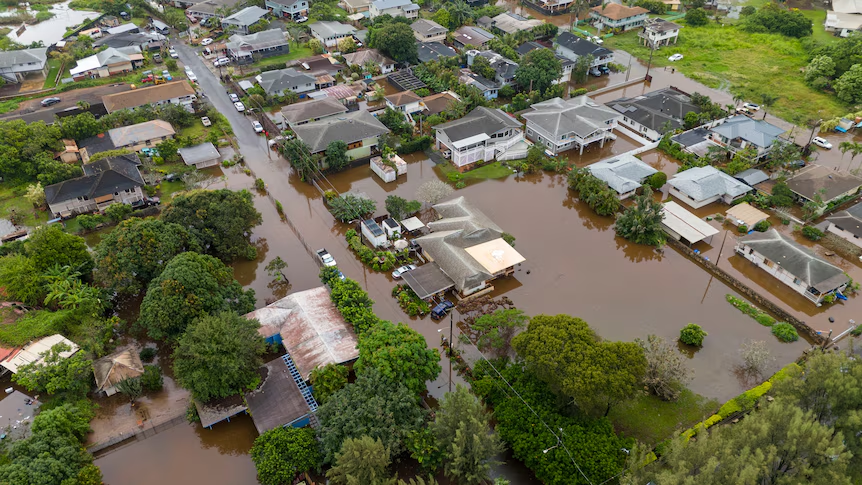

A fast-escalating flood emergency in Hawaii has forced more than 4,000 residents to evacuate parts of O’ahu island, as relentless rainfall submerged communities and pushed a 120-year-old dam to the brink of failure. Authorities have described the situation as “life-threatening,” with entire neighborhoods underwater and homes reportedly swept away by powerful floodwaters.
The crisis has unfolded rapidly across O’ahu’s North Shore, particularly in Haleiwa and Waialua, where streets turned into rivers overnight. Emergency crews, including firefighters and lifeguards on jet skis, have been deployed to search for stranded residents as floodwaters continue to surge through residential areas.
120-Year-Old Wahiawa Dam at Risk of Imminent Failure
The most alarming development is the condition of the Wahiawa dam, a structure over a century old that officials say now faces a serious risk of imminent failure. Water has already begun flowing over the spillway, significantly increasing pressure on the aging infrastructure.
Authorities have classified the dam as having “high hazard potential,” warning that a collapse could result in probable loss of human life. Residents living downstream were ordered to evacuate immediately on Friday morning, with no room for delay as conditions worsened by the hour.
According to emergency management officials, the evacuation zone alone includes more than 4,000 people, making this one of the largest emergency responses on the island in recent years.
Homes Swept Away, Streets Fully Submerged
Officials confirmed that homes have been swept away in the floodwaters, although the exact number remains unknown. The force of the water has been strong enough to carry debris, vehicles, and entire structures through flooded streets.
Visuals from the ground highlight the severity of the situation. In some areas, residents were evacuated using bulldozers as roads became completely impassable. Floodwaters reached chest height in several locations, making traditional rescue operations nearly impossible.
Despite the destruction, there have been no confirmed reports of deaths or serious injuries so far. However, authorities have cautioned that conditions remain extremely dangerous, and the situation could deteriorate quickly.
Emergency Shelters Flooded, Evacuees Relocated
The scale of the flooding has even impacted designated safe zones. A shelter at Waialua High and Intermediate School, which had been housing around 185 evacuees and approximately 50 pets, was itself flooded and had to be evacuated.
Those sheltering there were transported by bus to another evacuation center, adding urgency and complexity to the ongoing rescue and relief operations. Emergency teams have been working continuously to ensure displaced residents have access to safe shelter.
Rainfall Totals Reach Extreme Levels Across O’ahu
The flooding has been fueled by extraordinary rainfall levels. Several parts of O’ahu recorded between 200 and 300 millimetres of rain overnight, while Kaala, the island’s highest peak, received nearly 400 millimetres in just 24 hours.
This comes on top of an already saturated landscape. Between March 10 and 16, Kaala had already recorded around 670 millimetres of rainfall, leaving the ground unable to absorb additional water. When the latest storm arrived, runoff rapidly accumulated, overwhelming rivers, drainage systems, and flood control structures.
The National Weather Service warned of “widespread life-threatening flash flooding,” particularly in Haleiwa and Waialua, where conditions were described as extremely dangerous.
Kona Low Storm System Triggers Back-to-Back Disasters
The extreme weather has been driven by a Kona low, a powerful winter storm system that brings moisture-laden air over the Hawaiian Islands. These systems are known for causing torrential rainfall, thunderstorms, hail, and severe flooding.
In this case, the danger has been amplified by back-to-back storm systems. After a devastating storm last week that already caused damage across the state, a second, slightly weaker system moved in — but still delivered enough rain to trigger catastrophic flooding.
Experts note that Kona lows can be particularly dangerous because they develop slowly and can dump massive amounts of rain over the same area for extended periods.
Hawaii National Guard Activated as Crisis Intensifies
Hawaii Governor Josh Green confirmed that the Hawaii National Guard has been activated to assist in the emergency response. In a public statement, he described the storm as “very severe,” especially in northern O’ahu.
“It’s going to be a very touch-and-go day,” he said, highlighting the uncertainty and rapidly changing conditions on the ground.
The Guard is expected to support evacuation efforts, assist stranded residents, and help manage logistics as authorities attempt to stabilize the situation.
Lahaina Faces New Threat After 2023 Wildfire Devastation
Meanwhile, on the island of Maui, authorities issued evacuation advisories — though not full orders — for parts of Lahaina. Nearby retention basins were nearing capacity, raising concerns about potential flooding in areas still recovering from the devastating 2023 wildfires.
Emergency crews have been actively redirecting and pumping water to prevent overflow and protect vulnerable neighborhoods. The situation remains under close watch as additional rainfall is expected.
More Rain Forecast Raises Fears of Escalation
While the worst of the current storm may be passing, forecasters warn that more rain is expected through the weekend. Even lighter rainfall could worsen conditions due to already saturated ground and overwhelmed infrastructure.
Officials are urging residents to remain alert, follow evacuation orders, and avoid floodwaters at all costs. Guidance from Ready.gov emphasizes the importance of immediate action during flash flood events, as conditions can turn deadly within minutes.
A Growing Climate and Infrastructure Warning
This disaster highlights a broader concern for Hawaii and other vulnerable regions: the increasing frequency of extreme weather combined with aging infrastructure. The Wahiawa dam crisis underscores how older systems can become critical points of failure during modern climate-driven events.
For thousands of residents on O’ahu’s North Shore, the current crisis is more than just another storm — it is a stark reminder of how quickly nature can overwhelm even well-prepared communities.
With evacuation orders in place, homes damaged or destroyed, and the threat of dam failure still looming, Hawaii now faces a crucial period where every hour matters. Authorities continue to monitor conditions closely, hoping to prevent the worst-case scenario as the island braces for what comes next.

Make Swikblog your go-to source on Google for reliable updates, smart insights, and daily trends.