
By Chetan
The Ningaloo coastline, known for its untouched beauty and thriving marine life, woke up to a grim reality after Cyclone Narelle swept through Western Australia. What should have been pristine beaches turned into scenes locals are now calling “devastating,” with dead marine animals scattered across the shore.
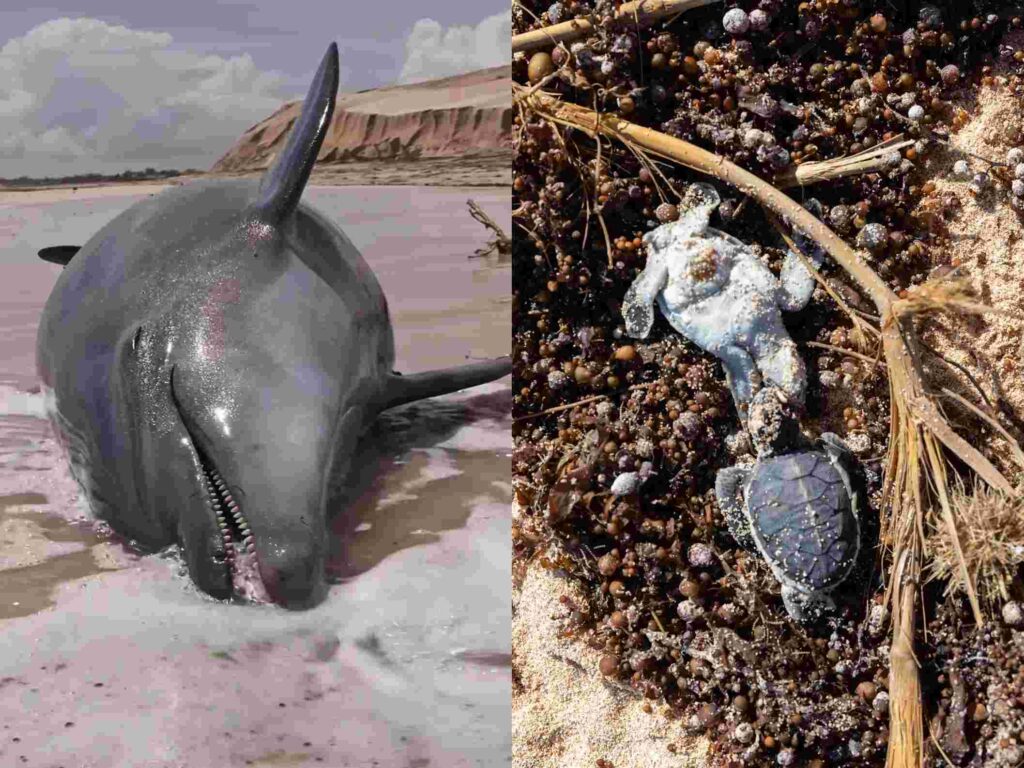
From seabirds and fish to turtle hatchlings and even dolphins, the aftermath of the cyclone has left a deep mark — not just on infrastructure, but on one of the world’s most delicate marine ecosystems.
A powerful cyclone leaves destruction on land and sea
Ex-Tropical Cyclone Narelle made landfall near Coral Bay on Friday as a category 3 system, bringing destructive wind gusts of up to 250 km/h and dumping nearly 350 millimetres of rain across the region. The intensity of the storm cut off the tourist town of Exmouth in every direction, flooding roads and halting access along major highways including the Great Northern Highway and North West Coastal Highway.
Flights were cancelled after significant damage to the local airport, while boats — including trawlers preparing for the upcoming prawn season — were overturned or badly damaged. Homes were not spared either. Roofs were torn off, trees uprooted, and several properties flooded as emergency services responded to multiple distress calls.
Authorities later confirmed that at least four structures were destroyed, with several others suffering severe to moderate damage. Around 30 pastoral properties in the region were also heavily impacted, alongside widespread crop damage in Carnarvon.
Yet, amid all this destruction, it was the condition of the coastline that shocked many the most.
Local conservation group Balu Blue shared videos showing what they described as “countless seabirds, turtle hatchlings, fish, sea snakes, eels, crustaceans and so much more” washed up along the Ningaloo coast. Some of the species found are rarely seen, even by divers familiar with the area.
“Our heart is breaking for the beautiful reef and our wildlife,” the group said, adding that they had managed to return some animals to the sea while taking others into care.
The sight of tiny turtle hatchlings lying lifeless on the sand struck a particularly emotional chord with residents and volunteers. For many, it symbolised the fragile balance of marine life that had been abruptly disrupted.
According to the Bureau of Meteorology, Cyclone Narelle is among the strongest systems to hit the region in recent decades. Experts believe the combination of powerful winds, intense rainfall, and storm surges likely disoriented marine species, pushing them ashore in large numbers.
Exmouth resident Matt Carroll described the situation as “pretty daunting,” noting that while his own home survived, the scale of damage across the town was overwhelming.
“When you see homes with roofs ripped off and ceilings gone, you realise just how lucky you are,” he said.
Despite the widespread destruction, there was a small sense of relief — no injuries have been reported. Emergency services, including the State Emergency Service, worked through extreme conditions to assist residents and assess damage.
However, the challenges are far from over. Many residents spent days without power, with outages stretching into a third consecutive night for some households. While electricity has been restored to hundreds of customers, several homes still remain without power or running water.
Authorities have warned that recovery could take time, particularly as floodwaters continue to cover key roads across the Northwest Cape and surrounding regions.
“It’s going to take a long time for the water to dissipate,” officials said, urging residents to remain patient as cleanup and restoration efforts continue.
The state government has announced relief payments ranging from $1000 to $4000 to support affected residents with accommodation, food, and emergency transport. Additional crews are being deployed to accelerate recovery, with Premier Roger Cook assuring communities that “help is coming.”
Still, beyond the rebuilding of homes and infrastructure, attention is now turning toward the environmental toll.
The Ningaloo Reef is one of the most biologically diverse and fragile ecosystems in the world. While nature has the capacity to recover, events of this scale can leave lasting impacts, particularly when they coincide with sensitive periods such as turtle hatching seasons.
For volunteers walking the beaches, the cleanup is not just physical — it’s emotional. Each rescued animal offers a small moment of hope, but the scale of loss is hard to ignore.
As the waters slowly recede and the region begins to rebuild, the images left behind by Cyclone Narelle serve as a stark reminder of nature’s power — and the delicate balance that sustains life along one of Australia’s most treasured coastlines.
You may like: Millions in unclaimed Medicare money could leave some Australians missing out on a $280 rebate.

Make Swikblog your go-to source on Google for reliable updates, smart insights, and daily trends.