
By Chetan Sharma
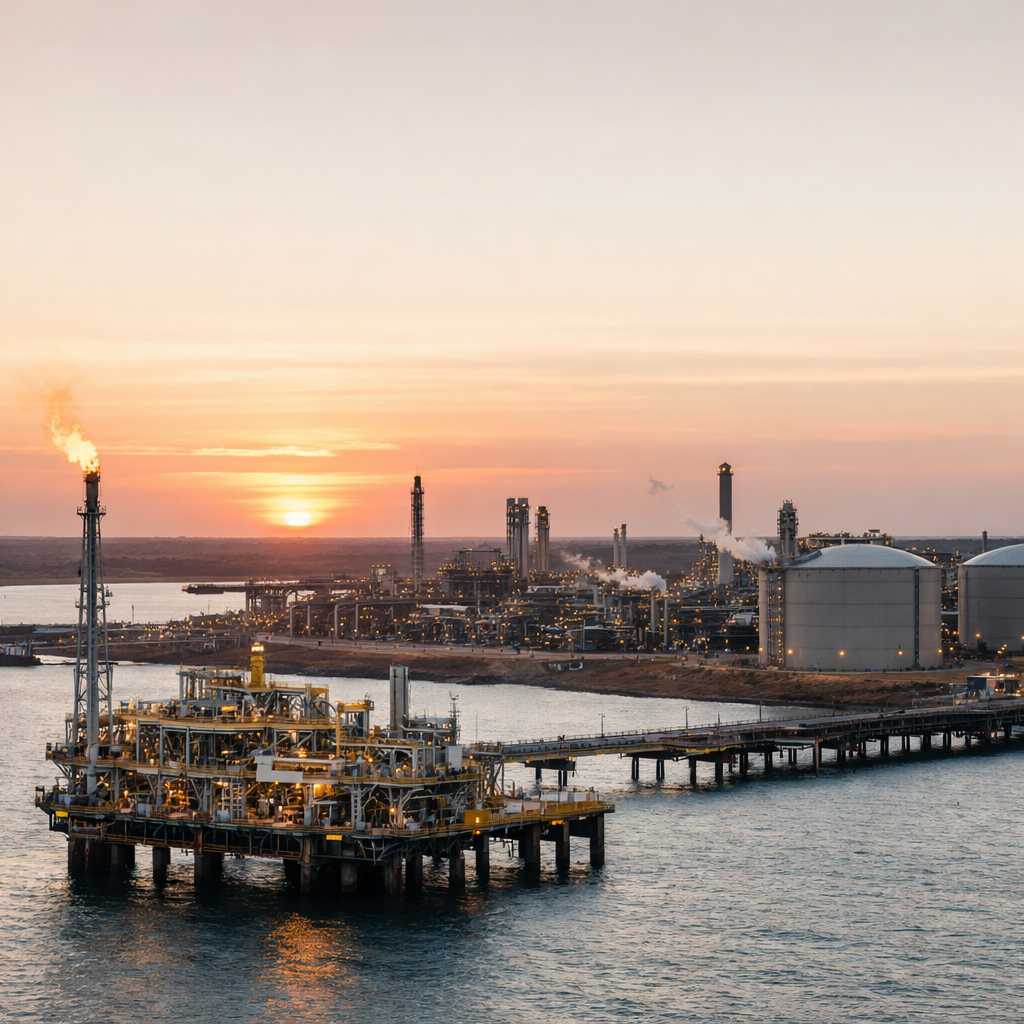
Chevron has signaled that repairs at its Wheatstone gas facility in Western Australia will take several weeks, after damage from Tropical Cyclone Narelle disrupted operations at one of the world’s key liquefied natural gas (LNG) export sites. The update is adding fresh pressure to an already tight global energy market, with traders increasingly bracing for higher LNG prices.
The Wheatstone project, which produces around 8.9 million tonnes of LNG annually, is a major contributor to global supply. Roughly 15% of its output is reserved for Australia’s domestic market, with the rest exported primarily to Asia. Any prolonged disruption at this scale tends to ripple quickly across international markets.
Chevron confirmed that both the onshore processing plant and offshore platform sustained equipment damage during the cyclone. While assessments are still ongoing, the company indicated that it will take “a number of weeks” before production can safely return to full capacity.
Global LNG Supply Faces Multiple Shocks
The timing of the outage is what makes it particularly significant. The global LNG market is not dealing with a single disruption — it is navigating several at once.
Cyclone Narelle alone has been estimated to disrupt supply equivalent to more than 30 million tonnes per year across Australia’s LNG network. At the same time, geopolitical tensions in the Middle East have added another layer of uncertainty. Iran’s actions affecting shipping routes, including the Strait of Hormuz, have complicated energy flows from the region.
Adding to the strain, Qatar — one of the world’s largest LNG exporters — has also faced disruptions following damage to its facilities. These overlapping events have created what analysts describe as a rare “compound supply shock,” where multiple major sources of LNG are affected simultaneously.
According to industry estimates, more than a quarter of global LNG supply has been disrupted in some form over recent days. That scale of impact is unusual and is one of the reasons markets are reacting cautiously.
Australia, which recently strengthened its position as one of the world’s top LNG exporters, is central to this equation. When multiple facilities in the country face interruptions at the same time, the global supply balance can shift quickly.
Chevron did note that its larger Gorgon LNG facility, with a capacity of 15.9 million tonnes per year, has returned to full production. All three trains at Gorgon are now operating normally, offering some stability. However, the ongoing issues at Wheatstone mean that overall supply remains constrained.
Meanwhile, Woodside Energy has reported continued disruptions at its Karratha gas plant, the onshore processing facility for the North West Shelf project. That facility alone produces about 14.3 million tonnes annually, further highlighting how widespread the impact of the cyclone has been.
Why LNG Prices Could Rise From Here
In energy markets, price movements are often driven by expectations as much as actual supply changes. The prospect of Wheatstone remaining below full capacity for several weeks is enough to shift sentiment, especially when combined with other global risks.
For major LNG importers like India, Japan, and South Korea, even short-term supply disruptions can lead to higher procurement costs. These countries rely heavily on spot market purchases to meet demand, making them particularly sensitive to price swings.
The current situation leaves little buffer. When multiple supply sources are affected at once, there are limited alternatives available in the short term. That’s why traders are closely monitoring repair timelines at Wheatstone and operational updates from other facilities.
There is also a behavioral element at play. News of disruptions tends to trigger precautionary buying, as importers move quickly to secure cargoes before prices climb further. This can amplify price movements beyond what supply fundamentals alone would justify.
According to the International Energy Agency, LNG markets have become increasingly sensitive to disruptions due to tighter balances and rising global demand. Even temporary outages can create noticeable volatility, particularly when inventory levels are not high enough to absorb shocks.
Chevron has emphasized that safety remains the priority, and repair timelines will depend on detailed inspections and conditions at the site. That means the “several weeks” estimate could evolve, keeping markets on edge in the meantime.
What makes this episode stand out is not just the cyclone itself, but the broader context in which it has occurred. Weather disruptions, geopolitical tensions, and infrastructure challenges have converged at the same time, creating a fragile environment for energy markets.
For investors and traders, the focus now shifts to how quickly production can be restored and whether additional disruptions emerge elsewhere. Until there is more clarity, LNG prices are likely to remain sensitive to headlines.
For now, the signal from the market is clear — supply risks are building, and the path of least resistance for prices appears to be upward.
You may also like: Benson Boone Tour 2026 Dates, Tickets and Full Schedule

Make Swikblog your go-to source on Google for reliable updates, smart insights, and daily trends.