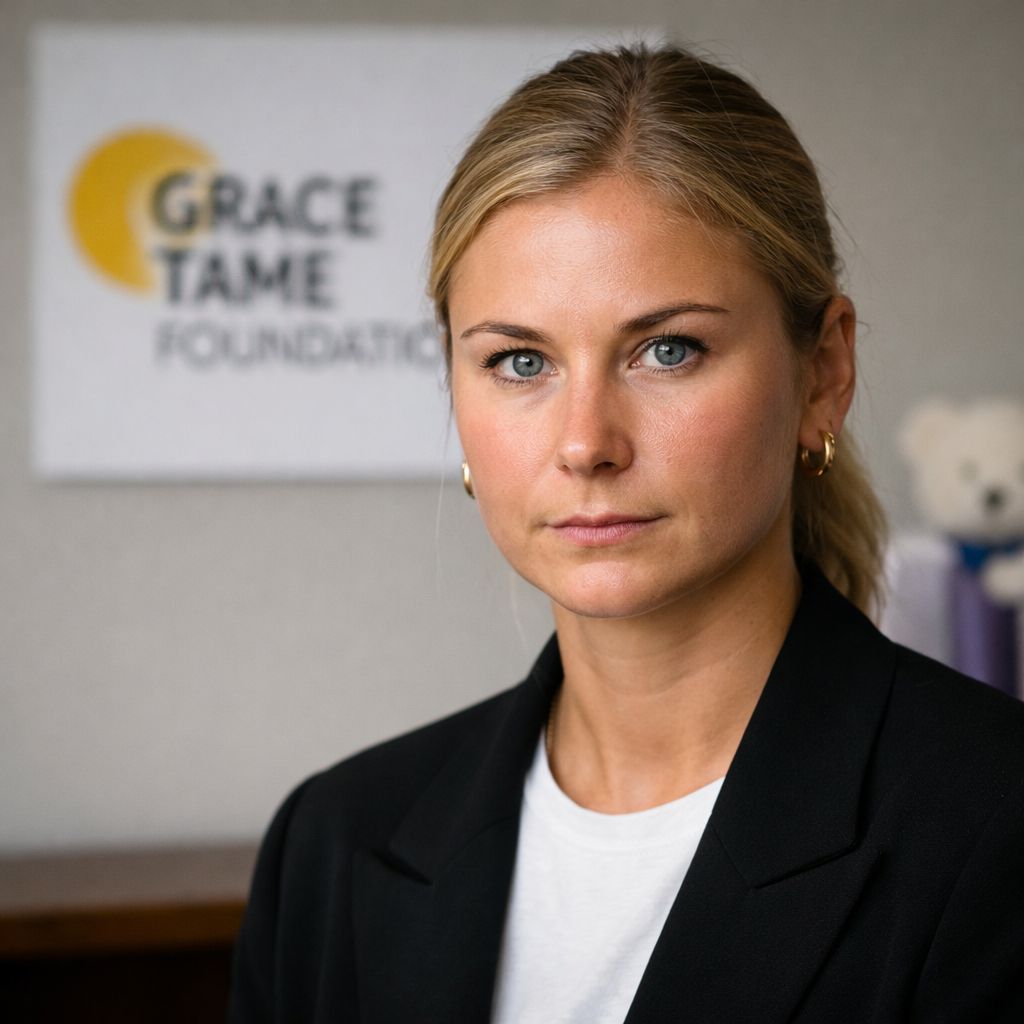

The Grace Tame Foundation will close in the coming weeks after warning that securing long-term funding has become “increasingly challenging”, bringing an end to a high-profile advocacy group that has helped shape national conversations around child sexual abuse and survivor rights in Australia.
The organisation, founded in 2021 and named after Tasmanian survivor and former Australian of the Year Grace Tame, confirmed the decision in a statement posted to social media. The board — made up of four volunteers, including Tame — said it had made the call after careful consideration, with the closure process expected to be finalised shortly.
The announcement has drawn attention not only because of the foundation’s public impact, but also because it highlights the financial fragility of advocacy groups operating in sensitive and often politically charged areas. Despite its relatively small structure, the foundation had positioned itself at the forefront of legal reform, awareness campaigns and survivor support.
In its statement, the board pointed to a record of influence that extended across the country. It said the foundation had helped drive landmark legal reforms, pushed for the harmonisation of survivor identification laws across Australian jurisdictions, advocated for anti-grooming education and supported hundreds of survivors seeking justice.
Among its most cited achievements was contributing to changes in how the crime of persistent child sexual abuse is described in law. According to the foundation, every jurisdiction in Australia has now removed the term “relationship” from this offence — a shift campaigners have long argued is critical to accurately reflecting the nature of abuse.
Funding pressures meet public advocacy
The closure underscores a broader challenge facing advocacy-led organisations: sustaining financial backing over time, particularly when their work sits at the intersection of politics, law and public scrutiny. Unlike larger service-based charities, smaller advocacy groups often rely on inconsistent funding streams while maintaining high visibility and influence.
Tame’s own advocacy has been central to the foundation’s identity. After speaking publicly about the abuse she suffered as a student, she became one of Australia’s most prominent voices on survivor rights, using her platform to push for legal and cultural change. The foundation extended that work into structured campaigns and policy engagement.
However, recent months have also illustrated the complexities of operating in the public sphere. In March, Tame said she had lost speaking engagements, which she attributed to what she described as an ongoing smear campaign following her participation in a protest in Sydney against the visit of Israel’s President Isaac Herzog, where she led a controversial chant.
While no direct link has been made between those events and the foundation’s funding challenges, the episode reflects the broader pressures faced by advocacy figures whose work often intersects with wider political debates.
Impact and what comes next
The board said the foundation’s closure would be completed in the coming weeks and included a list of support services for survivors who may require counselling or assistance. For many, however, the organisation represented more than a referral point — it was a visible and independent voice pushing for systemic change.
The loss of the foundation raises questions about how survivor-led advocacy will continue to evolve in Australia, particularly as demand for reform and support remains high. While legal progress has been made in recent years, campaigners have consistently warned that gaps remain in both policy and public understanding.
The experience of the Grace Tame Foundation reflects a wider reality across the non-profit sector, where even organisations with measurable impact can struggle to maintain financial stability. According to the Australian Charities and Not-for-profits Commission, many charities continue to face ongoing funding and operational pressures, particularly those working in specialised or advocacy-focused areas.
As the foundation prepares to wind up, its closure marks the end of a chapter in Australia’s survivor advocacy movement — one defined by rapid impact, high visibility and a reminder that influence alone does not guarantee sustainability.

Make Swikblog your go-to source on Google for reliable updates, smart insights, and daily trends.