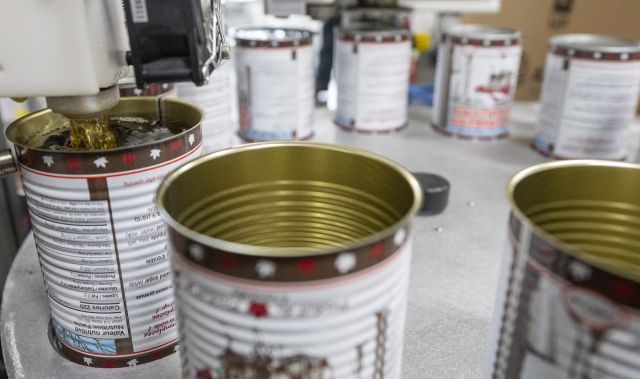

Canada’s maple syrup industry has wrapped up the 2026 season with a surprising outcome: stability instead of the feared collapse. After weeks of erratic weather, delayed sap flow, and growing concern among producers, the final picture now looks far more balanced. Production has slipped from last year’s record highs, but demand remains strong — and exports to the United States have surged 16% to a record C$525 million, highlighting the sector’s resilience.
The numbers tell a mixed but ultimately encouraging story. Canada produced 18.9 million gallons of maple syrup in 2025, a 5.1% decline from 2024’s record-breaking output. While that drop may appear significant, many producers say it feels like a win given how unstable conditions were throughout the season. What initially looked like a potentially disastrous year has instead settled into what industry experts are calling an “average” harvest — a far better outcome than expected.
Extreme weather disrupts flow but season recovers
Maple syrup production depends heavily on a delicate balance: freezing temperatures at night followed by daytime thaws. This year, that pattern was anything but consistent. Producers across Ontario and Quebec reported sudden swings between extreme cold and unseasonal warmth, often within the same week. March, in particular, proved challenging, with prolonged cold spells preventing sap from flowing properly in several southern regions.
The inconsistent conditions created sharp regional contrasts. In parts of northern Ontario, some producers reported yields as low as 0.6 litres of sap per tap — well below the typical target of around two litres. Meanwhile, southwestern regions managed to achieve closer to normal output levels, highlighting how localized weather patterns shaped production outcomes.
Timing also varied widely. While the maple season generally runs from late February to late April, southern producers experienced delays, while operations in northern regions such as Sault Ste. Marie are only just entering peak production. This staggered timeline means the final national picture will only become fully clear toward the end of May.
Despite these challenges, producers say the situation gradually improved. Many entered the season already cautious after a dry previous year, and early forecasts had raised fears of a major shortfall. Instead, as conditions stabilized, output began to recover enough to bring the season back toward normal levels. For many farmers, that turnaround has been the defining story of the year.
Exports surge 16% as global demand stays strong
While production faced headwinds, demand for Canadian maple syrup remained robust — especially in the United States. Exports climbed 16% in 2025, with 117 million pounds shipped to American consumers, reaching a record value of C$525 million. The increase highlights strong cross-border demand and reinforces the product’s status as a premium staple in international markets.
Trade conditions have also helped support the sector. Maple syrup remains covered under the Canada–United States–Mexico Agreement (CUSMA), meaning exports to the U.S. are not subject to tariffs. At a time when global trade tensions continue to impact agricultural products, this tariff-free access provides Canadian producers with a key competitive advantage.
Canada’s dominance in the global maple syrup market remains unmatched. The country produces approximately 73% of the world’s supply, with Quebec alone accounting for about 90% of national production. Ontario contributes roughly 4%, with the rest coming from smaller producing regions such as New Brunswick. This concentration of production gives Canada significant influence over global supply and pricing.
Interestingly, most maple syrup produced in Ontario is consumed domestically, with relatively limited exports compared to Quebec. Some producers believe recent trade tensions and shifting consumer sentiment may be encouraging more Canadians to buy locally, potentially boosting domestic demand.
The cultural importance of maple syrup also continues to shine through. In a recent moment highlighting its national identity, the product even featured in a lighthearted exchange between Prime Minister Mark Carney and Artemis II astronauts, underscoring how deeply it is embedded in Canadian life.
For now, industry leaders agree on one point: this will not be a record-breaking season. But it is far from a failure. After a rocky start, unpredictable weather, and real fears of a poor harvest, Canada’s maple syrup sector has managed to stabilize production and capitalize on strong demand. With final reports expected later in May, the season stands as a reminder that even in agriculture’s most uncertain moments, resilience can still deliver a sweet result.
For official production data and industry insights, visit Statistics Canada.
You may also like: Anthropic Claude Mythos AI Raises New Cyberattack Risk Concerns

Make Swikblog your go-to source on Google for reliable updates, smart insights, and daily trends.