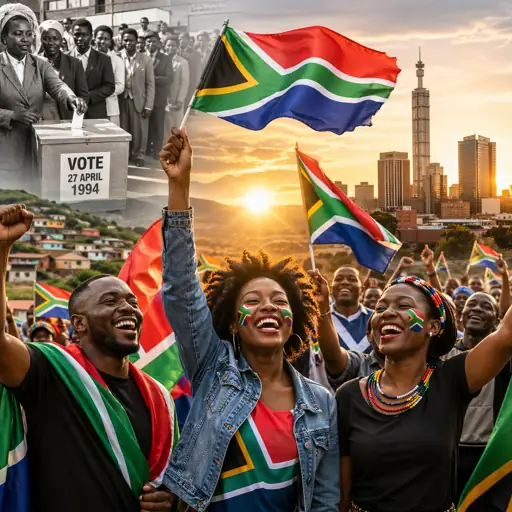

South Africa will observe Freedom Day on April 27, 2026, with a renewed focus on democracy, justice and the rule of law. The national theme for this year, “Freedom and the Rule of Law: Thirty Years of Democratic Citizenship,” places the spotlight on a country that has travelled far since apartheid, but still faces difficult questions about equality, opportunity and the strength of its democratic institutions.
Freedom Day is one of South Africa’s most important public holidays. It remembers April 27, 1994, when citizens of all races were able to vote together in the country’s first democratic, non-racial elections. That historic vote brought Nelson Mandela to power and marked the formal end of apartheid, opening the way for a constitutional democracy based on human dignity, equal rights and representative government.
Why Freedom Day 2026 carries deeper meaning
The 2026 commemoration comes at a time when democracy is under pressure in many parts of the world. South Africa’s own history gives the day added weight. Freedom was not handed down easily; it was won through decades of resistance, sacrifice and political struggle. For many families, Freedom Day is not just a national event, but a personal memory of a country that changed direction after years of exclusion.
This year’s theme links freedom directly with the rule of law. That matters because democracy depends on more than elections. It also needs trusted courts, accountable leaders, fair institutions and a Constitution that protects every citizen equally. Without these foundations, political freedom can lose meaning in daily life.
The South African government has said Freedom Month is a time to strengthen participatory democracy and protect constitutional values. Official information on the 2026 programme and theme is available through the South African Government’s Freedom Month 2026 page.
In 2026, the national Freedom Day celebration is being hosted in the Free State, with activities centred in Bloemfontein in the Mangaung Metropolitan Municipality. The wider month of April is observed as Freedom Month, with public events, commemorations and community activities aimed at honouring those who fought for liberation while encouraging citizens to reflect on the work still ahead.
Democracy has advanced, but the promise remains unfinished
Since 1994, South Africa has made major democratic gains. Millions of people who were once denied political rights now live under a constitutional system that protects freedom of expression, equality before the law and the right to vote. Access to housing, education and public services has expanded, and a generation has grown up without the legal restrictions of apartheid.
Yet Freedom Day 2026 also arrives with clear reminders that political freedom has not automatically solved economic inequality. Many South Africans still face unemployment, poor service delivery, limited access to finance and barriers to land and property ownership. These issues are central to the national conversation because they shape how people experience freedom in practical terms.
Housing remains one of the most visible challenges. While more citizens have gained access to formal homes and title deeds since democracy began, demand continues to outpace delivery in many areas. For families still waiting for secure housing, the promise of dignity and economic participation remains incomplete.
Land and property ownership also remain sensitive and important parts of the debate. The property sector has grown significantly since 1994, but wealth and ownership are still unevenly distributed. Broader participation in land, housing and business ownership is increasingly seen as essential to building a more inclusive economy.
Another key issue is youth opportunity. Young South Africans have inherited political rights, but many are still struggling to enter the job market or build financial independence. Without stronger education-to-employment pathways, skills development and support for entrepreneurs, the next phase of democracy may remain uneven.
Women’s economic participation is also part of the unfinished freedom agenda. Although women play a major role in families, communities and business life, they still face obstacles in access to finance, ownership opportunities and leadership positions. A stronger democracy will require deeper inclusion across gender and age groups.
Ramaphosa’s warning on democracy and global instability
Ahead of Freedom Day, President Cyril Ramaphosa used his weekly letter to argue that democracy must be defended both inside South Africa and around the world. He pointed to rising extremism, inequality, conflict, misinformation and weakening global institutions as threats that can damage democratic societies.
His message placed South Africa’s Freedom Day in a wider international context. The country’s transition from apartheid to democracy remains globally significant, but Ramaphosa warned that democratic values cannot be taken for granted. The lesson of 1994 is not only that freedom can be achieved, but that it must be protected continuously.
That warning is especially relevant in 2026. Across the world, many democracies are facing public mistrust, economic frustration and political division. South Africa’s own experience shows that constitutional values must be matched by real progress in people’s lives. Where poverty and inequality remain high, faith in democracy can weaken.
Freedom Day as celebration and responsibility
Across South Africa, Freedom Day is marked through official ceremonies, cultural programmes, family gatherings and community events. Many citizens spend the day with relatives, attend local celebrations or reflect on the country’s journey from apartheid to democracy. Traditional braais, music and public performances often form part of the national atmosphere.
But the day is also a civic reminder. Freedom is not only about remembering the past; it is about asking what kind of country South Africa is still trying to become. The 2026 theme makes that question clear by connecting freedom with law, justice and citizenship.
The next chapter of South Africa’s democracy will likely be judged by how effectively the country reduces inequality, strengthens institutions and expands opportunity beyond major urban centres. Rural communities, township economies and young entrepreneurs will need to play a greater role in future growth.
For readers following wider political and economic developments, more analysis is available on Swikblog’s global news and economy coverage.
Freedom Day 2026 is therefore both a celebration and a test. South Africa can look back with pride on the historic vote of 1994, but the deeper challenge is to ensure that freedom continues to deliver dignity, fairness and opportunity for every citizen. Thirty years into democratic citizenship, the country’s future will depend on whether the values won through struggle can be protected, renewed and made real in everyday life.
You may like: Tourist trapped 3 hours in Australia toilet collapse: Shocking incident explained

Make Swikblog your go-to source on Google for reliable updates, smart insights, and daily trends.