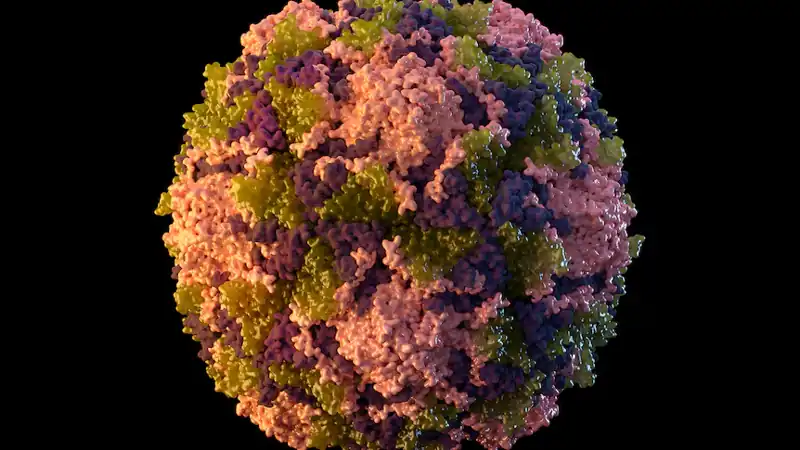

Australia has reported a rare detection of vaccine-derived poliovirus in wastewater from Perth, prompting health authorities in Western Australia to increase surveillance while stressing that there is no evidence of community spread.
The virus was found in a wastewater sample collected from a Perth catchment in mid-April. Officials said testing identified a vaccine-derived poliovirus type 2 strain, a form of the virus that has been detected overseas in recent years, including in parts of Africa, Europe and Papua New Guinea. The finding is unusual for Australia, but authorities say it most likely reflects a traveller who acquired the strain overseas and temporarily shed the virus after arriving in the country.
Western Australia’s Chief Health Officer, Dr Clare Huppatz, said the detection should be taken seriously but not treated as a sign of an outbreak. Health officials have not found evidence that the virus is spreading in the local community, and the risk to the wider population remains very low because of strong vaccination coverage.
Polio, also known as poliomyelitis, is a highly infectious disease caused by poliovirus. It usually spreads through contact with infected faeces and can enter the body through contaminated water, food or hands. Many infections are mild or go unnoticed, but in rare cases the virus can affect the nervous system and cause paralysis. Children under five are considered most vulnerable, although any unvaccinated person can be infected.
The Perth finding does not mean Australia is seeing a return of local polio transmission. Australia was declared polio-free in 2000, and there has been no known local transmission of poliovirus in the country since 1972. The only confirmed case reported since 1987 occurred in 2007, when an overseas-born student contracted polio while visiting a country where the virus was still circulating.
The latest detection is important because it shows how quickly modern surveillance systems can identify public health risks before they appear as clinical cases. Wastewater monitoring has become a major tool for tracking infectious diseases because it can detect traces of viruses shed by people who may have no symptoms. For more on how this type of monitoring works, read our guide on wastewater surveillance and public health tracking.
Vaccine-derived poliovirus can sound alarming, but it has a specific meaning. In some countries, oral polio vaccines use a weakened live virus to trigger immunity. In communities with low vaccination coverage, that weakened virus can circulate for long periods and, in rare circumstances, mutate into a form capable of spreading. This is known as vaccine-derived poliovirus.
Australia does not use the oral live-virus polio vaccine in its routine program. Instead, it uses an inactivated polio vaccine given by injection. That vaccine does not contain live virus and cannot cause polio infection. The strain detected in Perth is therefore not believed to have originated from Australia’s vaccination program.
The World Health Organization says global polio cases have fallen by more than 99 per cent since 1988, but the disease has not been fully eradicated. Wild poliovirus remains endemic in Afghanistan and Pakistan, while vaccine-derived strains can still appear in under-immunised communities elsewhere. International travel means countries that have eliminated polio must continue monitoring for possible importations.
Western Australia’s childhood polio vaccination coverage is around 92 per cent, according to the information released by health officials. That level of protection makes sustained spread far less likely. High vaccination coverage acts like a barrier: even if the virus is introduced, it struggles to find enough unprotected people to keep circulating.
Authorities have said similar wastewater detections in Europe during 2024 and 2025 did not lead to people developing polio disease. That history matters because it shows wastewater findings can represent short-term importation rather than a developing outbreak. Still, public health teams treat such detections carefully because polio is a serious disease and early action is far safer than delayed response.
Read More
The WA Department of Health is now increasing the frequency of poliovirus testing in Perth’s metropolitan wastewater network. The move is precautionary and is designed to check whether the virus appears again. If further samples are negative, it would support the view that the detection came from a single temporary shedding event rather than wider circulation.
Australia’s experience with polio also explains why officials continue to push vaccination. The country saw major polio epidemics in 1956 and again from 1960 to 1962. Cases dropped sharply after the vaccine was introduced in the 1950s, transforming polio from a feared childhood disease into one controlled by routine immunisation. For readers following broader health updates, see our latest coverage on public health alerts and disease surveillance.
For most Australians, the practical message is simple: check that polio vaccinations are up to date, especially before overseas travel. Travellers visiting countries where polio or vaccine-derived strains are circulating should follow health advice and ensure they are protected before departure.
The Perth wastewater detection is not a reason for panic, but it is a reminder that polio remains a global health issue. Australia’s strong vaccination program, environmental testing and rapid public health response are the main reasons officials believe the risk remains very low. At this stage, the evidence points to overseas-linked detection, not local spread.

Make Swikblog your go-to source on Google for reliable updates, smart insights, and daily trends.