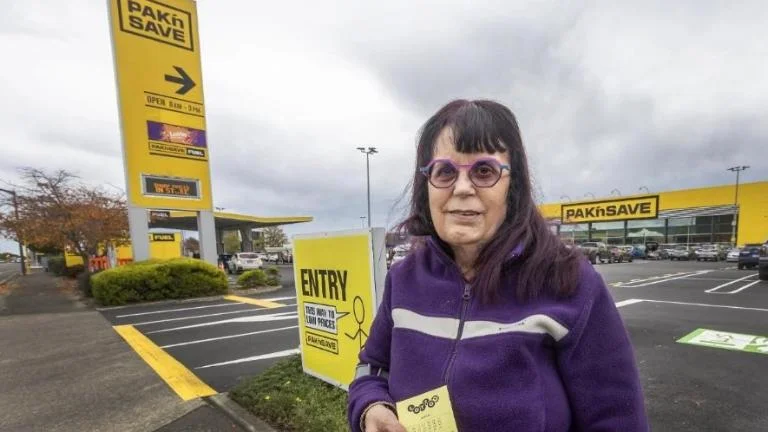
A New Zealand supermarket owner is facing mounting public criticism after a long-serving employee with a disability lost her role following changes to the store’s layout, sparking a wider conversation about workplace inclusion and how companies treat loyal staff members.
Katie Tippler, who worked at a Pak’nSave store in Palmerston North for nearly three decades, became the focus of public attention this week after reports emerged that her Lotto counter position was removed during redevelopment work at the supermarket entrance.
The story quickly gained traction online, with many people expressing frustration over the loss of a role that had reportedly suited Tippler’s physical needs. The 56-year-old uses a prosthetic leg and had worked in a seated Lotto position that allowed her to remain comfortable while serving customers.
Public reaction intensified after details emerged that the dedicated Lotto counter would disappear as part of the store redesign. Social media users across New Zealand described the situation as disappointing, with many questioning whether alternative duties or adjusted responsibilities could have been explored for such a long-serving worker.
According to Stuff, supermarket owner Steve Duffield later acknowledged the public response and said he had reached out to Tippler to discuss whether a better outcome could still be achieved.
His response appeared to soften the tone surrounding the controversy, though it remains unclear whether a formal role has been offered.
The story has resonated beyond Palmerston North because it touches on broader concerns around disability inclusion, long-term employee loyalty, and the growing public expectation that businesses should make stronger efforts to support vulnerable workers during operational changes.
For many customers, familiar supermarket staff become part of everyday life, and the reaction surrounding Tippler’s departure reflects how emotionally connected local communities can become to workers they see regularly over many years.
The discussion has also highlighted how quickly public pressure can influence corporate responses in the social media era, especially when stories involve workers viewed as loyal, vulnerable, or deeply connected to their communities.

Make Swikblog your go-to source on Google for reliable updates, smart insights, and daily trends.