
A fast-moving Ebola outbreak in Central and East Africa has triggered the World Health Organization’s highest international health alert, after dozens of deaths in the Democratic Republic of the Congo and confirmed spread linked to travellers in Uganda.
The outbreak, involving the rare Bundibugyo strain of Ebola, has raised concern because it is spreading in a region already strained by conflict, population movement and weak healthcare access. Health officials have reported at least 80 suspected deaths and 246 suspected cases in Ituri province, an eastern DRC region that borders Uganda and South Sudan.
The WHO has now classified the situation as a “public health emergency of international concern,” a designation used when an outbreak poses a serious risk beyond one country and requires a coordinated international response. The agency made clear that this is not the same as declaring a pandemic, but the warning is meant to unlock faster funding, technical support and cross-border disease control.
What makes this emergency different from several past Ebola outbreaks is the virus strain. The Bundibugyo virus is far less common than the Zaire strain, which has caused multiple previous outbreaks in the DRC. For the Zaire strain, vaccines and treatments have been developed. For Bundibugyo, there are currently no approved strain-specific vaccines, no approved targeted treatments and no dedicated rapid diagnostic tools widely available for field use.
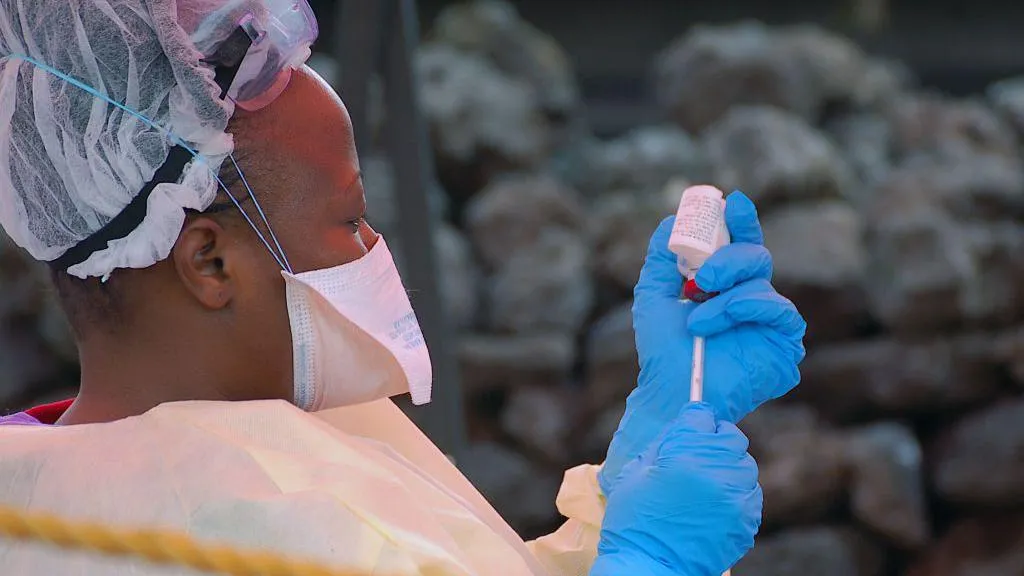
That leaves frontline teams depending on the basics of outbreak control: identifying patients quickly, isolating confirmed and suspected cases, tracing contacts, protecting health workers, disinfecting contaminated spaces and ensuring safe burials. In a stable setting, those steps are difficult. In eastern DRC, where armed conflict and displacement continue to affect daily life, they become much harder.
The first known case identified by Congolese officials was reported in a nurse on April 24. Since then, the outbreak has moved from a local health emergency into a regional threat. Uganda has reported two cases in Kampala, including one death, linked to people who had travelled from the DRC. A case has also been confirmed in Kinshasa, the DRC’s capital, far from Ituri province.
Another worrying development is the confirmation of a case in Goma, one of eastern DRC’s most important cities. The patient was reportedly the wife of a man who died of Ebola in Bunia and travelled to Goma while already infected. Goma’s size, transport links and proximity to conflict-affected zones make any confirmed case there especially sensitive for public health teams.
The WHO has warned that the real scale of the outbreak may still be unclear. Limited surveillance, delayed detection and movement between cities mean the official numbers may not fully reflect how widely the virus has spread. That uncertainty is one reason the emergency declaration came quickly.
For medical background, the World Health Organization’s Ebola disease guidance explains that Ebola spreads through direct contact with bodily fluids such as blood, vomit, diarrhoea, sweat and other secretions from infected people or contaminated materials.
Ebola does not spread in the same way as common respiratory viruses, but it can move rapidly through households, clinics and burial ceremonies when protective equipment is limited. Patients often begin with symptoms such as fever, weakness, headache, sore throat and muscle pain. In severe cases, the illness can progress to vomiting, diarrhoea, internal organ damage and bleeding.
The danger is particularly high for health workers. Nurses, doctors, cleaners, ambulance teams and burial workers face the greatest exposure risk when infection-control systems are weak. Officials have already stressed the need for gloves, disinfectants, handwashing facilities and safe handling of patients and bodies. However, many informal clinics in affected areas may not have enough supplies.
Read More
- Visit Swikblog Homepage
- New Zealand Fuel Prices Drop: Diesel and Unleaded 91 Fall
- Xbox Game Pass June 2026: Five Games Confirmed
- Amazon Alexa AI Shopping Assistant Can Track Deals and Auto-Buy Products
- Ram 2500 Recall Over Tire Speed Rating Issue
- Swatch x Audemars Piguet Royal Pop Watch Sparks Crowds and Resale Frenzy
The outbreak also shows why early detection matters so much. When Ebola is identified quickly, response teams can map contacts, monitor symptoms and interrupt transmission chains. When detection is delayed, the virus can travel silently through families, hospitals and transport routes before authorities understand the full picture.
Africa CDC officials have said the source of the outbreak has not yet been confirmed. They are also discussing whether experimental vaccines, treatments or diagnostic tools for Bundibugyo Ebola could be tested or used under emergency conditions. Any such step would require careful safety review, but the absence of approved tools makes research options more urgent.
In Bunia, the capital of Ituri province, residents have described fear and confusion after seeing unusually high numbers of deaths and burials before the outbreak was fully understood. Community trust will now be crucial. Ebola responses can fail when people fear treatment centres, hide symptoms or avoid health teams. Clear communication in local languages, respectful burial practices and cooperation with community leaders can make the difference between containment and wider spread.
The emergency is also a reminder that outbreaks do not happen in isolation. Conflict, poverty, weak health systems and displacement can turn a dangerous virus into a regional crisis. Ituri’s location near international borders adds another layer of risk, especially with movement between DRC, Uganda and South Sudan.
For readers following global health alerts, Swikblog previously covered another infectious disease emergency in Hantavirus Outbreak on Cruise Ship Leaves 3 Dead, WHO Investigation Begins.
The coming days will be critical. Health agencies must expand testing, protect medical workers, trace contacts and coordinate border surveillance without causing panic or disrupting essential movement. The WHO’s declaration is intended to speed up that response before the outbreak becomes harder to contain.
For now, the message from health officials is clear: the outbreak is serious, the strain is difficult, and the world has a narrow window to help DRC and Uganda prevent a wider Ebola crisis across Africa.

Make Swikblog your go-to source on Google for reliable updates, smart insights, and daily trends.