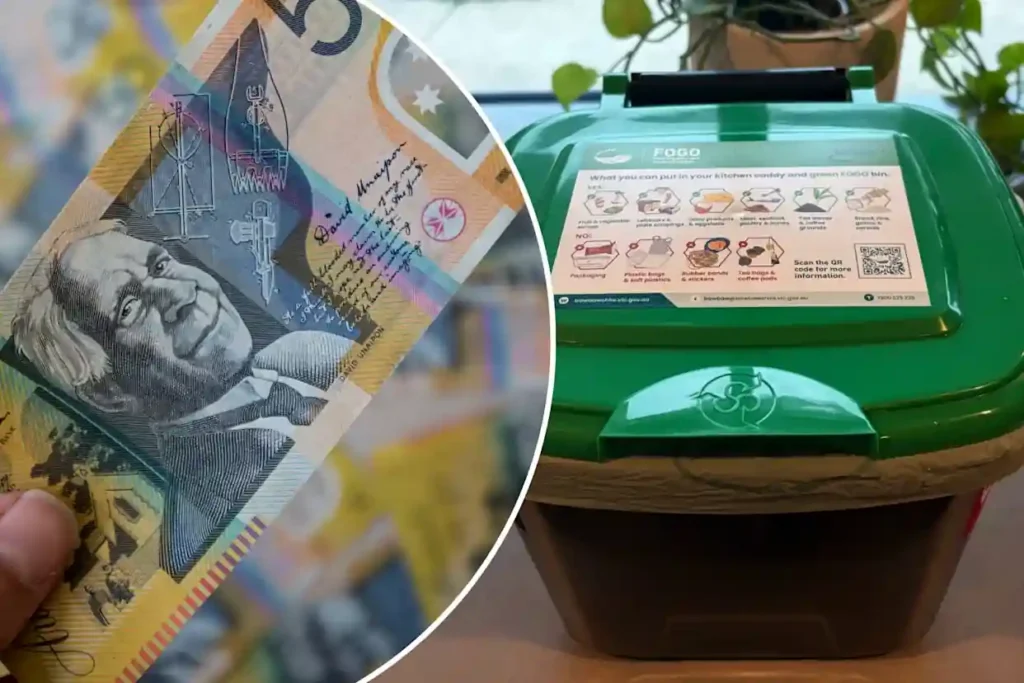

Thousands of households in Victoria’s Baw Baw Shire could soon receive cash back on everyday essentials as the council prepares for a significant change to local waste collection services.
The council has expanded its environmental rebate program ahead of the July rollout of its Food Organics and Garden Organics (FOGO) service, giving residents a financial incentive to adopt reusable products and reduce the amount of waste ending up in landfill.
The move comes at a time when councils across Australia are accelerating food waste recycling programs, even as some communities continue to raise concerns about changes to bin collection schedules.
Residents can claim up to $100 under expanded rebate scheme
Baw Baw Shire Council has updated its “Reduce, Reuse, Recycle Rebate” program to include additional household products that can help cut landfill waste.
Under the revised scheme, residents can receive a rebate covering 50 per cent of the cost of reusable sanitary and incontinence products, up to a maximum of $50.
For example, someone purchasing a reusable sanitary product for $30 would be eligible to receive $15 back from the council.
The council is also offering a 50 per cent rebate on reusable nappies and nursing products, with a maximum payment of $100. A family spending $250 on reusable nappies would qualify for the full $100 rebate.
These additions build on existing rebates available for compost bins and worm farms, which are already aimed at helping households manage food waste more sustainably.
Why the council is offering cash incentives
The expanded rebate arrives just weeks before the introduction of the FOGO service, which will allow residents to place food scraps and garden waste into their green-lid bins for processing instead of sending them to landfill.
Baw Baw Shire Mayor Kate Wilson said the initiative is designed to support households looking to reduce their reliance on products that eventually end up in landfill.
The council believes there is substantial room for improvement in household waste habits. According to its data, more than 53 per cent of material found in the average red general rubbish bin consists of food and garden organics, recyclable glass or other recyclable materials.
Reducing those materials in landfill is one of the key objectives behind FOGO programs being introduced across Australia.
What can go into the new FOGO bins?
Once the service launches in July, residents will be able to use their green bins for a wider range of food waste than many home composting systems can handle.
Accepted items will include meat scraps, fish, raw and cooked bones, dairy products, eggs and eggshells, spoiled food, citrus peels and onion waste.
To help households prepare, the council has already distributed kitchen caddies to residents, allowing food scraps to be collected indoors before being transferred to the green bin.
The goal is to divert a larger share of organic waste away from landfill and into composting and recycling streams.
Why some residents remain concerned
While FOGO programs have environmental benefits, they have also attracted criticism in some council areas because they are often accompanied by changes to general waste collections.
In Baw Baw Shire, residents will move from weekly red-bin collections to fortnightly collections under the new system.
For some households, particularly larger families, that shift has raised concerns about whether general rubbish bins will provide enough capacity between collections.
Supporters of the change argue that once food scraps and garden waste are removed from general rubbish, households should generate significantly less waste overall.
Similar debates have emerged in other parts of Australia, where councils have faced questions about costs, collection frequency and public participation rates. Recent discussions around FOGO-related waste collection challenges in Western Australia highlight how local governments continue to balance environmental targets with community expectations.
How the rollout fits into Australia’s waste reduction goals
The expansion of food waste recycling programs forms part of a broader push to reduce landfill dependency and recover more resources from household waste streams.
Organic material sent to landfill can generate methane as it breaks down. By collecting food and garden waste separately, councils can divert those materials into composting processes that create useful soil products instead.
Read More
For Baw Baw Shire residents, the upcoming rollout represents both a behavioural change and a financial opportunity. Households planning to purchase reusable products may be able to reduce their ongoing waste while benefiting from the council’s rebate program at the same time.
More information about the rebate program and FOGO rollout is available through Baw Baw Shire Council.

Make Swikblog your go-to source on Google for reliable updates, smart insights, and daily trends.