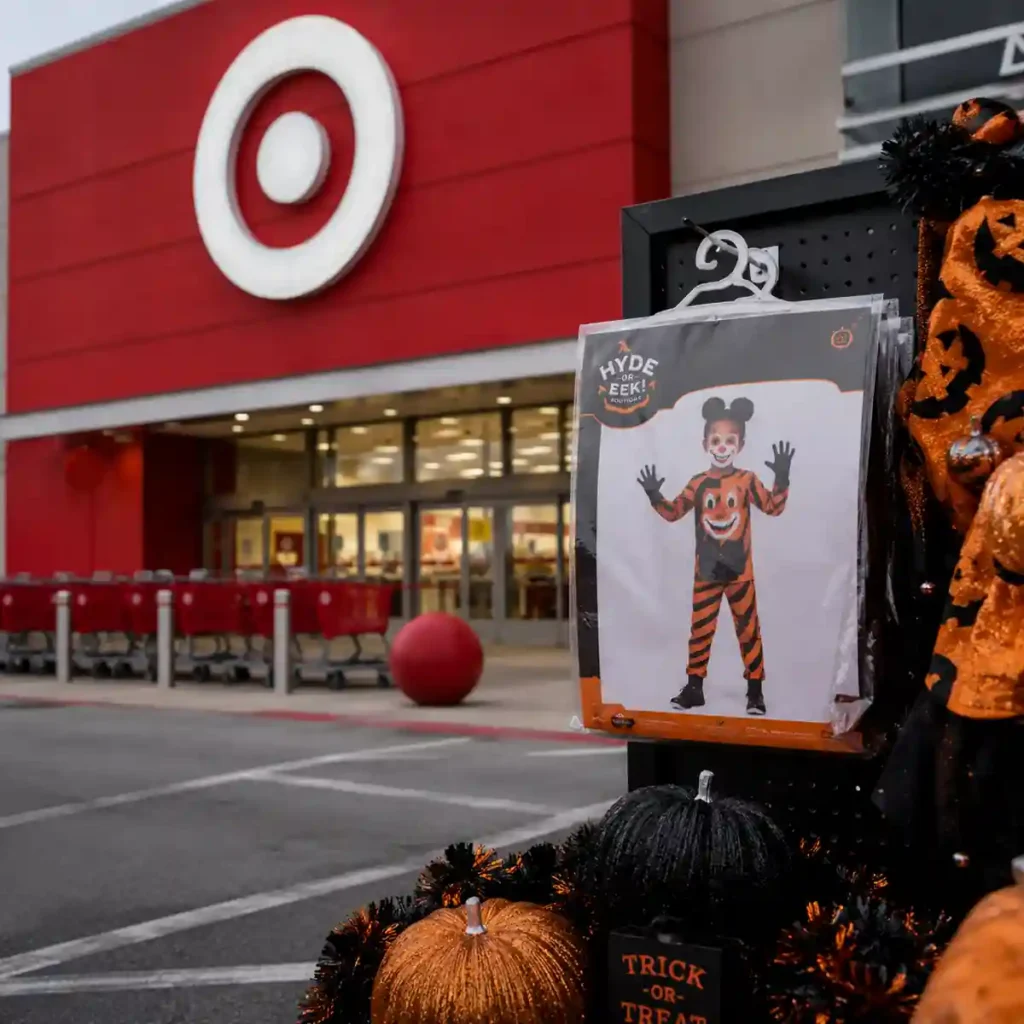

Target has removed a children’s Halloween clown costume and apologized after critics said its design and promotional imagery evoked racist Blackface and minstrel-show caricatures. The backlash spread online over the weekend before the Minneapolis-based retailer acknowledged on August 24 that the product should never have been included in its assortment.
The controversy concerns one costume from Target’s seasonal Halloween range, but it has raised a larger question for the retailer: how did a product Target now calls offensive make it through its merchandise approval process?
What Target Halloween costume was removed?
The product was listed as the “Kids’ Glows Under Blacklight Circus Clown Halloween Costume Bodysuit – Hyde and EEK! Boutique.”
Promotional imagery showed a Black child modeling an orange-and-black clown outfit with black gloves and a mask featuring an exaggerated wide smile. Critics focused on the overall combination of the mask, gloves, expression and presentation.
Target has confirmed that the costume is no longer available for sale. The company has not withdrawn its wider Halloween collection.
Why did the costume cause backlash?
Critics said elements of the costume resembled racist caricatures historically associated with Blackface and minstrel shows, which relied on degrading stereotypes of Black people.
Minneapolis-area businesswoman Sheletta Brundidge was among those who publicly criticized the listing. Brundidge, founder and CEO of ShelettaMakesMeLaugh.com, said she initially wondered whether the image was a joke or AI-generated when she saw it on Saturday. She saved screenshots before the costume became unavailable.
There is no verified evidence that Target deliberately intended the costume to represent Blackface. The controversy centers on critics’ comparison of its imagery with historical racist stereotypes and how such a product passed Target’s review process.
What did Target say?
Target accepted responsibility rather than defending the costume as a misunderstanding. In its official August 24 statement, the company apologized, described the costume as offensive and said it should never have been part of its assortment.
Target acknowledged that the incident was especially hurtful to its Black customers, employees and partners. It called removing the costume an important first step and said it is reviewing how the situation happened and what needs to change.
Who designed and approved the costume?
That remains unanswered. Target has not publicly identified who designed the costume or explained the specific process through which it was approved for sale.
The retailer has also not disclosed how many units were sold, when sales began or whether customers who already purchased the costume will receive special refund instructions.
No product-safety recall has been announced. Target’s action is a removal from its assortment following complaints about offensive imagery, rather than a recall involving a reported safety defect.
Target Opening 11 New Stores Across 10 States: Full Location Details
Coles and Woolworths Facial Recognition: What Shoppers Need to Know
Why Target’s DEI controversy is being discussed
The incident comes after Target faced boycott calls and criticism over changes to its diversity, equity and inclusion initiatives in 2025. Brundidge has questioned whether those changes affected the range of perspectives involved in decisions capable of identifying problematic imagery.
There is currently no verified evidence establishing that Target’s DEI changes caused the costume to be approved. That connection remains an argument made by critics rather than a finding from Target’s review.
The controversy follows a prolonged period of consumer pressure surrounding the retailer, including the Target boycott and debate over its DEI changes, which remained closely tied to questions about brand trust and customer loyalty.
Why this matters for Target now
The dispute arrived during Target’s 2026 Halloween sales push and while the retailer is trying to strengthen sales, merchandise quality and customer perception.
Those pressures were already visible in concerns about the retailer’s broader recovery. Earlier analysis of Target’s stock and store performance highlighted the importance of improving execution and restoring confidence among shoppers and investors.
The most important unanswered issue is now Target’s internal review. The company has promised to examine how the costume reached its assortment, but it has not yet said what merchandise-review procedures will change, who approved the product or whether additional action will follow.

Make Swikblog your go-to source on Google for reliable updates, smart insights, and daily trends.