
Two unvaccinated Lancaster County residents have died after contracting measles, becoming Pennsylvania’s first measles-associated deaths in 35 years and the first reported in the United States in 2026.
The Pennsylvania Department of Health announced the deaths on August 25. Officials did not release the names, ages or other identifying details of the two residents, saying only that both lived in Lancaster County, west of Philadelphia.
Pennsylvania has confirmed 393 measles cases across 28 counties in 2026, while the United States is experiencing its highest annual case count since 1991.
U.S. measles cases reach a 35-year high
The United States had recorded 2,777 confirmed measles cases by late August, surpassing the 2,289 cases reported during all of 2025.
The two Pennsylvania deaths bring the number of measles-associated deaths reported nationally over the past two years to five, highlighting the potential severity of a disease that had become rare in the country for decades.
Measles was declared eliminated in the United States in 2000, meaning continuous domestic transmission had been interrupted. Imported infections can still cause outbreaks when they reach communities with lower vaccination coverage.
The resurgence extends beyond the United States. Canada has also reported cases and travel-related alerts, including measles cases linked to flight exposure alerts in Canada.
U.S. measles-free status will be reviewed
International health officials are expected to review the measles-elimination status of the United States and Mexico in November 2026.
Public-health experts generally consider vaccination coverage of about 95% necessary to prevent sustained measles outbreaks because the virus spreads extremely easily.
Lancaster County remains a key focus
Both people who died lived in Lancaster County, where several public exposure notices have been issued during the current outbreak.
Potential exposure locations previously identified by state officials included a soccer camp at Millersville University on August 4 and 5 and the Whole Foods Market at 1563 Fruitville Pike in Lancaster on August 12. An earlier case also prompted an exposure warning involving the Lancaster County Courthouse.
Health officials have not linked either death to those locations. The alerts are intended to help people determine whether they should check vaccination records and monitor for symptoms.
State data cited by the Associated Press show that about 88% of Lancaster County kindergartners were up to date on measles vaccination during the previous school year, below the level generally considered necessary to limit sustained transmission.
How measles spreads and what symptoms to watch for
Measles spreads through the air when an infected person breathes, coughs or sneezes. The virus can remain infectious in the air or on surfaces for up to two hours after the person leaves, according to the Pennsylvania Department of Health.
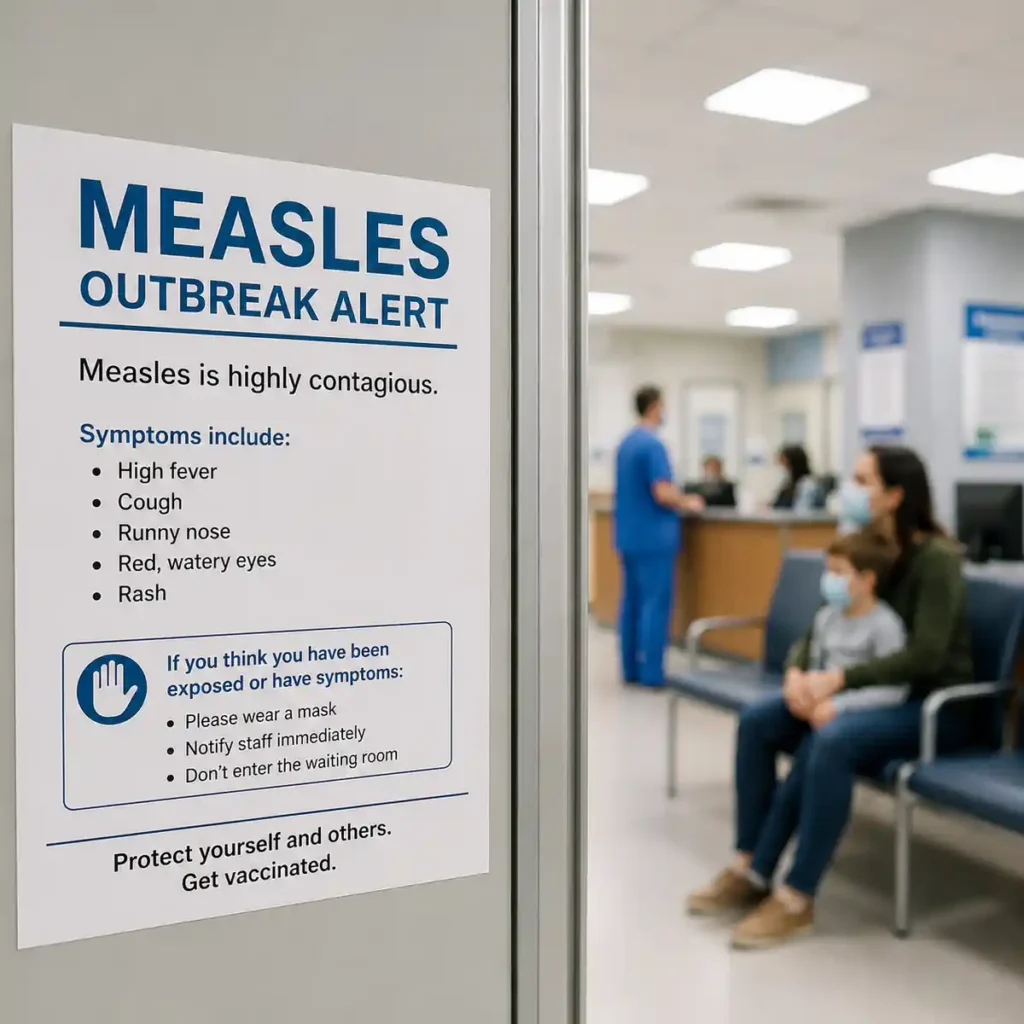
Symptoms usually appear seven to 21 days after exposure. Early signs include fever, cough, runny nose and red or watery eyes. A rash typically appears several days later, often beginning around the face before spreading downward.
Why measles can become serious
Many people recover, but measles can cause complications such as pneumonia and inflammation of the brain.
Pennsylvania health officials say nearly 20% of people who contract measles may require hospitalization. Death occurs in roughly one to three patients per 1,000 cases.
Infants who are too young for routine vaccination and some people with weakened immune systems can face a greater risk of serious illness.
MMR vaccination remains the main protection
The measles, mumps and rubella vaccine remains the primary protection against measles. One dose is about 93% effective, while two doses provide approximately 97% protection.
The standard childhood schedule generally recommends the first MMR dose at 12 to 15 months and a second between ages 4 and 6. During outbreaks, health departments may recommend earlier or catch-up vaccination for some people who are not fully protected.
Broader routine vaccination and immunization programs help maintain protection against vaccine-preventable illnesses before outbreaks spread widely.
Since Pennsylvania’s outbreak began in April, Department of Health staff have administered more than 4,100 MMR vaccinations at 91 pop-up clinics in affected areas. Another 40 pop-up clinics are planned in the coming weeks as the state expands its response.
NHS Free Home HPV Test Kits 2026: Who Is Eligible and How It Works
Greater Anglia Disruption: Signalling Fault Causes Train Delays and Cancellations
What to do after possible measles exposure
Anyone who believes they may have been exposed should check their vaccination records and monitor for symptoms for 21 days after the possible exposure.
If fever, cough, red eyes or a rash develops, health officials recommend calling a healthcare provider before arriving at a clinic, urgent care center or emergency department. Advance notice allows medical staff to take infection-control precautions and reduce the risk of exposing other patients.
Pennsylvania residents can contact the Department of Health at 877-PA-HEALTH (877-724-3258) for guidance about symptoms, possible exposure or vaccination.

Make Swikblog your go-to source on Google for reliable updates, smart insights, and daily trends.