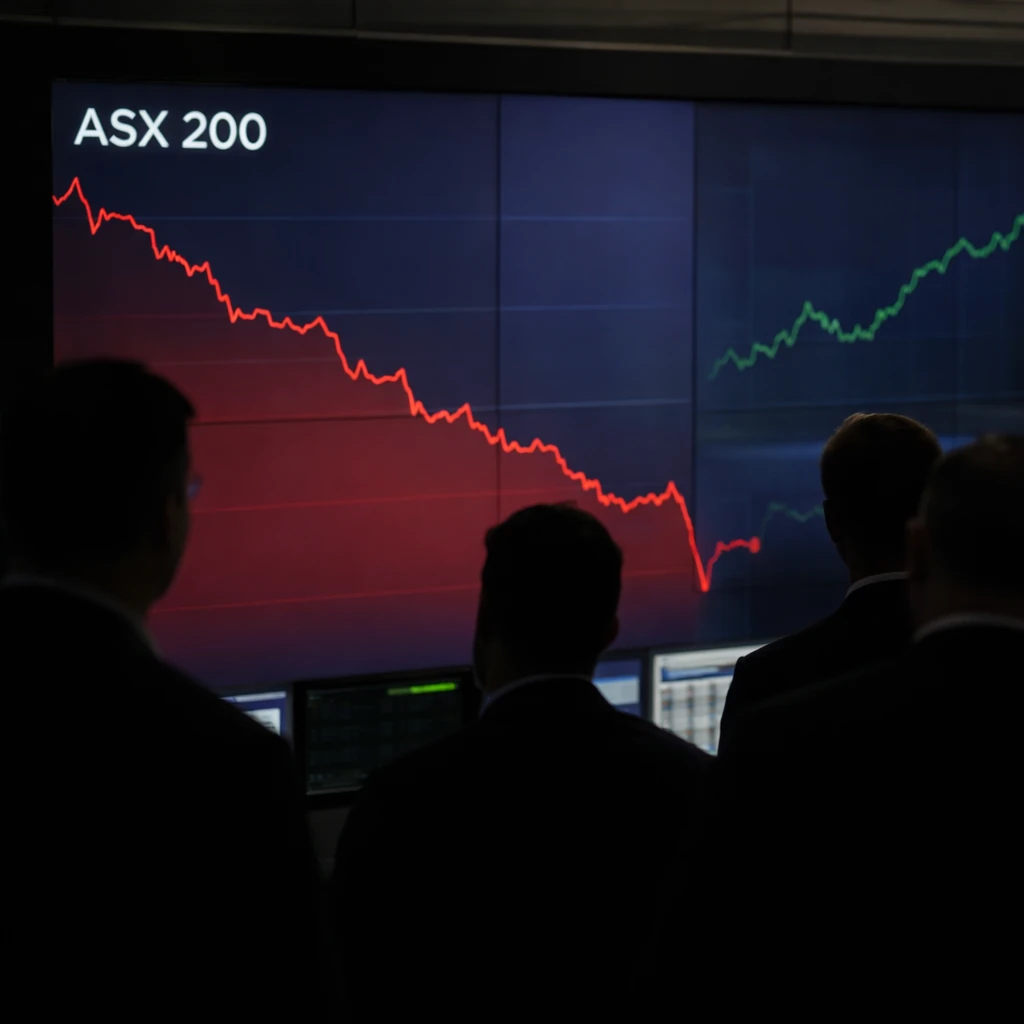

ASX 200 tumbles sharply as $320 billion wiped out in weeks
The Australian sharemarket extended its sharp decline today, with the ASX 200 falling to 8,367, as escalating geopolitical tensions and surging oil prices triggered a wave of selling across sectors. The benchmark index has now dropped nearly 1000 points from its February peak of 9202, wiping out roughly $320 billion in market value in just three weeks.
Monday’s sell-off comes as investors react to fresh threats from US President Donald Trump toward Iran, reigniting fears of a broader conflict that could disrupt global energy supply and push inflation higher.
Trump’s 48-hour ultimatum shakes global markets
Markets were initially stabilizing after comments that the conflict between the US/Israel and Iran was “winding down.” However, sentiment reversed sharply after Trump issued a 48-hour ultimatum demanding Iran fully reopen the Strait of Hormuz or face military strikes on major power infrastructure.
The Strait of Hormuz is one of the world’s most critical energy routes, handling nearly 20% of global oil and gas shipments. Any disruption or prolonged closure raises immediate concerns about supply shortages and price spikes, which directly impact global markets.
Investors are now pricing in the risk of further escalation, with uncertainty around Iran’s response and potential retaliation against US assets adding to volatility.
Oil surge above $100 fuels inflation fears
Oil prices have surged dramatically since the conflict began, rising from around $56 per barrel in January to above $100. Brent crude recently hovered near $112, reflecting growing concerns about supply disruptions.
This sharp rise in energy prices is feeding directly into inflation expectations, forcing investors to reassess the outlook for interest rates. Higher oil prices increase transportation and production costs, which can push consumer prices higher globally.
According to Reuters commodities coverage, sustained oil strength is already reducing expectations for near-term rate cuts from central banks.
Broad-based sell-off hits banks, miners and gold stocks
The market decline has been widespread, with nearly 79% of ASX stocks trading below their 50-day moving average, signaling strong bearish momentum.
Banking stocks led losses, with major lenders including Commonwealth Bank, ANZ, Westpac and NAB falling around 2% or more. These stocks are particularly sensitive to economic uncertainty and interest rate changes.
Mining giants such as BHP and Rio Tinto also moved lower, while gold stocks saw heavy selling pressure after bullion recorded its biggest weekly drop since 1983. Companies like Evolution Mining and Northern Star posted sharp declines, reflecting the shift in investor sentiment.
Gold has now fallen for multiple sessions, as rising inflation expectations reduce the appeal of non-yielding assets.
Energy stocks emerge as rare winners
Amid the broader market weakness, energy stocks have been the only bright spot. Companies such as Woodside Energy, Santos, Ampol and Viva Energy posted gains as higher oil prices boosted their earnings outlook.
This divergence highlights how the current market environment is being driven by macro factors rather than company-specific performance.
ASX hits 10-month low as correction deepens
The ASX 200 has now fallen around 10% since late February, pushing the index to its lowest level in 10 months. Last week alone, the market dropped more than 2%, while the monthly decline stands at over 7%.
Despite the sharp fall, some analysts still describe the move as a “mild correction” compared to historical market crashes. However, the speed and scale of the decline have raised concerns about further downside risk if geopolitical tensions escalate.
RBA rate outlook adds to pressure
The Reserve Bank of Australia has already raised interest rates in recent months, and rising oil prices could complicate the outlook further. Central bank officials have warned that prolonged high energy costs could fuel inflation and disrupt economic supply chains.
Economists are now forecasting at least one more rate hike in the near term, potentially as soon as May. This would add additional pressure on households already dealing with rising living costs and mortgage repayments.
Global markets also under strain
The sell-off is not limited to Australia. US markets ended last week sharply lower, with both stocks and bonds falling as investors priced in higher inflation and tighter monetary policy.
According to the ASX market overview, futures had already pointed to a sharp drop before Monday’s open, signaling that global sentiment remains fragile.
Gold volatility has added another layer of uncertainty, while rising bond yields suggest markets are increasingly preparing for prolonged economic pressure.
What investors should watch next
The next phase for markets will largely depend on how the geopolitical situation unfolds. The key focus will be on whether the US follows through on its threat and how Iran responds.
Oil prices will remain the most critical indicator. A sustained move above current levels could trigger further declines in equities, while any easing in tensions may help stabilize markets.
For now, the ASX remains highly sensitive to global developments, with volatility expected to stay elevated in the near term.
Investor anxiety has grown alongside broader global uncertainty, much like how urgent developments can quickly shift public attention, as seen in this report on the RCMP emergency alert for missing Colchester County man Jason Lorette.

Make Swikblog your go-to source on Google for reliable updates, smart insights, and daily trends.