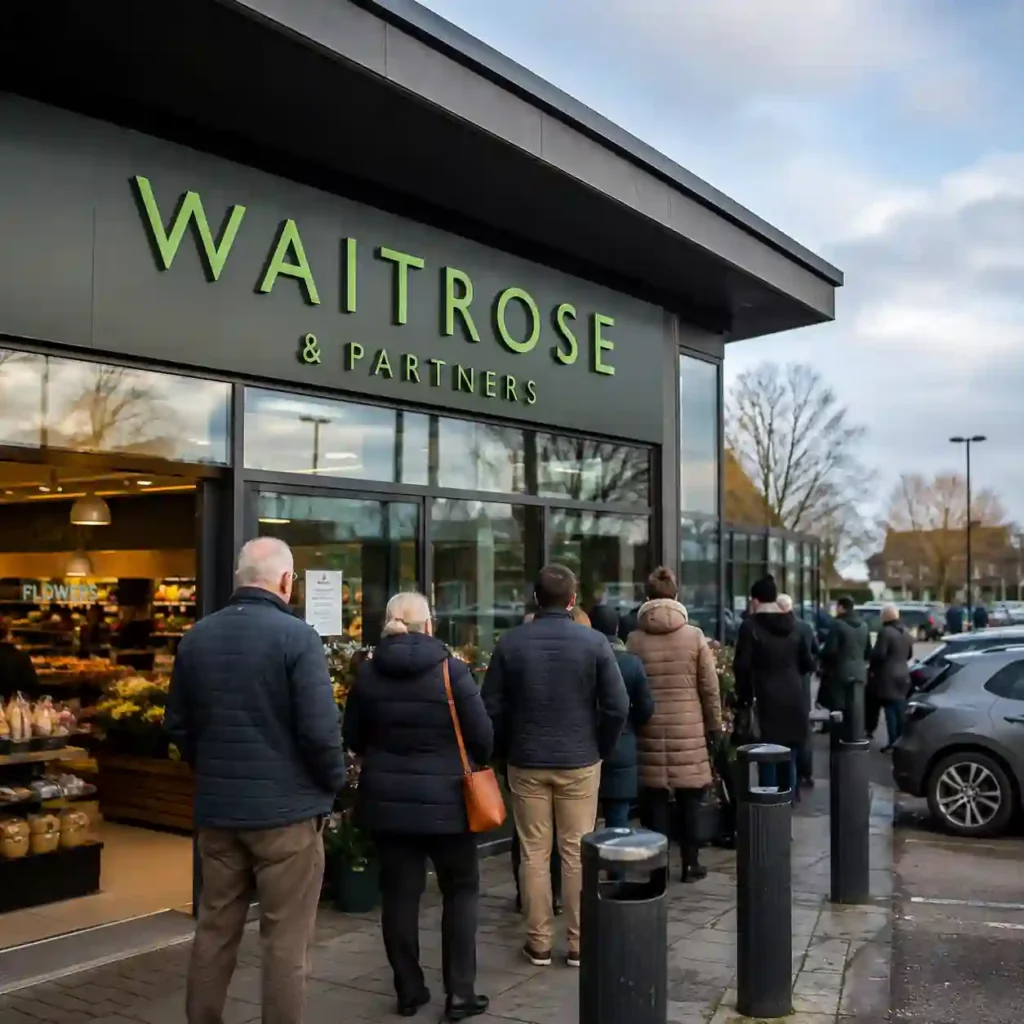

Waitrose stores returned to normal trading on Friday after a brief technical fault disrupted the opening of several UK branches, with the supermarket chain confirming that a delay in its till-startup system was behind the problem.
The issue affected a limited number of shops that were scheduled to begin trading at 7am. Some customers arriving early found branches unable to open on time while staff waited for electronic systems to come back online.
Reports from Oxfordshire named Abingdon, Wallingford, Oxford’s Peartree Interchange and Wheatley among the stores affected. These locations were due to open at 7am but experienced a short delay after what was initially described as a “critical error” in supermarket systems.
Waitrose later said the matter had been resolved quickly and that all stores were open as usual. The company explained that the affected branches opened around 10 minutes late because of a delay with the system that starts the tills before trading begins.
“All our shops are open as normal,” a Waitrose spokesperson said after the disruption ended. The retailer added that the vast majority of its stores open at 8am and were therefore not affected by the early-morning issue.
Fewer than 50 Waitrose shops across the UK were impacted, according to the company. Customers needing store information or support can check the official Waitrose customer service page.
What caused the Waitrose store delays?
The disruption appears to have centred on the electronic system used to initialise tills before shops open. In practical terms, if tills cannot start properly, stores may be unable to process payments, run checkouts or begin normal customer trading.
That is why even a short technical issue can force supermarkets to hold back opening. Shelves may be stocked and staff may be ready, but without checkout systems working correctly, a store cannot operate in the usual way.
During the disruption, a supermarket source reportedly said work was already under way to fix the fault but that staff could not guarantee exactly when shops would reopen. The same source described the problem as a critical systems error while the issue was still being handled.
Waitrose’s final statement suggested the disruption was narrower and shorter than first feared. The retailer said shops due to start trading at 7am opened 10 minutes later, while later-opening branches were largely unaffected.
The difference in opening times helped limit the impact. Many Waitrose supermarkets begin trading at 8am, meaning the technical fault was resolved before most stores were due to welcome customers.
For shoppers, the effect was mainly a short wait outside affected branches. For the retailer, however, the incident highlighted how dependent modern supermarkets are on back-end technology before doors can open.
Read More
- Visit Swikblog Homepage
- Maldives Diving Horror: Five Italians Die in Underwater Caves at Vaavu Atoll
- Sunday Times Rich List 2026: David Beckham Billionaire Sportsman
- Spaghetti House Closes All London Restaurants After 70 Years
- HSBC Halts $4 Billion Private Credit Investment After $400 Million Loss
- Australia Quarantines Cruise Ship Travellers After Hantavirus Outbreak
Why a 10-minute supermarket outage still matters
Supermarket operations now depend on far more than staff, shelves and stock. Every trading day starts with a network of systems: tills, card terminals, inventory tools, self-checkout machines, payment processing and internal store controls.
If one of those systems fails at the wrong time, the disruption becomes visible immediately. Early customers may be delayed, staff have to manage uncertainty and store managers must wait for confirmation that systems are safe to use.
The Waitrose incident was resolved quickly, but it still matters because grocery retail runs on tight routines. A supermarket opening late by even a few minutes can affect commuters, local workers, nearby offices and shoppers who rely on early trading hours.
It also shows why technology resilience has become a major issue for UK retailers. Supermarkets have invested heavily in digital tools to speed up checkout, manage stock and improve customer service, but that same dependence means technical faults can spread across multiple locations at once.
Waitrose, part of the John Lewis Partnership, has been working to strengthen its store network and customer offer in a competitive grocery market. The retailer is also expanding in some areas, including a planned Malmesbury branch expected to create around 170 jobs and generate about £1 million a year in wages for the local area.
The wider UK supermarket sector remains under pressure from rising costs, changing shopping habits and intense competition. Swikblog recently covered those pressures in UK Supermarket Crisis Deepens as 300 Stores Face Closure and Thousands of Jobs Risk.
Friday’s Waitrose disruption was not a prolonged outage and there is no indication of a wider business problem. Still, it offered a clear example of how quickly a technical fault can affect store operations when tills and electronic systems are central to everyday trading.
By late morning, the message from Waitrose was that shops were open as normal and the issue had been fixed. For customers, the problem was brief. For the supermarket industry, it was another reminder that reliable digital infrastructure is now just as important as stocked shelves and open doors.

Make Swikblog your go-to source on Google for reliable updates, smart insights, and daily trends.