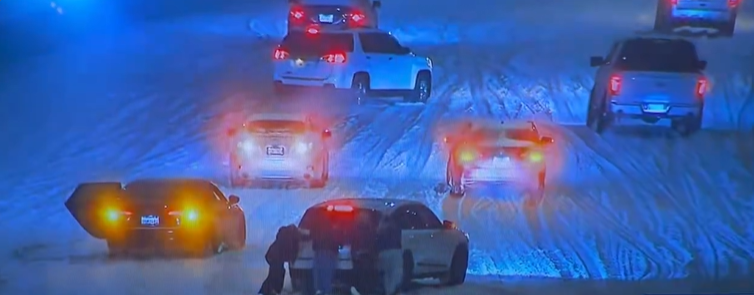
Traffic across parts of Dallas ground to a near standstill overnight as icy rain and snow turned major highways into skating rinks, leaving cars and trucks stranded and forcing bystanders to physically push vehicles in an effort to keep them moving.
Video shared by WFAA shows chaotic scenes on the Woodall Rodgers Freeway, where flashing emergency lights reflect off a frozen roadway and drivers struggle to maintain even minimal traction. At the time of filming, temperatures hovered around 18°F, with freezing rain continuing to fall.
The footage has become one of the most striking snapshots of the historic January 2026 North Texas winter storm, which has blanketed large parts of the region in sleet and freezing rain. Local NBC and FOX affiliates have reported record-low temperatures and near-impossible travel conditions across multiple counties.
Unlike northern states that regularly contend with snow, Texas remains particularly vulnerable to ice events. Highways are not equipped with the same level of plowing or pre-treatment, meaning even a thin glaze of freezing rain can quickly paralyse traffic and trigger chain-reaction pile-ups.
Related: Winter storms can also strain the power grid. Here’s what Texans need to know about outages and emergency planning.
Texas Department of Transportation traffic cameras have confirmed widespread slick conditions across Dallas-Fort Worth, with officials urging drivers to stay off the roads wherever possible until temperatures rise and ice begins to melt. Emergency crews have continued responding to spin-outs and stalled vehicles throughout the metro area.
Meteorologists warn that freezing rain is often more dangerous than snowfall, as it coats roads invisibly and offers little warning before tyres lose grip. According to guidance from the National Weather Service, even brief exposure to freezing rain can create treacherous driving conditions that persist long after precipitation ends.
For many Texans, the scenes from Dallas serve as a stark reminder of how quickly winter weather can overwhelm infrastructure when rare ice events strike, turning everyday commutes into hazardous journeys within minutes.

Make Swikblog your go-to source on Google for reliable updates, smart insights, and daily trends.