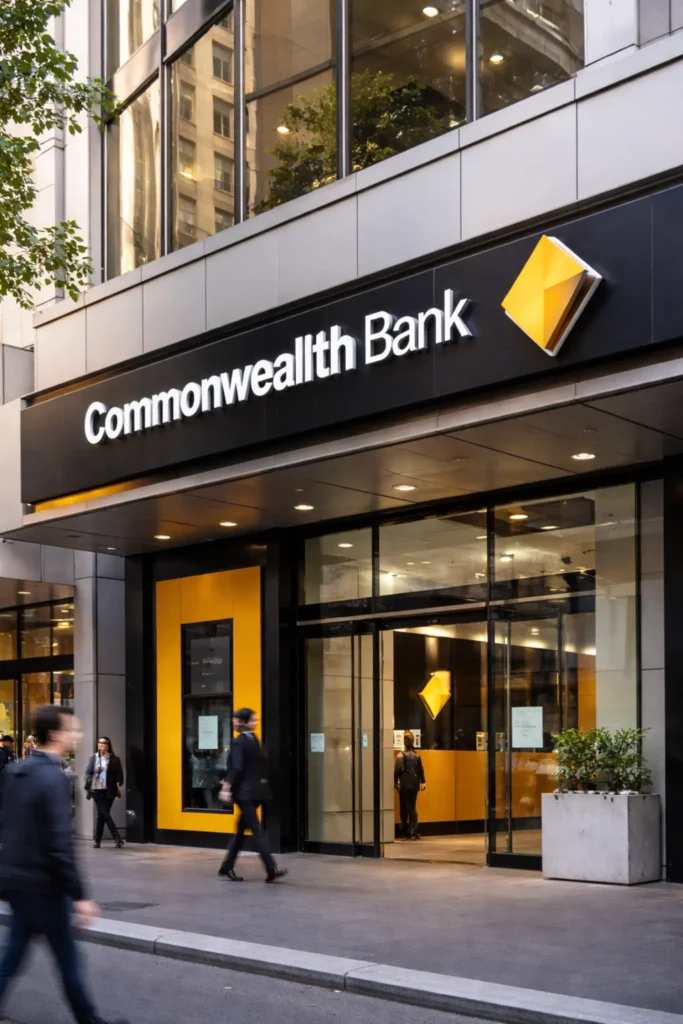

Commonwealth Bank of Australia is back in sharp focus after announcing a fresh round of home loan rate hikes, adding pressure on borrowers while keeping bank stocks resilient. CBA (ASX: CBA) gains 0.27% to 173.64 as mortgage costs rise after a 30 bps rate hike, highlighting a growing divide between investor optimism and borrower stress.
Australia’s largest bank confirmed it will increase all fixed home loan rates by 30 basis points, alongside a 25 basis point rise in variable home loans effective March 27, 2026. The move comes as lenders rapidly pass on the Reserve Bank of Australia’s (RBA) latest rate hike, with expectations building that more increases could follow in the coming months.
CBA leads wave of rate hikes across lenders
Commonwealth Bank is not alone. Nearly 50 lenders have already confirmed they are passing on the RBA’s latest rate hike in full, signalling a broad tightening cycle across Australia’s mortgage market. Other major banks are moving in tandem, with NAB and ANZ set to increase variable rates immediately, while Westpac is expected to follow by March 31.
Fixed rates are also rising sharply across the industry. Over the past week alone, 28 lenders have lifted fixed mortgage rates by an average of 0.34 percentage points, significantly narrowing the window for borrowers looking to lock in lower rates. ING recently raised its fixed rates by 35 basis points, while ANZ had already lifted fixed rates by up to 25 basis points ahead of the RBA’s March decision.
This coordinated shift reflects both higher funding costs and growing expectations that the rate cycle is not yet over.
Why CBA shares are gaining despite borrower pressure
While borrowers face rising repayments, CBA shares are holding firm and even posting gains. Investors typically view higher interest rates as supportive for bank profitability, as lenders can expand margins on loans more quickly than they increase deposit costs.
However, the positive stock reaction comes with caution. Prolonged rate increases can strain household finances, increasing the risk of mortgage stress and slower credit growth. For now, markets appear focused on near-term earnings strength, but longer-term risks are quietly building beneath the surface.
Borrowers face rising costs and tough choices
For mortgage holders, the impact is immediate. Variable rate customers will see higher monthly repayments, while those considering fixed loans are now facing less attractive rates than just weeks ago.
This creates a difficult decision point. Borrowers must choose between staying on variable rates and absorbing potential future hikes, or locking into fixed rates at already elevated levels. The uncertainty around future interest rate movements is making this decision even more complex.
Many borrowers are now exploring split loan strategies, combining fixed and variable portions. This approach offers a balance between repayment certainty and flexibility, especially as the rate outlook remains uncertain.
Another RBA rate hike likely in May
Adding to the pressure, all major bank economists are now expecting another RBA rate hike at the May meeting. While recent data showed headline inflation easing slightly to 3.7%, underlying inflation remains sticky at 3.3%.
More importantly, recent figures do not yet fully reflect the global energy shock driven by Middle East tensions and rising fuel prices. Westpac now expects headline inflation to surge to around 5.5% by mid-year, with core inflation also trending higher.
Treasury modelling has also suggested inflation could reach around 5% this year, although officials have indicated these estimates may still be conservative. This reinforces the view that the RBA may need to keep tightening policy to control price pressures.
Fixed-rate window rapidly closing
One of the most critical developments is the rapid rise in fixed mortgage rates. As lenders anticipate further rate increases, fixed products are being repriced higher even before official policy changes occur.
This means borrowers hoping to secure lower fixed rates may be running out of time. The current trend suggests that waiting could result in even higher rates, but fixing now also carries the risk of locking in near the peak of the cycle.
According to market insights, borrower enquiries about fixed and split loans are increasing as households try to navigate this uncertain environment.
What this means going forward
The latest CBA rate hike signals that Australia’s mortgage market is entering a more challenging phase. Borrowing costs are rising, lender competition is tightening, and the path of interest rates remains uncertain.
For investors, banks may continue to benefit from stronger margins in the short term. For borrowers, however, the reality is very different. Higher repayments, reduced flexibility, and ongoing rate uncertainty are becoming defining features of the current cycle.
With another potential RBA hike on the horizon and fixed rates climbing rapidly, the decisions borrowers make now could have long-term financial implications.
For more details on official rate updates, visit Commonwealth Bank or check the latest policy updates from the Reserve Bank of Australia.
You may like: Nasdaq Slides 2.38% Today as Tech Stocks Crash and Oil Prices Surge

Make Swikblog your go-to source on Google for reliable updates, smart insights, and daily trends.