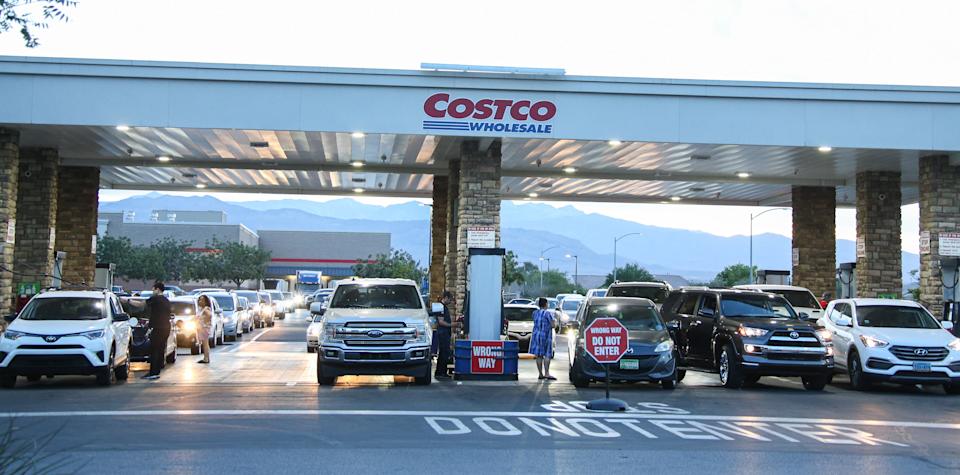

Costco’s gas stations recorded their strongest fuel volumes on record during the warehouse retailer’s fiscal third quarter, as higher gasoline prices pushed more members toward its discounted pumps. The surge helped lift store traffic and contributed to a sharp increase in quarterly sales.
The results, released on May 28, 2026, cover the 12 weeks ended May 10. They remain Costco’s latest full quarterly financial report as of July 31, with fourth-quarter results scheduled for September 24.
Costco gas sales set consecutive records
Chief Executive Ron Vachris said each of the quarter’s three four-week periods established a new company record for gasoline volume. The final five weeks became Costco’s five busiest fuel-volume weeks on record.
Some stations required several deliveries a day to remain supplied. The increase was not confined to one market, indicating that members across Costco’s network were responding to the widening cost difference between its pumps and competing stations.
Vachris linked the demand to disruption in the Middle East, which affected fuel supplies and pushed prices higher. The company did not disclose the total number of gallons sold or the average discount members received.
Costco said heightened price sensitivity led many existing members to use its filling stations for the first time. That distinction matters because the pumps are generally a membership benefit rather than a service available to every passing driver.
How fuel influenced Costco’s quarterly results
Costco reported total revenue of $70.53 billion for the quarter, up from $63.21 billion a year earlier. Net sales, which exclude membership fees, increased 11.6% to $69.15 billion.
Net income rose to $2.19 billion, or $4.93 per diluted share, compared with $1.90 billion, or $4.28 per share, in the same quarter of fiscal 2025. Membership-fee revenue increased from $1.24 billion to $1.37 billion.
Comparable sales advanced 9.8% across the company. The United States recorded 9.4% growth, while Canada gained 10.7% and other international markets increased 11.2%.
Those headline percentages include the effects of gasoline-price movements and currency changes. After removing both factors, companywide comparable sales grew 6.6%, including a 6.8% increase in the United States.
The difference between the reported and adjusted figures shows how much fuel prices and foreign exchange influenced the quarter. It does not mean gasoline produced all the underlying growth: merchandise sales continued to rise, while digitally enabled comparable sales increased 21.5% on a reported basis.
Why low-priced gasoline benefits the warehouse business
Costco can use fuel differently from a conventional service station because its business is supported by annual membership fees. Gasoline gives members another reason to renew, while frequent visits create opportunities for additional warehouse purchases.
A driver may arrive primarily to save on a tank of fuel, but the trip can lead to spending on groceries, household supplies or other goods. Costco therefore gains value from increased traffic even when it keeps fuel margins narrow.
The strategy becomes more effective when market prices rise quickly. A larger visible saving at the pump makes the membership benefit easier to measure, particularly for households that drive often.
This relationship was evident in the quarter’s results, but it creates an important comparison issue. Reported comparable sales can accelerate when gasoline prices rise even if Costco sells the same number of gallons. Fuel volume, fuel revenue and merchandise demand should therefore be assessed separately.
Food prices eased while other costs remained uncertain
Management reported lower prices in areas including produce, eggs and dairy, offering some relief inside the warehouse. Non-food costs presented a less predictable picture.
Costco said higher resin costs could affect products made with plastic or plastic-based packaging. The company was also monitoring tariffs, transportation expenses, oil prices and geopolitical disruption for possible effects on merchandise costs.
These pressures do not guarantee retail price increases. Costco can negotiate with suppliers, change sourcing, adjust package sizes or limit markups, but sustained increases in fuel and material expenses could reduce that flexibility.
What members should watch next
Costco has not promised that the record gasoline volumes will continue. Demand may ease if market prices fall or if the price gap with nearby stations narrows. Long queues can also reduce the practical value of a lower pump price for some drivers.
Members comparing costs should check the actual per-gallon saving, the distance required to reach a station and the time spent waiting. The U.S. Energy Information Administration’s weekly gasoline data provides a useful regional benchmark.
The latest quarter nevertheless demonstrates how Costco can turn energy-price pressure into a membership advantage. A related report examines how higher gas prices increased Costco sales and warehouse traffic.
More to Explore
Costco operated 931 warehouses when it released the results, including 639 in the United States and Puerto Rico. Its next earnings report should provide the clearest indication of whether record pump demand carried into the final quarter of fiscal 2026.

Make Swikblog your go-to source on Google for reliable updates, smart insights, and daily trends.