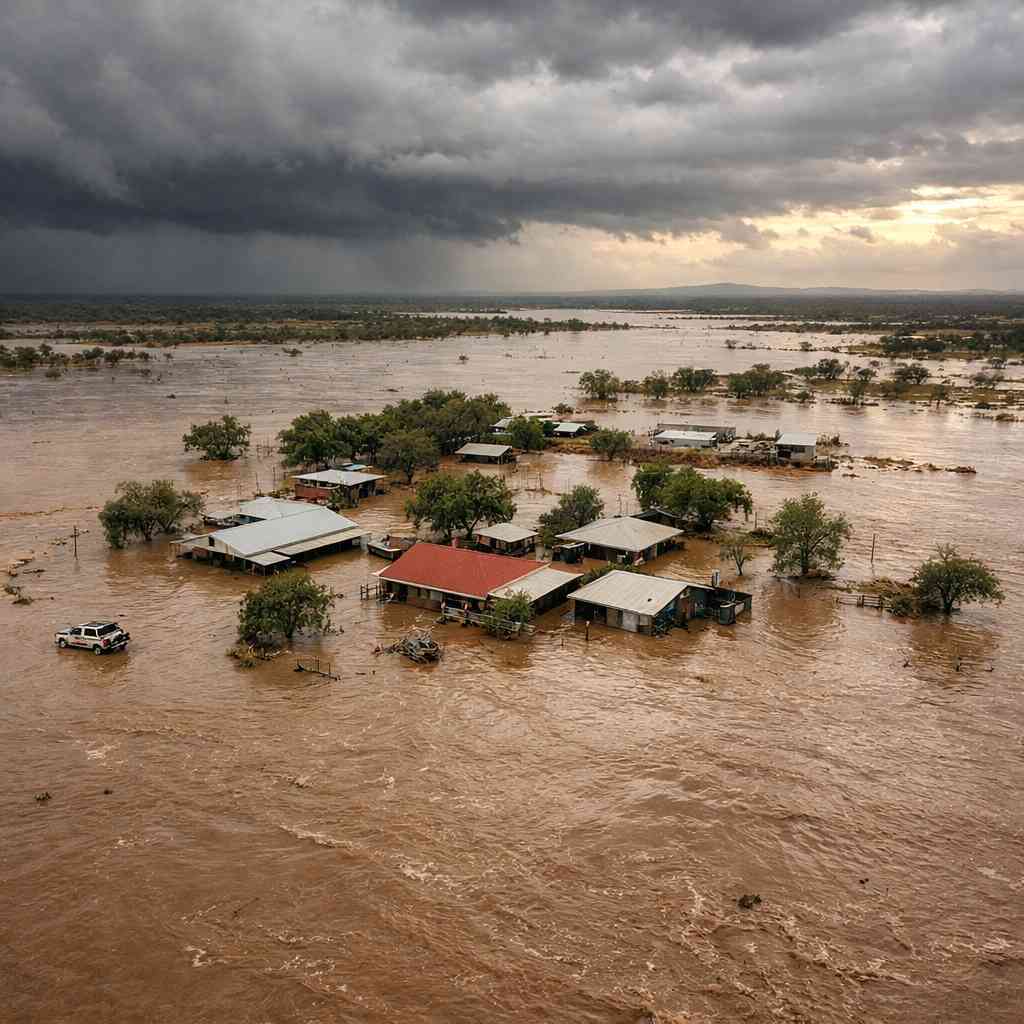

When Tropical Cyclone Narelle slammed into Western Australia’s north with wind speeds reaching 250 km/h, Bullara Station was not just hit — it was overwhelmed. The category four system brought a powerful tidal surge, relentless rain, and fast-moving floodwaters that turned the vast outback property into what looked like an inland sea.
Located near Exmouth, Bullara Station — a 100,000-hectare cattle property and popular tourist stay — found itself at the centre of one of the most intense weather events the region has seen in years. And what followed was not just destruction, but scenes that many are calling unbelievable.
Floodwaters rise to rooftops as chaos unfolds
As Cyclone Narelle crossed the Exmouth Gulf on Friday, a massive storm surge pushed water far inland. According to reports from ABC News Australia, floodwaters surged up to the highway, engulfing large parts of Bullara Station.
Videos shared from the property showed muddy brown water racing through buildings, rising so high that in some areas it nearly reached rooftops. One striking image captured a woman paddle boating across what used to be dry land, with only rooftops visible above the waterline.
Another video quickly caught attention — what appeared to be a goat seeking shelter inside a car while floodwater rushed violently around it. It was a small but powerful snapshot of how sudden and extreme the situation had become.
Owner Edwina Shallcross described the water levels as “unprecedented”, a word not used lightly in a region familiar with harsh conditions.
“There was a great tidal surge within the gulf,” she said, explaining how the water pushed inland faster than expected, leaving cattle stranded and infrastructure overwhelmed.
From outback life to survival mode
In a matter of hours, daily life at Bullara Station was completely upended. Staff who would normally be managing livestock and hosting travellers were instead navigating floodwaters using kayaks, tinnies, and stand-up paddleboards.
“We never would have thought we’d be on a SUP board or a kayak ever,” Shallcross said, reflecting the surreal shift from routine station life to emergency conditions.
About 15 staff members remained on the property, sheltering together in one section of the house, while others were evacuated inland to Cheela Plains, roughly 370 kilometres away. Inside, the atmosphere was tense but resilient.
“It’s like a big slumber party,” she said, though the reality was far from light-hearted. Many people had lost cars, personal belongings, and equipment — yet continued supporting each other through the crisis.
The sense of community became one of the strongest elements of the story. Despite the chaos outside, those inside focused on staying safe and helping where they could.
Livestock losses and missing animals add to the toll
For a working cattle station, the impact on livestock is one of the hardest blows. While all horses and goats were successfully rescued, there are confirmed losses among cattle, with some still trapped in flood-affected areas.
“There’s definitely a loss of livestock. I just don’t know what numbers,” Shallcross said.
Adding a deeply personal note, the station’s well-known pet bull, Scratchy, remains missing. For locals and frequent visitors, Scratchy is more than just livestock — he is part of the station’s identity.
Moments like these highlight the emotional side of disasters that often gets overlooked. It’s not just about land and infrastructure — it’s about animals, memories, and connections that can’t be easily replaced.
Exmouth region hit hard as infrastructure collapses
The damage extended well beyond Bullara Station. The town of Exmouth itself faced severe disruption, with both power and water supplies cut off following the cyclone’s impact.
Local authorities described the situation as serious, with the Exmouth airport reportedly “obliterated” by the storm. Strong winds, heavy rainfall, and flooding combined to create widespread infrastructure damage across the Gascoyne region.
The scale of the storm once again highlighted the destructive potential of tropical systems. The Australian Bureau of Meteorology had warned of dangerous conditions, but the real-world impact still shocked many.
Wind gusts reaching up to 250 km/h were enough to tear through buildings, uproot infrastructure, and push massive volumes of water inland — creating a disaster that unfolded rapidly and with little room for response.
Community support emerges as recovery begins
As floodwaters began to recede by Saturday night, attention quickly shifted toward recovery. While the full extent of the damage is still being assessed, the early signs point to significant losses across properties in the region.
Despite this, one thing has stood out clearly — the overwhelming support from the wider community.
“Our travelling community is just incredible,” Shallcross said, thanking those who reached out. Nearby pastoralists, Exmouth residents, and travellers have all offered help, showing how strong regional networks can be in times of crisis.
For Bullara Station, the coming days will focus on restoring power, assessing livestock losses, repairing infrastructure, and simply regaining a sense of normalcy. It won’t happen overnight.
But if there’s one takeaway from Cyclone Narelle’s impact, it’s this: even in the face of extreme weather and sudden devastation, resilience and community can hold things together.
The images of paddleboards drifting through floodwaters, animals seeking shelter, and families gathering under one roof will likely stay with many for a long time — not just as a reminder of the storm, but of how people respond when everything changes in an instant.

Make Swikblog your go-to source on Google for reliable updates, smart insights, and daily trends.