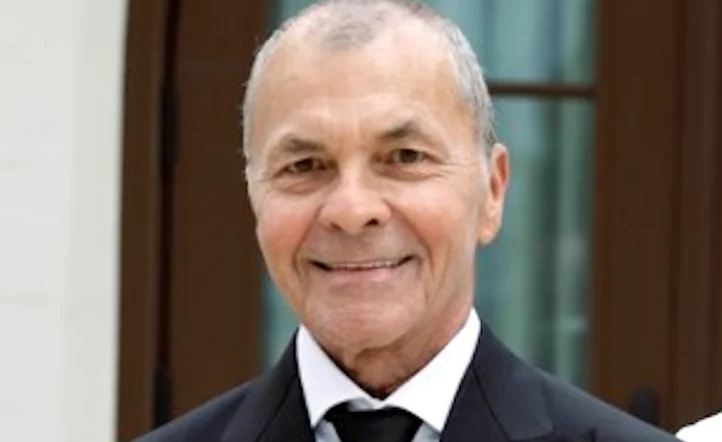
Ludwig A. Minelli, founder of Swiss right-to-die group DIGNITAS, has died by voluntary assisted dying just days before his 93rd birthday — a final act that reignites fierce debate in the US and UK over how we die, and who gets to decide.
Written by Swikblog Global Desk • Updated: 30 November 2025
When Ludwig A. Minelli founded the Swiss association DIGNITAS – To live with dignity – To die with dignity in 1998, he promised that people facing unbearable suffering would at least have one thing left: a choice. On 29 November 2025, according to the group’s own announcement, he made that promise personal. Minelli died “self-determinedly by voluntary assisted dying” at one of the clinics he helped create, just days before his 93rd birthday.
For his supporters, the decision is the ultimate expression of integrity: the founder of the modern assisted-dying movement living — and dying — by his own principles. For critics, it is a stark reminder of how far the practice has spread, and how fiercely contested it remains from Westminster to Washington.
Ludwig Minelli: the lawyer who turned a slogan into a system
Minelli did not start out as a campaigner for what opponents bluntly call “assisted suicide”. He worked first as a journalist and then as a human-rights lawyer, steeped in the language of autonomy and self-determination. In the late 1990s he concluded that those rights should apply not just to how we live, but to how we die. From a modest base near Zurich, he founded DIGNITAS and offered something that did not exist in most countries: a legally structured path out of life for people who felt trapped by illness, disability or chronic pain.
Under Swiss law, assisting another person to die is permitted so long as it is not done for selfish motives and the final act is carried out by the person themselves. Minelli spent decades building procedures around that framework: medical reports, psychological assessments, written declarations of intent and police oversight. Supporters say those layers of bureaucracy were not heartless but essential — guard rails to keep a deeply emotional decision from being exploited.
Over time, DIGNITAS became known far beyond Switzerland. By the mid-2020s, the organisation said it had supported thousands of deaths, many involving foreign nationals who felt they had no option at home. British newspapers routinely referred to “one Briton a fortnight” travelling to Zurich; US families quietly booked flights for loved ones when insurance, law and medicine ran out of answers.
A death that makes a global argument personal
Minelli’s own death is not just another case in a file. It is a symbolic moment for the entire right-to-die debate. Here is the man who argued, for decades, that people should control the timing and manner of their own deaths — and who now appears to have taken that control for himself.
The announcement from DIGNITAS describes him as a “pioneer and warrior” for dignity at the end of life and stresses that the association had already prepared its succession and will continue “in the spirit of its founder”. That spirit, however, was never universally admired. From the outset, Minelli was accused of turning Zurich into a hub for “suicide tourism” and of pushing the limits by accepting people whose suffering was psychological rather than strictly terminal.
Media investigations, court cases and political campaigns followed. Yet Minelli and his supporters often emerged on the winning side, including in cases at Switzerland’s highest courts and at the European Court of Human Rights. In one widely cited ruling, judges recognised that a person’s right to private life includes a degree of control over the circumstances of their own death — a line of reasoning that activists in the UK, US and elsewhere continue to use.
For a deeper historical look at how DIGNITAS operates behind closed doors, British readers have long turned to reporting such as The Guardian’s inside account of the Zurich clinic , which documented the atmosphere, paperwork and emotional weight surrounding these decisions.
Why this matters now in the UK and US
Minelli’s death lands at a highly charged moment. In the United Kingdom, peers and MPs are once again weighing versions of an assisted-dying bill that would allow terminally ill adults, under strict conditions, to request help to end their lives. Charities such as Dignity in Dying argue that British citizens should not have to fly to Zurich in order to exert control over their final days.
In the United States, the picture is fragmented. Several states — including Oregon, California, Washington, Vermont, Colorado and New Mexico — allow some form of physician-assisted dying for adults with a terminal prognosis and a limited life expectancy. Others ban it outright. Families caught between those regimes face wrenching decisions: move state, fight in court, or endure what they see as needless suffering.
Minelli never dictated what US or UK law should be, but his work in Switzerland has long served as a real-world test case. To his admirers, the DIGNITAS model shows that rigorous safeguards and clear rules can coexist with compassion. To his critics, it proves the opposite: that once any form of assisted dying is allowed, the boundaries inevitably stretch.
Dignity, suffering and the questions that won’t go away
At the heart of the argument lies a brutally simple question: who should decide when suffering has gone too far? Doctors? Lawmakers? Families? Religious authorities? Or the person living inside the body that hurts?
Minelli’s answer was always the last of those. DIGNITAS’s motto — “To live with dignity – To die with dignity” — is framed as a promise to individuals, not institutions. Yet the ethics are intricate. Disability campaigners warn that expanding assisted-dying laws too quickly could send a chilling message to people whose lives are already undervalued. Palliative care specialists worry that talk of a quick exit can overshadow the need to improve pain relief and support for those who want to live as fully as possible to the end.
Other health movements show how hard it can be to balance autonomy with protection. Swikblog recently explored this tension in the context of HIV, treatment access and stigma in its World AIDS Day 2025 analysis , where the language of dignity is also central. The fight for control over one’s own body — whether in illness, at the end of life or across a decades-long epidemic — rarely follows a clean moral script.
Supporters of assisted dying insist that robust laws, independent medical checks and a strong culture of palliative care can exist alongside the option of a planned death. Opponents counter that no paperwork can fully protect the most vulnerable from pressure, despair or subtle coercion. Minelli’s own organisation stresses that it also provides counselling, advance directives and suicide-prevention work — but those quieter services rarely make headlines.
How Minelli’s legacy will be judged
Even in death, Minelli will not escape controversy. To some, he will always be the lawyer who turned Zurich into a destination for people who wanted to die. To others, he is the man who offered a structured, supervised alternative to lonely, violent or desperate endings.
What is clear is that his final act removes any lingering doubt about his sincerity. The architect of DIGNITAS chose to walk the same path many of his clients took, in the same country, under the same principle of self-determination. For supporters, that is the definition of authenticity. For opponents, it is the starkest possible warning of where legal assisted dying leads.
The association he founded has already signalled that it will continue without him, guided by the constitution he helped draft and by the Swiss laws that enabled its existence. The rest of the world, however, is still deciding how far it wants to follow.
Whether you view Ludwig A. Minelli as a champion of dignity or as a troubling symbol of a world too quick to give up on life, his final decision ensures one thing: the debate he started will not die with him.

Make Swikblog your go-to source on Google for reliable updates, smart insights, and daily trends.