
Reggie Fils-Aimé has put new context around one of Nintendo’s strangest commercial pivots: the sudden rise of the NES Classic and SNES Classic during the Wii U’s collapse.
The former Nintendo of America president said Nintendo released the miniature retro systems in successive holiday seasons because the company needed products that could sell at meaningful volume while the Wii U struggled to find a broad audience. His comments, made during a New York University Game Center fireside chat, turn what many fans saw as a nostalgic celebration into something more revealing: a practical business response to a console generation that had gone badly wrong.
The Wii U is now remembered less as a total creative failure than as a commercial warning sign. It had strong Nintendo software, including Mario Kart 8, Super Smash Bros., Splatoon and Super Mario 3D World, but the system never escaped confusion over its identity. Many casual players did not clearly understand whether it was a new console or an accessory for the Wii, and the GamePad concept never created the same instant mass-market appeal that Wii Sports had delivered years earlier.
According to Nintendo’s own lifetime hardware figures, the Wii U finished at just 13.56 million units worldwide. That number sits far below the Wii’s 101.63 million units and below the Nintendo 3DS, which eventually reached 75.94 million units after its own slow start.
Reggie Fils-Aimé says Nintendo needed holiday hardware volume
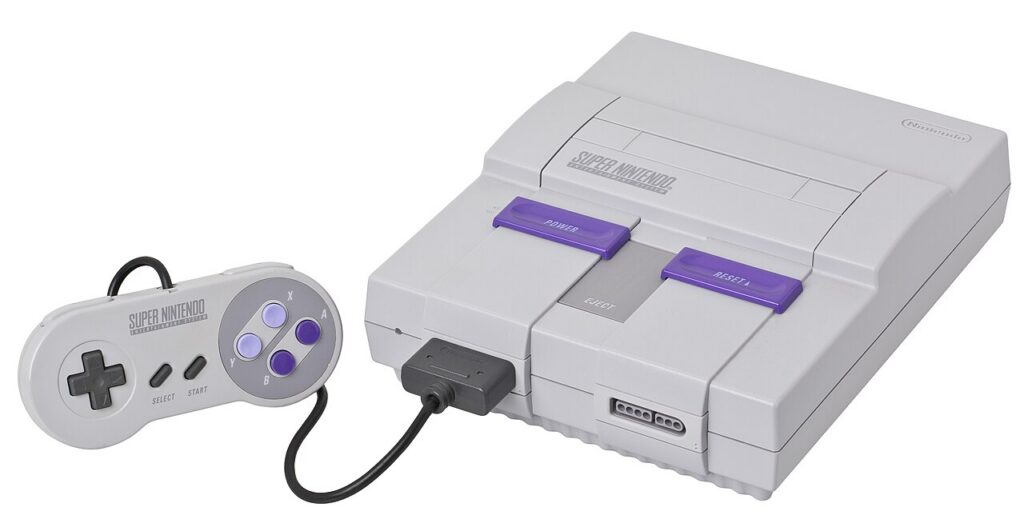
Fils-Aimé described the NES Classic and SNES Classic as “micro legacy devices” that helped Nintendo maintain business momentum when Wii U demand had weakened. In his telling, the decision was not simply about nostalgia. It was about keeping retailers engaged, giving customers something attractive to buy during the holiday season, and protecting the business while Nintendo prepared its next major move.
The timing is important. The NES Classic arrived in 2016, near the end of the Wii U cycle and just before the Nintendo Switch launched in March 2017. The SNES Classic followed in 2017, when the Switch had already started changing Nintendo’s outlook but demand for retro hardware remained intense.
The NES Classic came loaded with 30 games and immediately became difficult to find at retail. Its scarcity helped fuel a resale market, with fans frustrated by limited supply and sudden discontinuation plans in North America. The SNES Classic later continued the formula with a smaller library built around Super Nintendo nostalgia, including the long-unreleased Star Fox 2.
That success now looks less accidental. Nintendo had decades of beloved software, a strong emotional connection with older players, and a holiday-friendly product that did not require the company to persuade consumers to buy into the Wii U ecosystem. The Classic consoles gave Nintendo a clean way to monetize its history at a moment when its current home console was failing to carry the business.
The Wii U failure still shaped Nintendo’s biggest comeback
Fils-Aimé’s wider comments also show how much of the Wii U’s thinking survived inside the Nintendo Switch. The Wii U tried to connect living-room play with a second-screen handheld-style experience, but it split the idea across a console and GamePad. The Switch solved that problem more elegantly by making the same device work both on a TV and in portable mode.
That difference changed everything. The Wii U sold 13.56 million units across its life. The Switch went on to become one of Nintendo’s most successful platforms, and Nintendo’s latest official figures put Switch hardware at 155.92 million units. Even Nintendo Switch 2, listed at 19.86 million units as of March 31, 2026, has already moved beyond the Wii U’s lifetime total.
The new remarks also add a sharper edge to fan jokes about a possible N64 Classic. Nintendo has never announced such a device, and there is no confirmed sign that one is coming. But Fils-Aimé’s explanation makes the pattern clearer: if Nintendo ever leans heavily on another mini-console during a weak hardware period, fans may read it less as a simple retro celebration and more as a signal that the company wants reliable holiday sales outside its main console business.
For now, the NES Classic and SNES Classic stand as reminders of how Nintendo handled one of its toughest modern periods. The company did not save the Wii U with nostalgia hardware, but it used its past to steady the business long enough to reach the Switch era. In hindsight, those tiny retro boxes were more than collectibles. They were part of Nintendo’s bridge from one of its weakest consoles to one of its strongest.

Make Swikblog your go-to source on Google for reliable updates, smart insights, and daily trends.