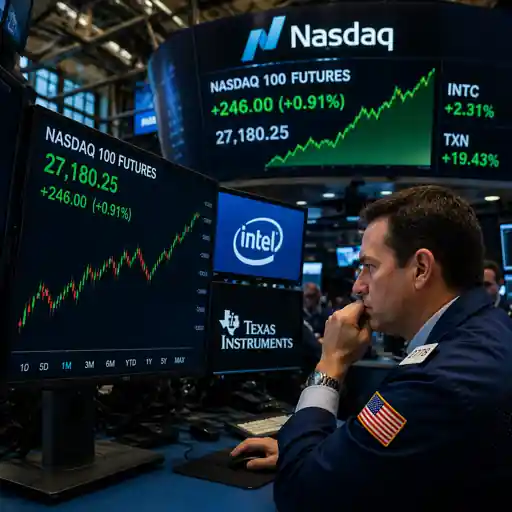
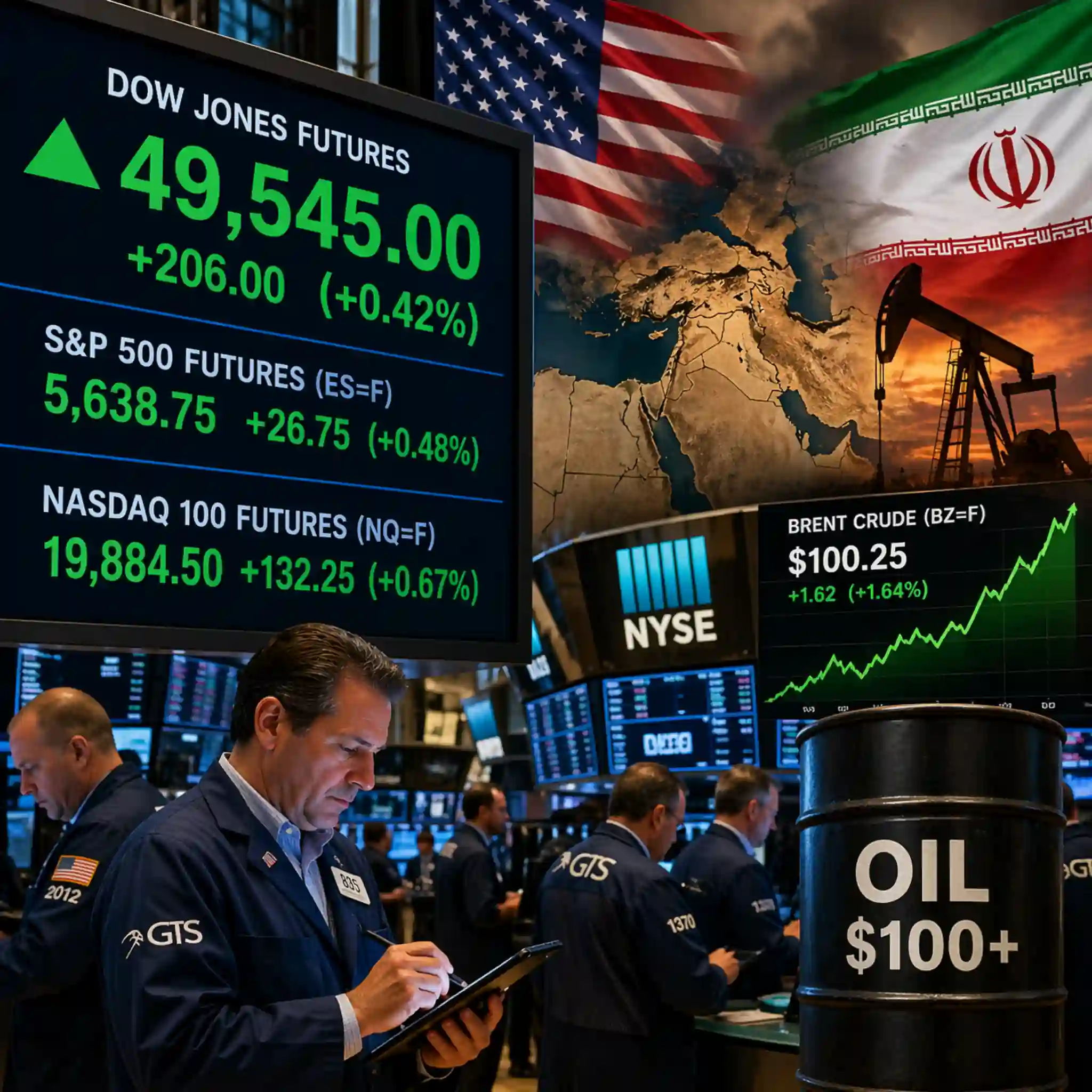
The S&P 500 slipped into the red on February 20, 2026, as a softer-than-expected growth print rewired the day’s risk calculus and pushed traders back into the familiar tug-of-war between “bad news is good news” rate-cut optimism and “bad news is bad news” earnings caution. The index traded around 6,904.90 after earlier strength, while investors repriced the near-term macro path and rotated across defensives, tech, and real assets.
At the center of the move was U.S. GDP: real output expanded at an annual rate of 1.4% in the fourth quarter, well below the 2.5% expectation highlighted in market chatter and live feeds. The shutdown-driven drag on government spending became the headline catalyst, turning what began as a routine “data day” into a positioning session dominated by rates, safety, and mega-cap leadership. For the full year, 2025 growth tracked near 2.2%, a step down from the prior year’s pace, reinforcing the idea that the economy is cooling but not collapsing.
GDP shock hits the tape and the index gives back gains
The key detail wasn’t only the headline 1.4% print; it was what it implied about the policy reaction function. A growth miss of that size tends to compress forward earnings expectations at the margins, but it also revives the “earlier and deeper cuts” narrative if inflation allows. That dual signal often produces choppy index action: futures dip, yields soften, then equities try to stabilize as traders model lower discount rates—until the next variable (inflation, geopolitics, or earnings) takes control.
The official advance estimate underscored that consumer spending and investment still contributed to growth, while declines in government spending and exports offset part of the gains. For readers tracking the source data directly, the U.S. Bureau of Economic Analysis’ release is here: advance GDP estimate for Q4 and full-year 2025.
SPY becomes the real-time scoreboard for risk appetite
For most investors, the fastest “market mood” indicator is still the SPDR S&P 500 ETF. With SPY trading near $686.41 during the session, intraday flows reflected a cautious tone: a GDP miss can prompt systematic de-risking, while discretionary investors look for relative strength in the same familiar areas—mega-cap tech, quality balance sheets, and cash-generative defensives. When markets wobble, liquidity tends to concentrate in the most crowded, most liquid vehicles, and SPY becomes the blunt instrument for hedging and quick exposure changes.
The Dow and Nasdaq complex also swung with the data, but the broader story was that equity investors were weighing whether slowing growth is a temporary shutdown distortion or a more persistent downshift into 2026. That distinction matters because it determines whether “lower rates” is an upside tailwind or a recession warning.
Gold steals the spotlight as the fear bid returns
While equities softened, gold surged again, pushing to around $5,044 (up roughly $66 on the day in the live coverage). The metal’s move captured two forces at once: geopolitical risk premium and a market increasingly comfortable with the idea of Fed cuts this year. Bullish long-range calls—$7,000 and even $10,000—circulated in commentary, reflecting how quickly macro narratives can migrate from “defensive hedge” to “momentum trade” when volatility rises.
Silver also remained elevated near $80.76, reinforcing that investors weren’t only hedging with gold; they were leaning into the broader precious-metals complex, where positioning can become reflexive when real yields fall and uncertainty rises.
Tech gets the “buy-the-dip” treatment into a major earnings week
Even on a risk-off day, Wall Street’s base case still leaned toward selective optimism in technology. Analysts highlighted valuations and relative multiples for mega-cap names, arguing that market leadership is likely to stay concentrated where earnings visibility is strongest. That matters for the S&P 500 because index performance increasingly hinges on a smaller set of heavyweight constituents that can overpower broad breadth weakness.
The next major catalyst is Nvidia’s earnings next week, which traders are treating as a sentiment anchor for AI-linked equities. With CEO Jensen Huang calling demand for the Blackwell platform “off the charts” in recent commentary, the market is essentially stress-testing whether AI capex remains on an upward glide path or starts to normalize. A strong print can re-ignite index momentum; a disappointment can amplify the GDP shock and pull the broader market lower through sector contagion.
What today’s tape is really pricing
By the end of the session’s key moves, the market’s message was straightforward: growth is slowing faster than expected, real assets are catching a safety bid, and equities are leaning on tech leadership to defend index levels. The debate now centers on whether the GDP miss is a shutdown-related air pocket that rebounds in early 2026, or an early signal that earnings expectations need to reset. That’s why the next set of macro prints—and a heavyweight earnings week—could determine whether this is a dip that gets bought or a crack that widens.
You may also like: Stock Market Today Feb 20, 2026: Dow, S&P 500, Nasdaq futures, PCE inflation and Iran tensions

Make Swikblog your go-to source on Google for reliable updates, smart insights, and daily trends.