
US Stocks
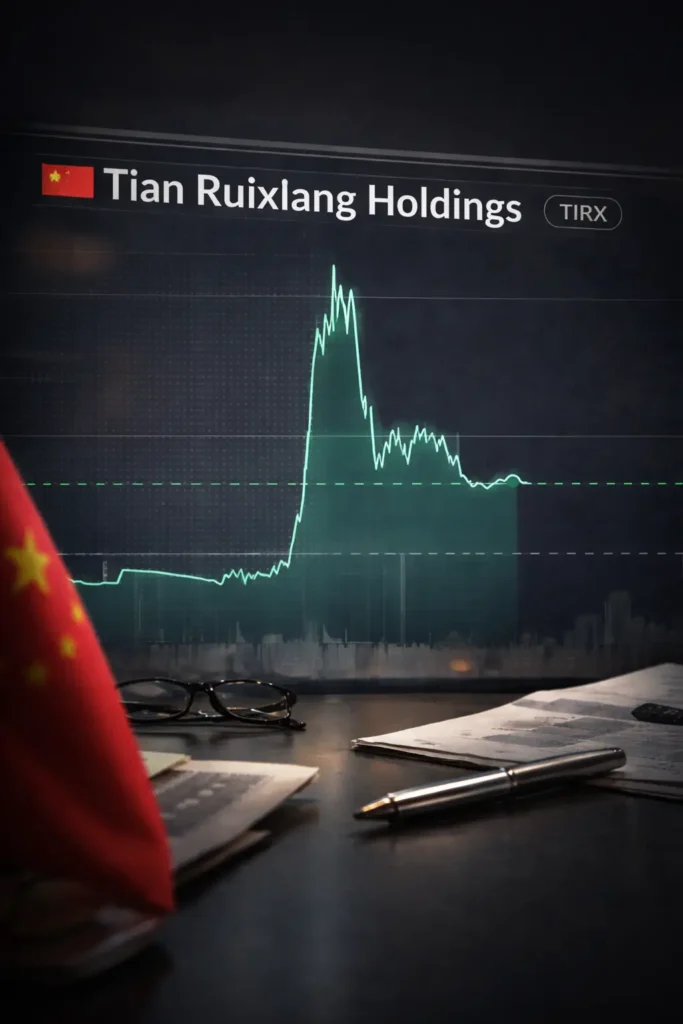
Shares of Tian Ruixiang Holdings stayed erratic on Thursday as traders continued to cycle through risk-on and risk-off bets in the wake of this week’s headline-driven surge. The Nasdaq-listed microcap changed hands around $0.1147 by late morning in New York, up roughly 14.7% on the session, after early swings that underscored how fragile price discovery can be in low-priced names.
The broader story for Feb. 6 was less about a new catalyst and more about the market digesting what came before. In the days after a dramatic spike that briefly pushed the stock into the most-active conversation, buyers and sellers have been fighting for control in a narrow band, with momentum traders looking for continuation while others treat each bounce as an opportunity to reduce exposure.
| Metric | Reading | What it signals |
|---|---|---|
| Last trade | $0.1147 | Price remains in penny-stock territory, where small flows can move the tape quickly. |
| Intraday change | +14.7% | Strong percentage moves can appear without corresponding fundamental updates. |
| Day range | $0.1126 to $0.1622 | Wide swings show active trading and unstable near-term levels. |
| Volume | 133,927,367 | Still heavy versus typical turnover, suggesting speculative participation remains elevated. |
| Previous close | $0.1000 | Current move builds from a low base, amplifying percentage changes. |
| Market cap (intraday) | $8.541M | Tiny capitalization can magnify both upside bursts and abrupt reversals. |
While Feb. 6 trading did not hinge on a fresh corporate update, the backdrop remains the same: earlier in the week the company disclosed a strategic agreement tied to a large Bitcoin figure and a partnership narrative that blended digital assets with artificial intelligence. That combination can be a magnet for speculative attention, especially when the share price is low enough to feel “cheap,” even if the underlying valuation and risks are anything but.
That earlier announcement matters today mainly because it changed the stock’s liquidity profile. Once a name becomes a momentum target, it can stay on screens longer than the news cycle, with repeated bursts of activity driven by technical levels, social chatter, and short-term positioning. In practice, that means day-to-day direction can turn on minutes, not quarters.
Fundamentals offer a stark contrast to the trading heat. Tian Ruixiang has recently reported negative earnings, and the absence of steady profitability leaves investors leaning on narrative rather than cash flow. In this corner of the market, that can matter more than usual: when sentiment cools, there is often little fundamental support to slow a retreat.
Where investors can double-check filings: The company’s public disclosures and periodic reports can be found through the SEC’s EDGAR database, which is typically the first stop for verifying deal structure, share issuance language, and risk-factor updates.
On the chart, the session’s shape told its own story. After an early push, the stock struggled to hold the upper end of the range, hinting at overhead supply from traders who bought the earlier surge and are now trying to exit into strength. At the same time, bids repeatedly appeared near the lower end of the day’s band, a sign that dip-buying interest remains present, even if conviction looks short-lived.
That tug-of-war leaves the stock in a familiar post-spike phase: volatile, liquid enough for rapid trading, and vulnerable to sharp air pockets if momentum fades. For readers watching from the sidelines, the clearest point is that Feb. 6’s jump sits inside a broader volatility regime rather than a fresh re-rating of the company’s core business.
Whether the stock can stabilize from here will likely depend on follow-through that turns headline attention into clearer execution, particularly around how any digital-asset-linked arrangement is implemented and reported. Until then, price action is likely to keep reflecting the mechanics of speculation more than the mechanics of an operating business.

Make Swikblog your go-to source on Google for reliable updates, smart insights, and daily trends.