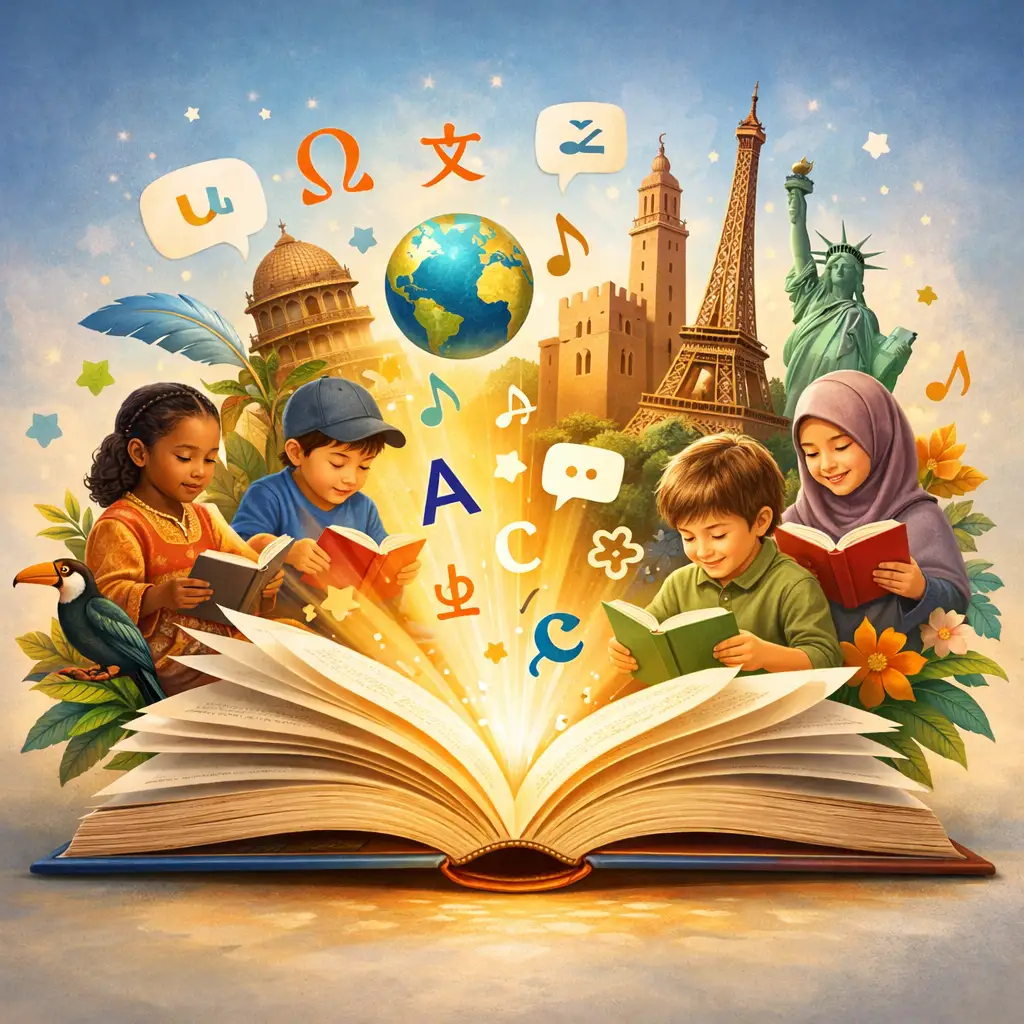

World Book and Copyright Day 2026 will be observed on April 23, as UNESCO once again brings global attention to the importance of books, reading and knowledge-sharing across cultures. This year, the focus remains firmly on literacy and multilingual learning, highlighting how books continue to act as a bridge between generations and societies in an increasingly digital world.
Often described as a window into another world, books introduce readers to new ideas, people and cultures. UNESCO has long emphasized that reading is not just an educational activity but a foundation for cultural exchange and human connection. The annual observance reflects this belief, encouraging people of all ages to engage with books and rediscover their role in shaping both personal growth and global understanding.
The date itself carries deep literary significance. April 23 was chosen by UNESCO in 1995 to honour some of the world’s greatest writers, including William Shakespeare, Miguel de Cervantes and Inca Garcilaso de la Vega. Over time, the day has evolved into a worldwide celebration of authors, publishers and readers, while also raising awareness about the importance of copyright protection in sustaining creative work.
Global focus on literacy and multilingual learning
For 2026, UNESCO’s messaging highlights the role of multilingual books in improving literacy outcomes. Research and education experience consistently show that children learn best when they begin reading in their mother tongue. By promoting multilingual learning materials, UNESCO aims to make education more inclusive and effective, particularly in diverse societies where language can often be a barrier.
This focus also aligns with the International Decade of Indigenous Languages (2022–2032), which seeks to preserve and promote linguistic diversity around the world. As part of this initiative, UNESCO has collaborated with international publishers to release the children’s book “What Makes Us Human” by Victor D.O. Santos and Anna Forlati in more than 30 languages. The project reflects a broader effort to ensure that knowledge and storytelling are accessible to children regardless of the language they speak.
Beyond education, multilingual publishing also plays a role in preserving cultural identity. When languages are represented in books, they are more likely to survive and thrive across generations. This makes books not just tools for learning, but also instruments of cultural continuity.
World Book Capital and global reading initiatives
An important part of the annual celebration is UNESCO’s World Book Capital programme, which recognises cities that actively promote reading and the book industry. In 2025, Rio de Janeiro in Brazil holds the title, while Rabat, Morocco, has been designated as the World Book Capital for 2026. These cities organise year-long programmes to encourage reading, support local publishers and improve access to books for all sections of society.
Since the initiative began in 2001 with Madrid, UNESCO has designated 26 World Book Capitals around the world. The programme is supported by major international organisations representing publishers, booksellers, libraries and authors, reinforcing a shared commitment to strengthening reading culture globally.
In addition, 63 cities within UNESCO’s Creative Cities Network have placed literature at the centre of their development strategies, further underlining the role of books in sustainable cultural and economic growth.
The global push for reading is also visible in local celebrations. Around the world, schools, libraries and communities organise activities such as book fairs, storytelling sessions, reading competitions and book exchange programmes. These initiatives aim to make reading more accessible and engaging, especially for young learners.
Why copyright remains central to the celebration
While the day celebrates books and reading, it also highlights the importance of copyright in protecting creative work. Copyright ensures that authors and creators receive recognition and legal rights over their work, supporting the sustainability of the publishing industry.
The Universal Copyright Convention, adopted in 1952 under UNESCO’s guidance and revised in 1971, played a key role in extending copyright protection internationally. In today’s digital environment, where content can be shared instantly, these protections remain essential for encouraging creativity and innovation.
By combining the celebration of books with awareness of copyright, UNESCO underscores the connection between creativity and protection — both of which are necessary for a thriving literary ecosystem.
More information about the global observance and UNESCO’s initiatives can be found on the official UNESCO World Book and Copyright Day page.
As World Book and Copyright Day 2026 approaches, the message remains clear: books continue to shape knowledge, preserve culture and connect people across languages and borders. In a rapidly changing world, their role in promoting literacy, understanding and creativity remains as important as ever.
You may like: Victoria Free Public Transport 2026 Fare Discount

Make Swikblog your go-to source on Google for reliable updates, smart insights, and daily trends.