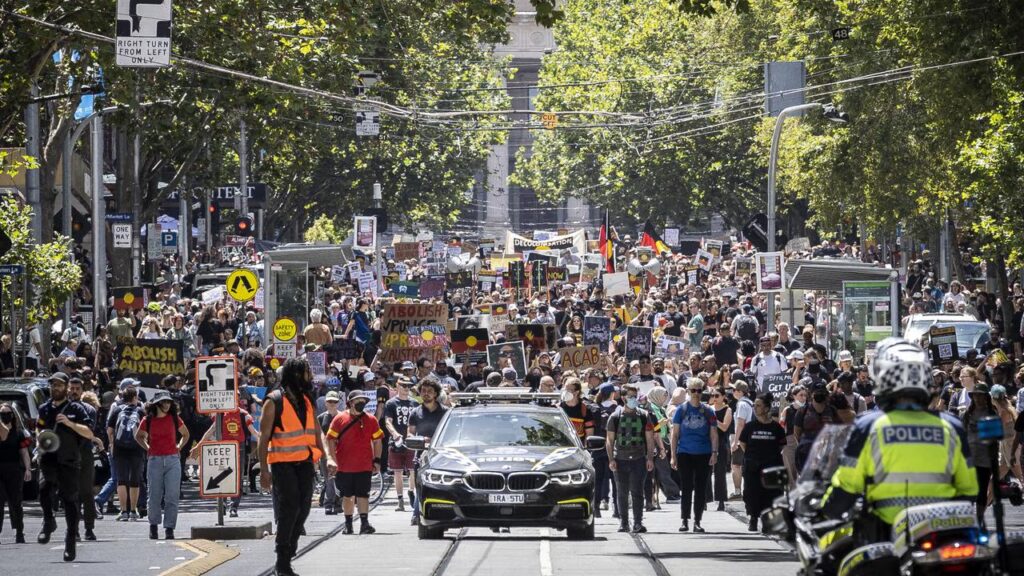

Melbourne’s CBD is seeing heavy foot traffic as Australia Day 2026 events unfold, with thousands gathering outside Victoria’s Parliament House for the annual Invasion Day rally. Victoria Police have established a significant presence around Spring Street and nearby transport hubs as marchers assemble before moving through the city. The demonstration is expected to cause road closures, tram disruptions and slower travel across parts of central Melbourne throughout the day.
The gathering is part of nationwide Australia Day protests taking place on January 26. While many Australians celebrate the national holiday, many Aboriginal and Torres Strait Islander people observe the date as Invasion Day or Survival Day, arguing that it marks the beginning of colonisation rather than a day of celebration.
Crowds build outside Victoria’s Parliament House
Groups carrying Aboriginal flags, banners and placards began arriving outside Parliament House early in the morning before scheduled speeches and a march through Melbourne’s CBD. Organisers say the event focuses on First Nations sovereignty, truth-telling, justice reforms and awareness of Indigenous deaths in custody.
The atmosphere has remained peaceful, with many participants attending to support Indigenous communities and listen to speakers discussing Australia’s history and the ongoing debate surrounding January 26. Families, community organisations and supporters from across Victoria have joined the rally alongside long-time campaigners.
Why police have increased their presence
Victoria Police have deployed additional officers around Parliament Station, Spring Street and major CBD intersections to manage pedestrian safety and minimise the risk of confrontations. Officers are directing crowd movements, monitoring transport corridors and maintaining separation between groups gathering for different events.
Authorities prepared for a busy day after counter-demonstrations linked to nationalist and anti-immigration groups were announced in several Australian cities. Similar policing strategies have been adopted elsewhere to reduce the chance of opposing crowds meeting in confined public spaces.
Why January 26 remains controversial
Australia Day continues to generate strong public debate because different communities attach very different meanings to the date. Many Australians celebrate national identity, citizenship ceremonies and community events. For many Aboriginal and Torres Strait Islander people, however, January 26 represents the arrival of the First Fleet in 1788 and the beginning of dispossession, making it a day of mourning, remembrance and protest.
These differing views have made Australia Day one of the country’s most closely watched annual public events, with demonstrations regularly attracting large crowds in major cities.
Demonstrations are taking place nationwide
Melbourne is one of several cities hosting major rallies today. Similar events are being held in Sydney, Brisbane, Perth, Adelaide and Canberra. In the national capital, police intervened after opposing groups gathered near Parliament House, separating demonstrators before the situation escalated. National authorities continue to monitor events as large crowds gather across Australia.
Travel advice for people heading into Melbourne
People travelling through Melbourne’s CBD should allow extra time as marches move through central streets. Temporary road closures, crowded tram stops and police-managed pedestrian diversions are expected around Parliament House, Bourke Street, Collins Street and surrounding areas. Travellers are encouraged to monitor official transport updates before leaving home.
Victoria Police has advised anyone attending public events to follow directions from officers and remain aware of changing conditions. The latest public safety information is available from the Victoria Police official website.
What happens next
As the march progresses through Melbourne, authorities are expected to continue monitoring crowd movements while organisers deliver speeches at scheduled locations. Any transport disruptions or public safety updates are likely to change throughout the afternoon as demonstrators move through the city.
For more coverage of breaking events across Australia, visit the latest Australia news section.
Today’s demonstrations once again highlight the ongoing national conversation about Australia’s history, identity and the future of January 26. While opinions remain deeply divided, authorities and organisers continue working to ensure events across Melbourne proceed safely.

Make Swikblog your go-to source on Google for reliable updates, smart insights, and daily trends.