
Markets • AI disruption • Software, Financials, Logistics
The “Dark Side of AI” Trade: Why Stocks Sold Off, Where the Fear Spread, and the Key Levels Wall Street Is Watching
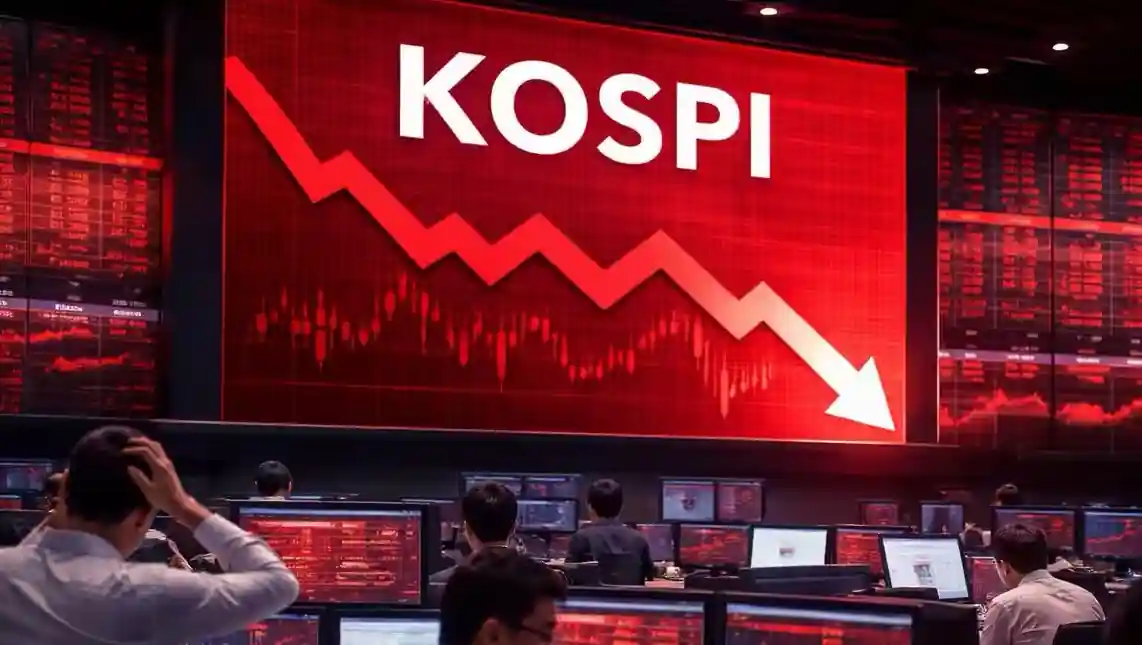
The past week’s drawdown wasn’t just a “tech is weak” story. It was a fast repricing of who gets disrupted by AI—especially businesses that earn premium fees for work that software can increasingly automate.
The market spent months rewarding AI winners. Then, in a matter of days, the narrative flipped into something colder: AI is also a competitor. Investors didn’t need proof that margins collapse tomorrow. They only needed a credible path where automation lowers the cost of “white-collar throughput” enough to pressure pricing, renewals, and fees.
Disruption moved from theory to valuation input. When investors start modeling fee compression and fewer paid seats, multiples don’t need a recession to fall—they just need uncertainty.
The first hit landed in enterprise software, where high gross margins have long relied on sticky workflows and expanding seat counts. But the fear spread quickly: wealth managers and logistics brokers also sold off as new tools promised to scale output without scaling headcount. That’s the direct threat—if the work is faster and cheaper, the next pricing negotiation becomes harder.
Logistics Freight and brokerage models got a wake-up call. When investors hear “we can move more freight without adding people,” they immediately translate it into a margin and pricing question. In a brokerage-style model, labor is a core part of the service. If software absorbs that labor, customers push for lower pricing and the market starts discounting the sustainability of peak margins.
Wealth management Advisory fees came under pressure in the narrative. AI-enabled tax and planning workflows raise an uncomfortable question: if recommendations, scenario analysis, and documentation are produced in minutes, how long do clients accept “old pricing” for outcomes that feel increasingly automated? That doesn’t mean the human advisor disappears—but it does mean pricing power becomes a debate again.
Software The epicenter remains enterprise software. The software selloff has been broad enough that the iShares Expanded Tech-Software ETF has slid roughly 22% year to date, with a growing focus on whether AI reduces seat counts, increases discounting, or shifts spending away from subscriptions into usage-based consumption. The market’s new obsession is simple: who controls the customer relationship when AI becomes the interface?
That’s why the debate now clusters around two competing outcomes. The bullish case says AI expands total demand and entrenches platforms through better bundles, compliance features, and workflow lock-in. The bearish case says AI lowers switching costs, encourages cheaper competitors, and normalizes margins that were once “through the roof.”
- If the move is overdone: leaders defend pricing with bundles and mission-critical workflows, and AI becomes an upsell rather than a substitute.
- If the move isn’t finished: renewals get choppy, discounts widen, and “seat math” turns negative as automation reduces paid headcount.
- The tell: watch for commentary about net retention, discounting, and whether usage-based pricing improves or hurts predictability.
Rates and volatility mattered, too. Cooler inflation data helped keep rate-cut expectations alive, and Treasury yields eased during the week. The 10-year yield finished around 4.04% and the 2-year around 3.40%, while the 30-year fixed mortgage rate was cited near 6.09%. Falling yields can support equities in general, but they don’t automatically rescue a theme that’s being repriced on business-model risk.
Meanwhile, volatility stayed elevated: the VIX closed at 20.60, signaling a market that’s jumpy and quick to punish uncertainty. For traders who track volatility closely, the official spot print is available directly on the Cboe VIX page.
- Pricing power: are companies defending ARPU, fees, and renewals—or leaning on discounts?
- Margin path: are savings reinvested, or does competition force price cuts that compress margins?
- Rotation signal: do inflows keep moving into defensives and “AI beneficiaries” outside pure-play software?
- Headline sensitivity: do AI announcements trade like mini-earnings events: sell first, analyze later?
Importantly, the week did not look like a market-wide panic. Leadership broadened in pockets while the “AI disruption basket” took the brunt of the hit. That’s why the next stretch may be less about a straight-line rebound and more about selective re-entry—favoring names with clear monetization, defensible data moats, and customer outcomes that aren’t easily commoditized.
Related reading on Swikblog: North London Derby: the moments that moved the match • Browse more at Swikblog.
External context (no-follow): Yahoo Finance market coverage and IGV fund facts.
Keep reading: North London Derby: the moments that moved the match. Or explore the latest posts on Swikblog.


Make Swikblog your go-to source on Google for reliable updates, smart insights, and daily trends.