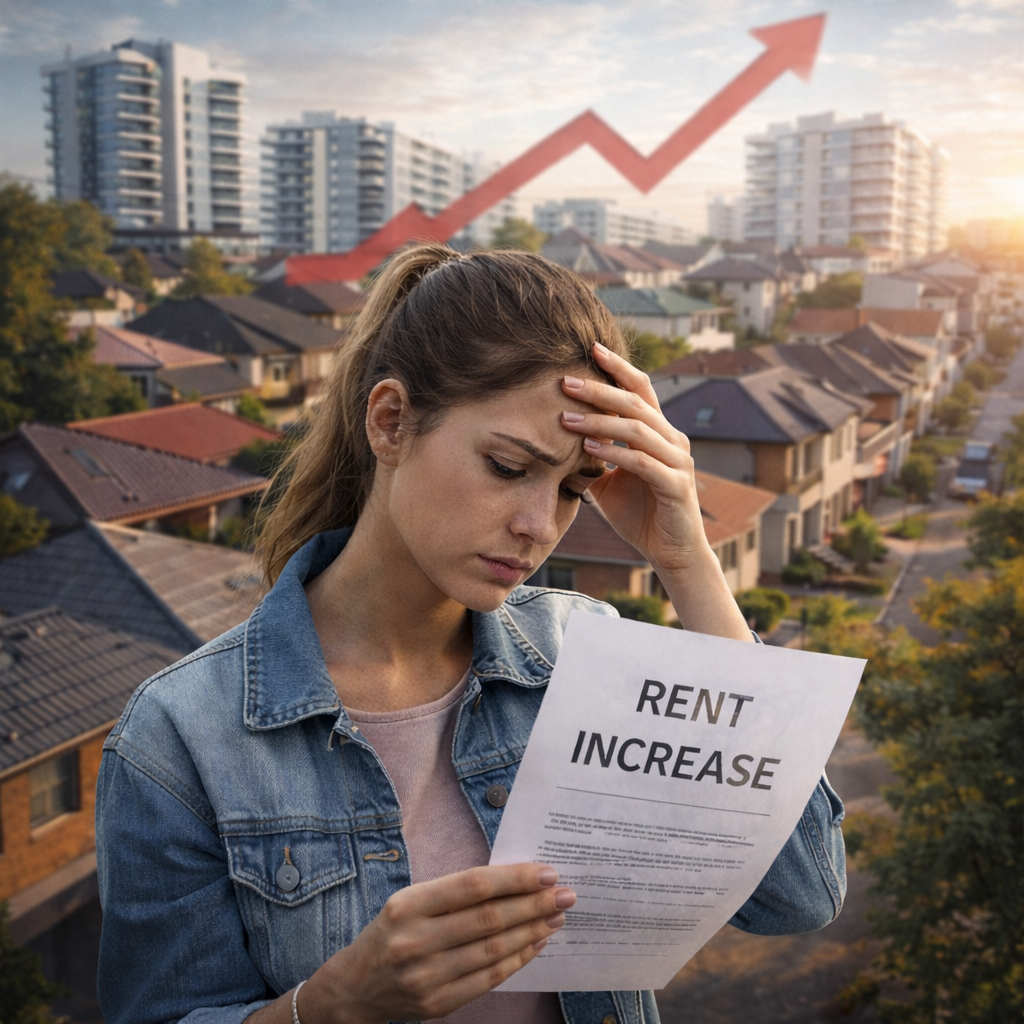

Australia’s property market is bracing for a potential shock as the federal government considers changes to negative gearing and capital gains tax (CGT) ahead of the 2026 budget. Early signals suggest these reforms could dramatically reshape investor behaviour — and in the worst-case scenario, push rents up by as much as 30% over the next two years.
The warning comes from within the property industry itself, where major players say even the discussion of tax changes is already unsettling investors. With rental markets across the country already under pressure, the timing has raised serious concerns about affordability for tenants.
Tax Reform Debate Intensifies Ahead of Budget
Treasurer Jim Chalmers is reportedly exploring adjustments to property tax settings, including reducing capital gains tax discounts and tightening negative gearing rules. Currently, investors benefit from a 50% CGT discount if they hold an asset for more than a year, while also being able to offset rental losses against their income.
Supporters of reform argue that these incentives have encouraged speculation in housing, pushing up property prices and widening inequality. Economists and policy advocates say changes are needed to create a fairer tax system and ease long-term housing affordability pressures.
But the property sector is pushing back hard. Industry leaders warn that removing these incentives could trigger a sharp shift in investor behaviour — one that may ultimately hurt renters the most.
Nathan Birch, head of a property management firm overseeing thousands of rentals, has warned that the impact could be immediate. According to him, many investors are already considering exiting the market due to economic uncertainty, and tax changes could accelerate that trend.
“These changes will scare a lot of investors into selling,” he said, adding that the timing could be a “massive shock” for the market.
Why Rents Could Spike 30%
The core concern is simple: fewer investors means fewer rental properties. If landlords begin selling in large numbers, rental supply could shrink quickly — at a time when demand is still rising.
Australia is experiencing strong migration, which continues to put pressure on housing. More people are entering the rental market, but supply is not keeping pace. If even a small percentage of investors exit, competition among tenants could intensify rapidly.
That imbalance between supply and demand is what could drive rents sharply higher. Some industry estimates suggest increases of up to 30% over two years if reforms are introduced aggressively.
There is also historical precedent behind these fears. During the mid-1980s, when negative gearing was temporarily abolished, rents surged significantly in certain Australian cities. While today’s conditions are not identical, the episode is often cited as a warning of what could happen if investor incentives are removed too quickly.
Investors themselves are not necessarily disputing the possibility of higher rents. Some have openly said that reduced tax benefits would force them to increase rental prices to maintain returns, effectively passing the cost onto tenants.
Others see opportunity. In a tighter market, landlords who remain could benefit from rising rents and stronger demand, even as overall supply declines.
Meanwhile, developers are facing their own challenges. Construction costs remain elevated, financing is tight, and some builders are already under pressure. If investor demand weakens at the same time, fewer new housing projects may be launched.
This could create a longer-term supply issue, making it even harder to stabilise rents in the future.
According to the Australian Bureau of Statistics, housing supply indicators have already shown signs of strain, adding to concerns that the system may not be able to absorb further shocks.
At the same time, critics of the current tax system argue that reform is overdue. They say negative gearing and CGT discounts disproportionately benefit wealthier investors and older Australians, while younger workers face higher tax burdens and rising housing costs.
The debate is ultimately about trade-offs. On one side is the need for a fairer and more sustainable tax system. On the other is the risk of worsening an already fragile rental market.
For renters, the stakes are immediate. With vacancy rates low and competition intense, any reduction in supply could translate into higher rents within months.
For investors, the uncertainty is already shaping decisions. Some are holding back on new purchases, while others are preparing to sell ahead of potential changes.
And for policymakers, the challenge is balancing long-term reform with short-term stability.
As the 2026 budget approaches, one thing is clear: negative gearing is no longer just a tax policy issue — it has become a critical factor in Australia’s housing crisis, with the potential to impact millions of renters and investors alike.
If you found this story interesting, you may like this report on Marc-Antoine Delage’s $385 parking fine backlash.

Make Swikblog your go-to source on Google for reliable updates, smart insights, and daily trends.