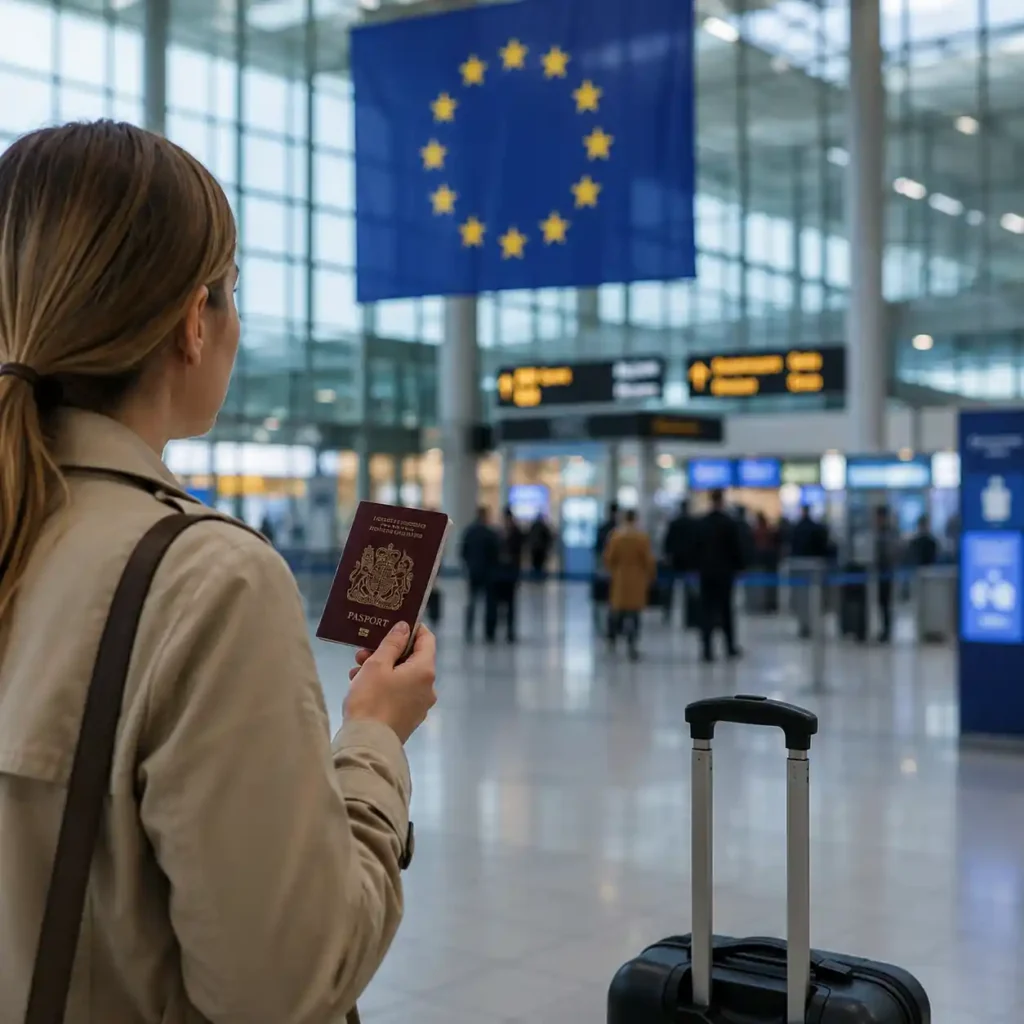

UK travellers planning holidays to Europe in 2026 do not need to apply for ETIAS yet, despite growing confusion around the EU’s new digital travel permit. The system is still expected to begin in late 2026, but it is unlikely to become a strict entry requirement for most British tourists before 2027.
What is ETIAS and What it means for European Countries?
ETIAS stands for the European Travel Information and Authorisation System. It is a new pre-travel screening system for visitors who can currently enter Europe without a visa. That includes British passport holders, along with travellers from the United States, Canada, Australia and dozens of other visa-exempt countries.
The permit is being introduced to give European border authorities more information about short-stay visitors before they arrive. It will apply to trips of up to 90 days in any 180-day period across most Schengen Area countries, including France, Spain, Italy, Germany, Greece, Portugal, Switzerland, Norway, Iceland and Liechtenstein. Ireland is not part of the Schengen Area, so ETIAS will not be required for UK-Ireland travel.
According to the official European Union ETIAS website, the system is expected to start operations in the final quarter of 2026. The EU has also said travellers do not need to take any action at this stage, and the confirmed launch date will be announced several months in advance.
Why ETIAS is not likely to be mandatory before 2027
The important detail is that the launch date and the mandatory date are not expected to be the same. Once ETIAS goes live, the EU plans to introduce a transitional period of at least six months. During that time, travellers will be encouraged to apply, but those without ETIAS should not be refused entry if they meet the usual border conditions.
That puts April 2027 as the earliest realistic point when ETIAS could become compulsory for many UK tourists, assuming the system begins in October 2026. A further grace period may then apply for some first-time travellers after the transition ends.
The delay is closely connected to Europe’s wider border overhaul. ETIAS depends on the EU Entry/Exit System, known as EES, which replaces manual passport stamping with digital records and biometric checks. That system collects details such as facial images and fingerprints from non-EU travellers entering and leaving the Schengen Area.
The EU Entry/Exit System is changing travel rules across 29 European countries, including the shift toward biometric border checks for UK and other non-EU visitors.
For travellers, the practical message is simple: ETIAS is coming, but it is not something you can apply for today. Any website claiming to process ETIAS applications before the official launch should be treated with caution.
How much ETIAS will cost and what travellers must provide
When applications open, ETIAS will cost €20 for travellers aged 18 to 70. Those under 18 or over 70 will still need travel authorisation, but they are expected to be exempt from the fee. An approved ETIAS will usually remain valid for three years, or until the linked passport expires, whichever comes first.
The application will be completed online or through an official app. Travellers will need to enter personal details, passport information, contact details, occupation, employer information and the purpose of their trip. Students will need to provide details of their educational institution.
Applicants may also be asked about serious criminal convictions, previous travel history and security-related matters. The EU says most applications should be processed within minutes, although some cases may take up to four days. If extra information or checks are needed, the process could take longer.
ETIAS will be linked electronically to the traveller’s passport, so there should be no need to print a separate document. Airlines and other carriers are expected to check whether passengers have the correct authorisation before travel once the requirement is fully enforced.
Having ETIAS will not guarantee entry. Border officers will still be able to refuse admission if a traveller fails to meet entry rules, including passport validity requirements. For UK tourists, passports should normally be less than 10 years old on the day of entry and valid for at least three months after the planned date of departure from the Schengen Area.
Read More
Travellers should also remember that ETIAS does not change the 90/180-day rule. A British visitor cannot spend more than 90 days in the Schengen Area within any rolling 180-day period unless they have a separate visa or residence permit.
For now, UK holidaymakers booking trips to Spain, France, Italy, Greece or Portugal in 2026 can continue travelling under existing rules. The safest approach is to follow official EU updates, avoid unofficial ETIAS websites, and check passport validity before booking. ETIAS will add one more step to Europe travel, but for most tourists, that step is still months away.

Make Swikblog your go-to source on Google for reliable updates, smart insights, and daily trends.