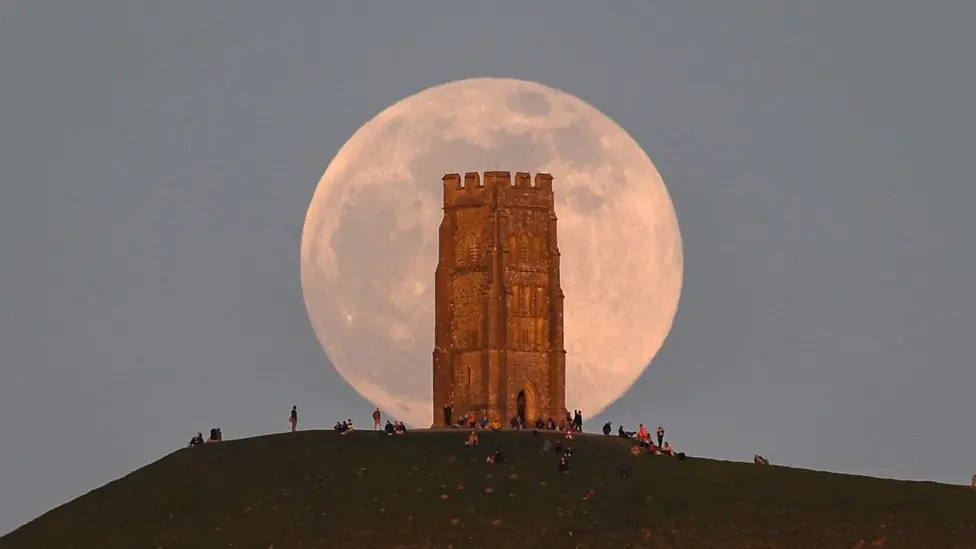

April’s full Pink Moon is one of those sky events that quietly captures attention every year. The name alone sparks curiosity — but if you’re expecting a rosy-colored Moon, you might be in for a surprise. The real story behind it is far more interesting, blending science, seasonal traditions, and even the way global festivals are timed.
How and When to See April’s Full Pink Moon
In 2026, the full Pink Moon will reach its peak at 03:12 BST on April 2. While that exact moment happens in the early hours, most people will get the best view the evening before.
On April 1, just after sunset, the Moon will rise low on the horizon. This is the ideal time to watch it. As it appears, it often looks larger than usual and takes on a deep orange or golden glow — a much more dramatic sight than when it’s high in the sky.
The reason for this color shift is simple physics. When the Moon is near the horizon, its light passes through a thicker layer of Earth’s atmosphere. Shorter wavelengths like blue and violet scatter away, leaving behind warmer tones like red and orange. That’s why the Moon looks more like a glowing ember than anything pink.
As the night progresses and the Moon climbs higher, it becomes brighter and returns to its familiar pale white color. So if you want the most visually striking moment, don’t wait — catch it as it rises.
For the best experience, choose a location with a clear view of the eastern horizon and minimal light pollution. Weather conditions will also play a role. Areas with clear skies will have the best visibility, while cloud cover can easily obscure the view.
Why It’s Called the Pink Moon — And Why It Matters
Despite the name, the Moon itself doesn’t turn pink. The term “Pink Moon” comes from seasonal traditions, not astronomy.
Historically, full Moons were named to mark changes in nature. April’s Moon was linked to the blooming of pink ground phlox, a vibrant wildflower that spreads across North America during early spring. The name reflects what’s happening on Earth rather than what’s happening in the sky.
This full Moon is also known by several other names around the world. Some call it the Sprouting Grass Moon, signaling new plant growth. Others refer to it as the Egg Moon, tied to themes of renewal and new life. The Fish Moon marks the time when fish swim upstream to spawn, while the Breaking Ice Moon points to the end of winter’s grip.
Beyond its cultural meaning, April’s full Moon plays a surprisingly important role in setting major calendar events. It directly determines the date of Easter.
Easter is celebrated on the first Sunday after the first full Moon following the spring equinox. In 2026, the equinox falls around March 20 (though the church traditionally fixes it as March 21). Since the Pink Moon is the first full Moon after this date, Easter is observed on April 5, 2026.
The same lunar cycle also influences the timing of Passover. In the Jewish calendar, months begin with the new Moon, and the full Moon marks the middle of the month. Passover begins during this full Moon period in the month of Nisan, aligning closely with the April full Moon.
If you want to explore how these lunar phases are calculated across calendars, you can read more on this detailed lunar cycle guide.
What makes the Pink Moon special isn’t just its name or timing — it’s the connection it creates between sky and season. Long before modern calendars, people relied on the Moon to track time, mark changes in nature, and guide important events.
Even today, that connection still feels relevant. Watching the Moon rise on a calm April evening is a simple reminder that some rhythms haven’t changed. The color may not be pink, but the experience is still worth stepping outside for.
You may like: 5 tonnes cocaine ship MV Raider case unfolds as vessel reaches Australia after major drug bust
::contentReference[oaicite:0]{index=0}
Make Swikblog your go-to source on Google for reliable updates, smart insights, and daily trends.