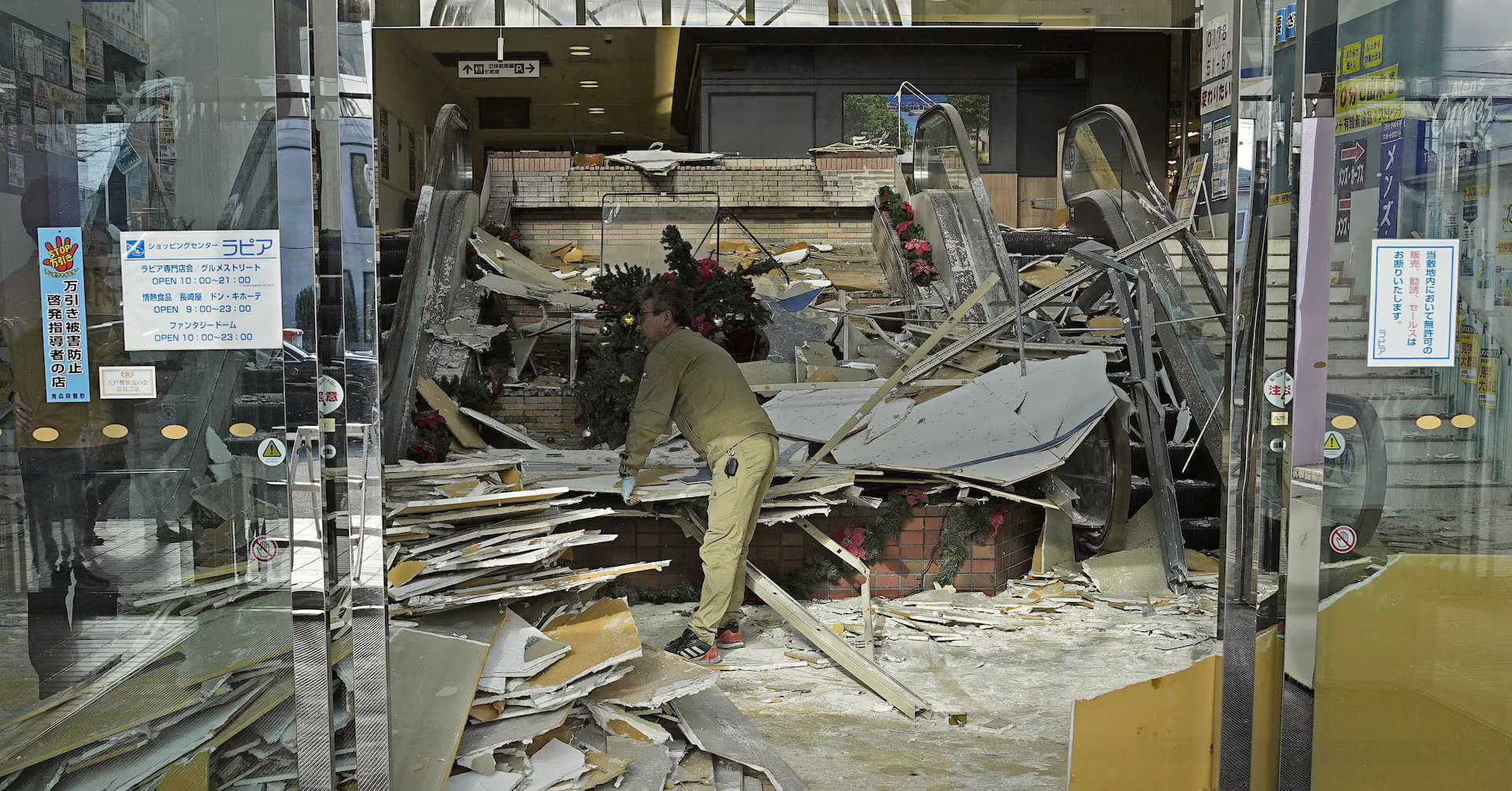
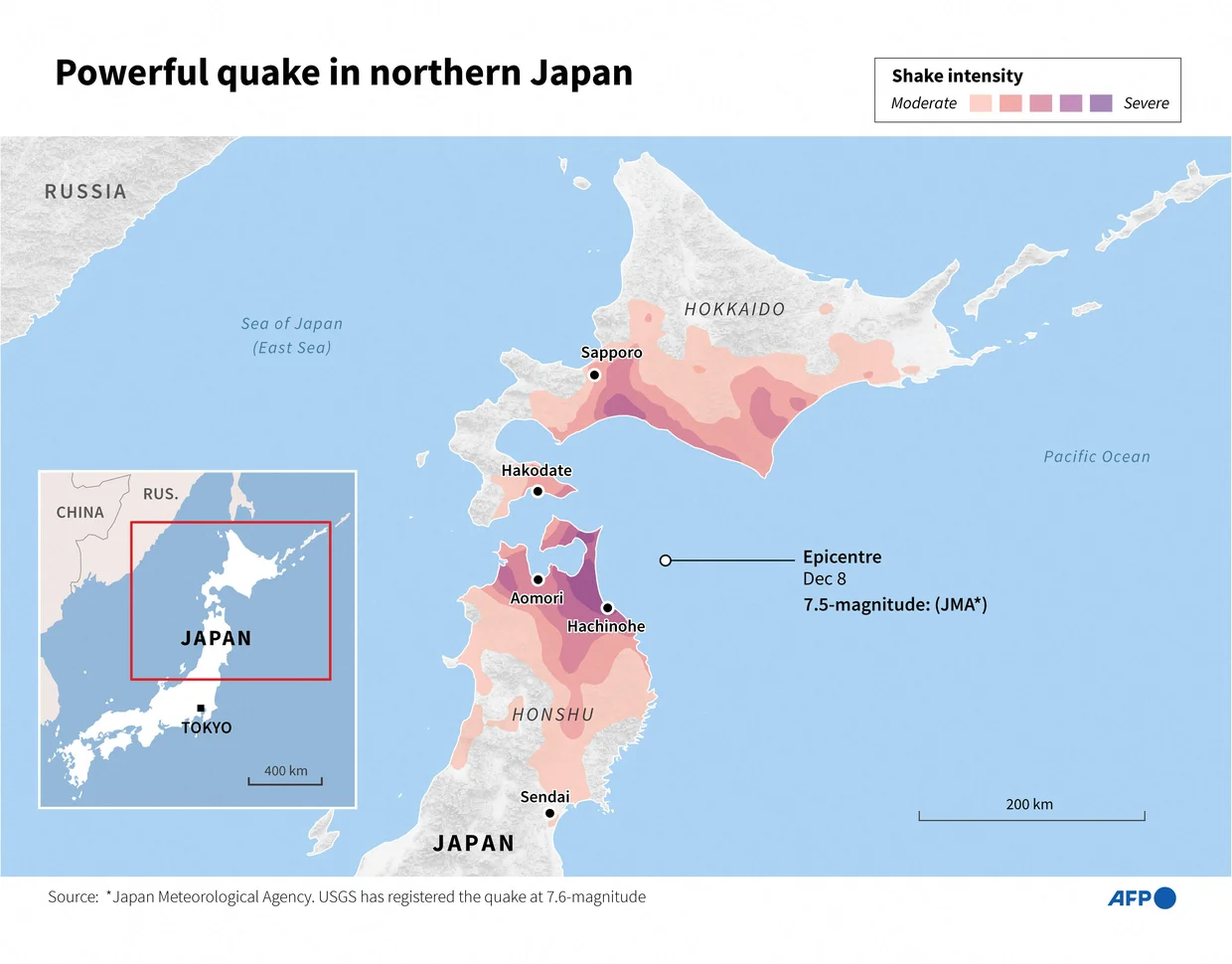
Japan is on alert after a powerful magnitude 7.5 earthquake struck off the northern Pacific coast, prompting officials to issue a rare megaquake advisory and warn of a short-term rise in the risk of a far larger event. The quake, centred off Aomori Prefecture near Hokkaido, caused at least 34 minor injuries, landslides, suspended train services and temporary power outages, according to BBC News.
The Japan Meteorological Agency (JMA) confirmed that a small tsunami — around 70cm — reached sections of the northeastern coastline, though no widespread flooding occurred. Local authorities urged residents to stay vigilant as aftershocks continued through Tuesday morning, NHK reported (NHK World).
While the physical damage remained limited, concern intensified as seismologists warned that the quake has temporarily increased the likelihood of a magnitude 8 or larger event in the coming week — a scenario that government modelling suggests could be catastrophic. According to AP News, the probability is still only around 1%, but significant enough for officials to activate heightened preparedness protocols.
What the megaquake advisory actually means
Japan’s Earthquake Research Committee evaluated the seismic stress changes from the M7.5 rupture and concluded that coastal regions from Hokkaido down to Chiba should stay on high alert for about a week. The advisory is not a prediction; instead, it acts as a public safety measure aimed at reinforcing readiness after a major offshore jolt.
Government simulations cited by Reuters show a worst-case megaquake in this trench system could unleash a tsunami up to 30 metres (98 feet), with potential casualties approaching 200,000 people depending on the time of day and location of the rupture.
Memories of 2011 linger — and officials want clearer communication
The quake struck in a region deeply scarred by the 2011 Tōhoku earthquake and tsunami, which killed nearly 20,000 people and triggered the Fukushima nuclear disaster. Many residents said the shaking and tsunami alerts immediately brought back traumatic memories.
Officials stressed that this advisory is not meant to cause panic, especially after last year’s poorly communicated Nankai Trough megaquake advisory sparked nationwide anxiety, panic buying and event cancellations. The government emphasised a balanced message this time: “Prepare, but do not panic.” Detailed updates are being published through JMA, local authorities and public broadcaster NHK to prevent misinformation from spreading on social media.
What residents along the Pacific coast are being told to do
Disaster management agencies have issued a set of urgent but practical recommendations, especially for coastal zones where evacuation speed can determine survival:
- Keep a fully stocked emergency bag ready at all times.
- Know the nearest tsunami evacuation route and rehearse it with family members.
- Secure heavy furniture and appliances to prevent injuries during aftershocks.
- Monitor alerts from JMA, local authorities and verified broadcasters such as NHK.
- If the shaking is long or strong: immediately move to high ground.
Japan’s upgraded early-warning systems, implemented after 2011, are capable of giving precious seconds to minutes of notice before major shaking or tsunami arrival — but officials say community preparedness remains the most critical factor.
You may also like
Japan Earthquake & Tsunami Warning: Latest 7.6 Updates
For now, life in Aomori, Hokkaido and the wider Pacific coastline is slowly returning to routine. But with a megaquake advisory in effect, residents are being asked to stay alert, stay informed and keep evacuation plans close at hand — just in case this 7.5 quake proves to be more than an isolated jolt.


Make Swikblog your go-to source on Google for reliable updates, smart insights, and daily trends.