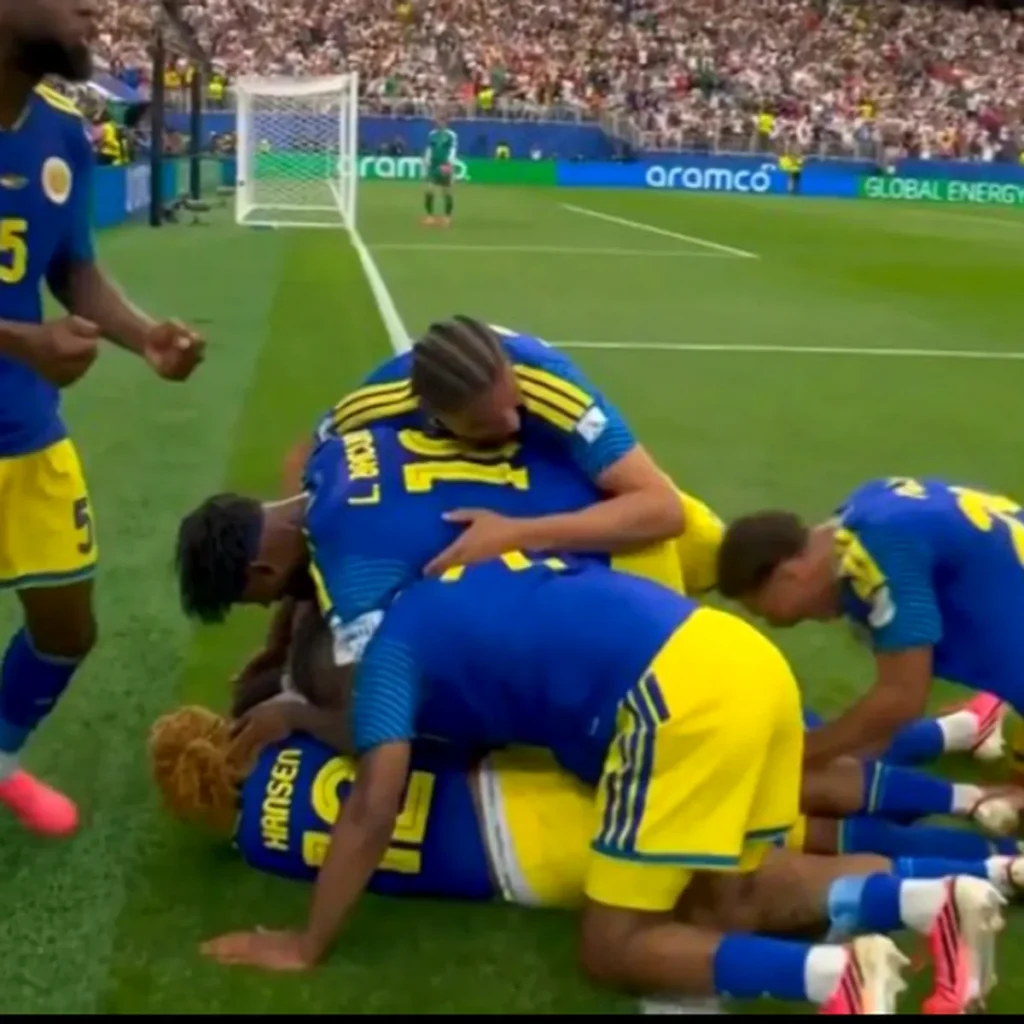

Livano Comenencia gave Curaçao the kind of World Cup moment that turns an underdog story into something much louder. Germany had gone ahead early, the match looked ready to follow its expected path, and then Curaçao broke forward with belief. Comenencia finished the move, the score moved to 1-1, and one of the smallest nations ever to reach the FIFA World Cup had stunned one of the game’s biggest powers.
The equaliser changed the mood of Germany’s Group E opener. For Germany, it was a reminder that history, possession and reputation do not settle a World Cup match on their own. For Curaçao, it was proof that their first appearance on this stage was not only a celebration of qualification. They had arrived with enough quality and courage to hurt a four-time world champion.
Comenencia’s name travelled quickly because the setting was so dramatic. Curaçao came into World Cup 2026 as a historic debutant, a Caribbean nation with a population of roughly 160,000 and a squad shaped heavily by Dutch football pathways. Against Germany, every forward run carried extra meaning. Comenencia turned one of those moments into a goal that immediately became part of Curaçao’s tournament identity.
Livano Shyron Liomar Comenencia was born in Breda, Netherlands, in February 2004 and represents Curaçao through his Curaçaoan roots. His football education began in the Netherlands, where he spent years inside PSV Eindhoven’s academy, one of the country’s most respected development systems.
That background helps explain why the equaliser did not feel like a random break from nowhere. Comenencia had been tracked as a serious young talent long before this World Cup. He came through PSV’s youth structure, played for Jong PSV and was once included among the notable young players of his age group in global youth-football coverage.
His career moved to Italy in 2023, when Juventus signed him for their Next Gen side. The move placed him inside a different football culture: more tactical, more physically demanding and built around the pressure of senior professional development. The club’s own announcement of Livano Comenencia’s Juventus Next Gen move marked another step in a career that had already moved beyond standard academy promise.
Comenencia later joined FC Zürich, continuing a club journey that has taken him from the Netherlands to Italy and Switzerland before this World Cup breakthrough. He has been used primarily on the right side of defence, though his development has also included midfield roles, giving him the kind of flexibility that is valuable in tournament football.
His international story is central to Curaçao’s wider rise. Like several players in the national team, Comenencia was born and developed in the Netherlands but chose to represent Curaçao at senior level. That connection has become one of the defining features of the island’s football project: a squad built from diaspora links, European club experience and a strong sense of national identity.
Before committing to Curaçao, Comenencia had represented the Netherlands at youth level. His switch gave Curaçao another player with elite academy grounding and professional European experience. In a World Cup group containing Germany, Ivory Coast and Ecuador, those details matter. Curaçao could not rely on emotion alone. They needed players who had lived inside demanding football environments.
That is why the equaliser against Germany carried so much force. It was not only a goal by an underdog. It was a symbol of how Curaçao reached this point: players formed across Dutch and European systems, now carrying the flag of a small Caribbean nation into matches where many expected them to be overwhelmed.
The match had already tested Curaçao’s nerve. Germany struck first through Felix Nmecha, and the danger for a debutant side was obvious. A quick German lead could have turned the game into damage limitation. Instead, Curaçao kept enough shape and belief to wait for the right break. When the chance came, Comenencia took it.
His finish did more than level the score. It changed Germany’s afternoon. Suddenly the favourite was not just controlling a match; it was being asked to respond to a team that had shown it could run, combine and punish space. On the World Cup stage, that kind of shift can make even the strongest teams look uncomfortable.
The goal also fits into an early tournament already shaped by sharp swings and unexpected moments. Swikblog’s coverage of Qatar and Switzerland’s penalty controversy involving Breel Embolo showed how quickly one incident can dominate the group-stage conversation. Comenencia’s equaliser against Germany belongs in that same early World Cup current: one moment, one player, one match suddenly rewritten.
For Comenencia personally, this was a different level of visibility. He is still only 22, but his path already includes PSV, Juventus Next Gen, FC Zürich and senior international football. A player known mainly to youth-football followers, club scouts and Curaçao supporters now has a World Cup goal against Germany attached to his name.
Curaçao’s presence at the tournament was historic before a ball was kicked. Comenencia’s goal gave that history a sharper edge. It was no longer only about the island reaching the World Cup. It was about the island landing a punch once it got there.
Whatever happens next in Group E, the equaliser will remain one of the images of Curaçao’s debut campaign. Comenencia carried a club journey through three European countries into the biggest tournament in football and turned it into a moment that forced Germany to look over its shoulder.
For Curaçao, it was belief made visible. For Comenencia, it was the night a young defender from Breda became the scorer of a World Cup goal that made the football world stop and look twice.

Make Swikblog your go-to source on Google for reliable updates, smart insights, and daily trends.