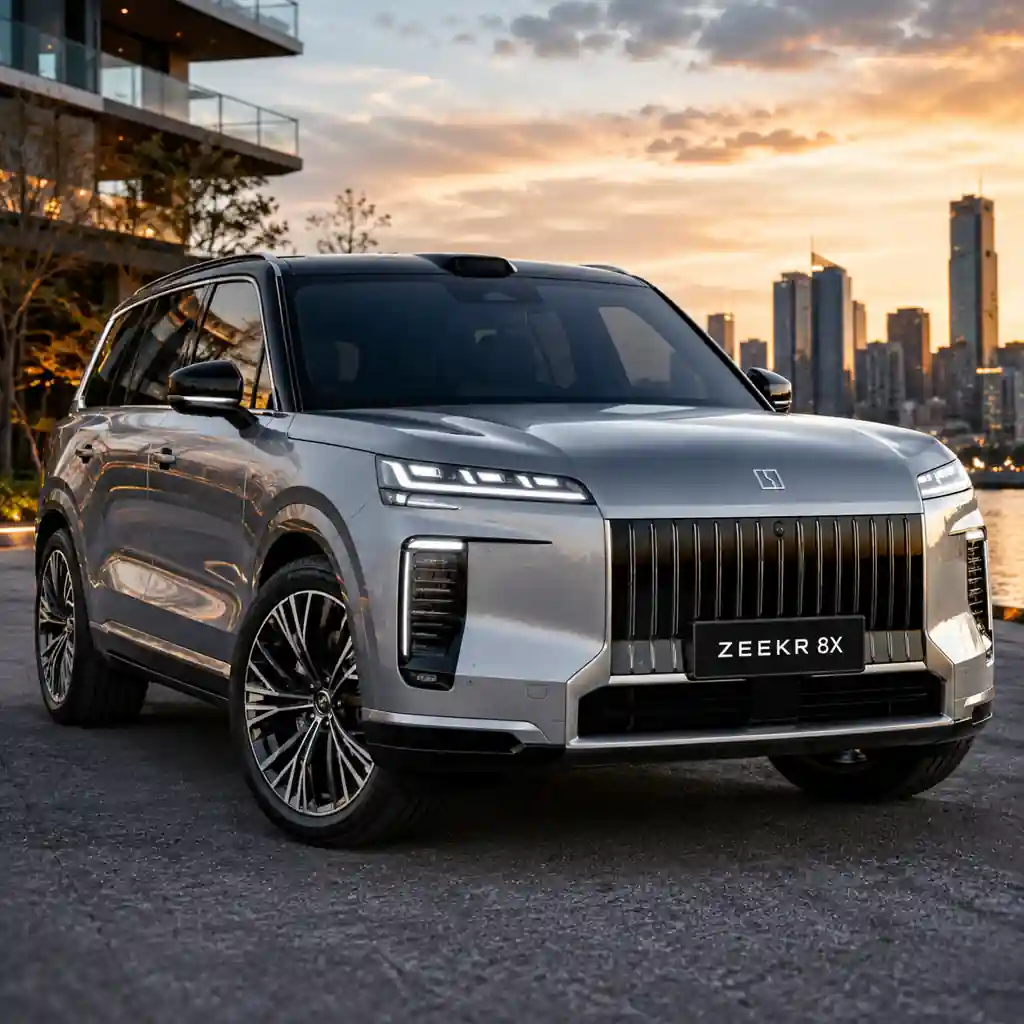

Zeekr is preparing to push deeper into Australia’s premium car market, and the upcoming Zeekr 8X could become one of its most important launches yet. The large plug-in hybrid SUV is expected to arrive as part of a broader product wave that may also include the flagship 9X SUV and the 7GT electric wagon.
For Australian buyers, the 8X is not just another luxury SUV from China. It is a high-output, technology-heavy hybrid designed to challenge the kind of models that usually dominate premium driveways, including the BMW X5, Audi Q7, Mercedes-Benz GLE and Range Rover Sport.
What makes the story more interesting is Zeekr’s timing. Demand for electric and hybrid vehicles continues to grow, but many luxury SUV buyers still want long-distance confidence, fast refuelling and strong towing-style flexibility. That is exactly where the Zeekr 8X is trying to position itself.
Read More
Why the Zeekr 8X Could Get Serious Attention in Australia
The headline figure is hard to ignore. In its most powerful form, the Zeekr 8X produces up to 1030kW and 1410Nm from a tri-motor plug-in hybrid system. That gives the SUV a claimed 0-100km/h time of just 2.96 seconds, putting it in territory normally reserved for supercars.
Even the dual-motor version is far from modest. It is reported to produce around 660kW and 935Nm, with a claimed 0-100km/h time of about 3.7 seconds. For a large luxury SUV, those numbers are enough to make established European brands pay attention.
The 8X also uses a much larger battery than most plug-in hybrids. Some versions in China are fitted with a 70kWh battery, while other variants may use smaller packs around 55kWh. That battery size gives the vehicle a claimed electric-only driving range of up to 328km on China’s CLTC cycle, although real-world Australian range would likely be lower.
Power comes from a combination of electric motors and a 2.0-litre turbocharged petrol engine. The petrol engine produces 205kW and 410Nm, and is mainly used as a range extender, though it can also help drive the front wheels at higher speeds.
This setup gives the 8X a different appeal from a full EV. It can run on electric power for daily driving, but still offers petrol-backed confidence for longer trips where charging access may be limited.
Price, Size and Rivals Could Be the Real Disruption
Australian pricing has not been confirmed, but early expectations suggest the Zeekr 8X could start below $100,000, with higher-spec versions potentially reaching around $130,000. If that happens, the SUV could sit near models like the BMW X3 and Audi Q5 on price, while offering the size and presence of much larger SUVs.
That could be a major advantage. Buyers looking at a BMW X5, Audi Q7 or Mercedes-Benz GLE may suddenly have a new option with more power, a bigger battery and a long list of luxury features at a competitive price point.
Expected variants may mirror the Chinese market, where trims include Max, Ultra and Ultra+. The flagship model is likely to be the one that attracts the most attention, thanks to its huge power output and performance claims.
The hardware also looks serious. Overseas versions of the 8X include dual-chamber air suspension, adaptive dampers, active roll control, 22-inch forged wheels, Michelin Pilot Sport 5 tyres and large performance brakes. The front brakes use six-piston calipers with 412mm discs, while the rear setup includes four-piston calipers and 364mm discs.
Those details suggest Zeekr wants the 8X to be seen as more than a feature-packed family SUV. It wants the model to feel like a genuine performance-luxury product.
The cabin is expected to follow the modern premium EV-style layout, with a large central screen, advanced connectivity, upscale materials and comfort-focused features. Depending on local specifications, buyers may see equipment such as ventilated seats, massage functions, premium audio, panoramic glass and advanced driver-assistance systems.
The larger Zeekr 9X will sit above the 8X and is expected to compete with vehicles such as the BMW X7, Mercedes-Benz GLS and Range Rover. It is likely to carry a price tag above $100,000 and serve as Zeekr’s flagship SUV offering.
However, the 8X may prove more important for volume and brand awareness. It lands in a part of the market where Australian luxury buyers are already active, but where value, technology and electrified powertrains are becoming more important.
There is one important catch. Because the 8X and 9X are plug-in hybrids rather than fully electric vehicles, they are not expected to qualify for Australia’s Fringe Benefits Tax exemption available to eligible EVs under novated lease arrangements. That could matter for company car buyers and salary-packaging customers.
Still, Zeekr’s hybrid strategy appears deliberate. The brand is targeting buyers who like the idea of electric driving but are not ready to rely completely on charging infrastructure. For large luxury SUVs, that remains a practical selling point.
The company is also preparing the 7GT electric wagon for Australia, with right-hand-drive production expected to support markets such as the UK. That model could arrive before the 8X and 9X, giving Zeekr another way to stand out in a market heavily focused on SUVs.
For readers tracking the latest automotive and technology trends, more updates can be followed on Swikblog, where new vehicle launches and market shifts are covered regularly.
Zeekr still needs to prove itself against long-established luxury names in Australia. Brand trust, servicing, resale value and real-world efficiency will all matter once the 8X reaches local roads.
But on paper, the Zeekr 8X has the right ingredients to create noise: supercar-level acceleration, a huge plug-in hybrid battery, premium hardware, strong electric driving capability and pricing that could undercut traditional rivals. If Zeekr gets the local launch right, the 8X may become one of the most closely watched luxury SUV arrivals in Australia.

Make Swikblog your go-to source on Google for reliable updates, smart insights, and daily trends.