
Written by Swikblog News Desk
A new scientific study is reshaping one of history’s most terrifying chapters: the Black Death may not have begun as a sudden outbreak, but as the long shadow of a catastrophic volcanic eruption that shook the world decades earlier. The finding challenges long-held assumptions about how Europe’s deadliest pandemic first took hold — and experts say the evidence is “game-changing”.
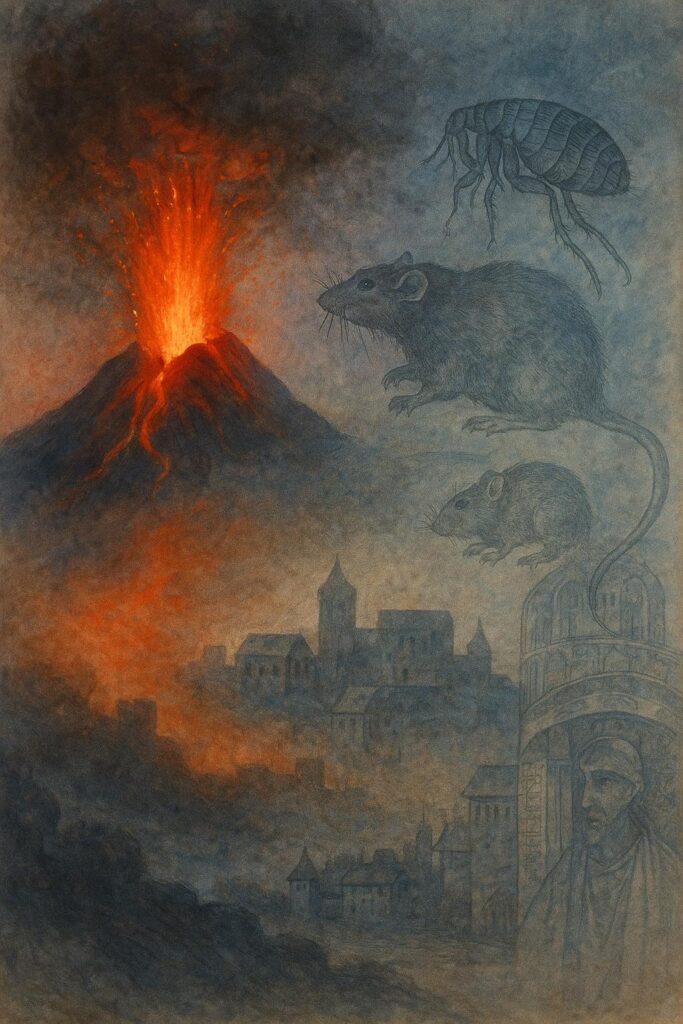
The research, first reported by BBC News, suggests that a major volcanic eruption in the 13th century unleashed a chain reaction of environmental disruptions. These included dramatic global cooling, crop failures, weakened immune systems across populations, and widespread ecological stress — all of which may have paved the way for Yersinia pestis, the bacterium that causes plague, to explode across continents.
How a Volcano Triggered the Perfect Storm
According to scientists, the suspected eruption — potentially linked to the massive Samalas volcano in Indonesia — released ash and aerosols that dimmed the sun and triggered a volcanic winter. Newly analysed ice cores reveal sudden temperature drops and long-lasting climate instability.
The resulting food shortages and famine created a deeply vulnerable population, while shifts in rodent behaviour and collapsing ecosystems likely encouraged plague-carrying fleas to move closer to human settlements. As Nature’s coverage notes, even trade routes and grain networks were disrupted in ways that inadvertently accelerated the spread of disease.
A Slow-Motion Disaster Decades in the Making
While the Black Death is typically dated to between 1346 and 1353, scientists now believe its origins stretch much further back. The eruption may have destabilized the climate and social structures for nearly a century, setting the stage for the pandemic that eventually killed up to 50 million people — nearly half of Europe’s population.
The new findings also challenge long-standing theories about plague reservoirs in Central Asia. Instead, the study suggests a more complex global network of environmental tipping points, where climate, ecology and human movement intersected in catastrophic ways.
Why This Matters Today
Understanding the role of climate shocks in historical pandemics is more than academic. It reflects how vulnerable societies can become when natural disasters collide with economic and public-health stress. As the world faces climate change and increasingly volatile natural events, scientists warn that these historical lessons carry new urgency.
For more on extreme natural events and their global impacts, you can explore similar scientific insights in our recent feature: North London Derby 2025 — Why It Went Viral.
The Mystery Continues
Although the research offers a compelling new theory, questions remain about the exact location and nature of the eruption. More ice-core analysis, archaeological evidence and climate modelling will be needed to fully map the path from volcanic ash to one of the most devastating pandemics in human history.
One thing is clear: the story of the Black Death is far from settled — and now, a volcano may take centre stage.

Make Swikblog your go-to source on Google for reliable updates, smart insights, and daily trends.