Piper Rockelle, who grew up online and built a massive teen audience, is now at the center of a new debate after sharing screenshots of eye-watering first-day earnings on the subscription platform.
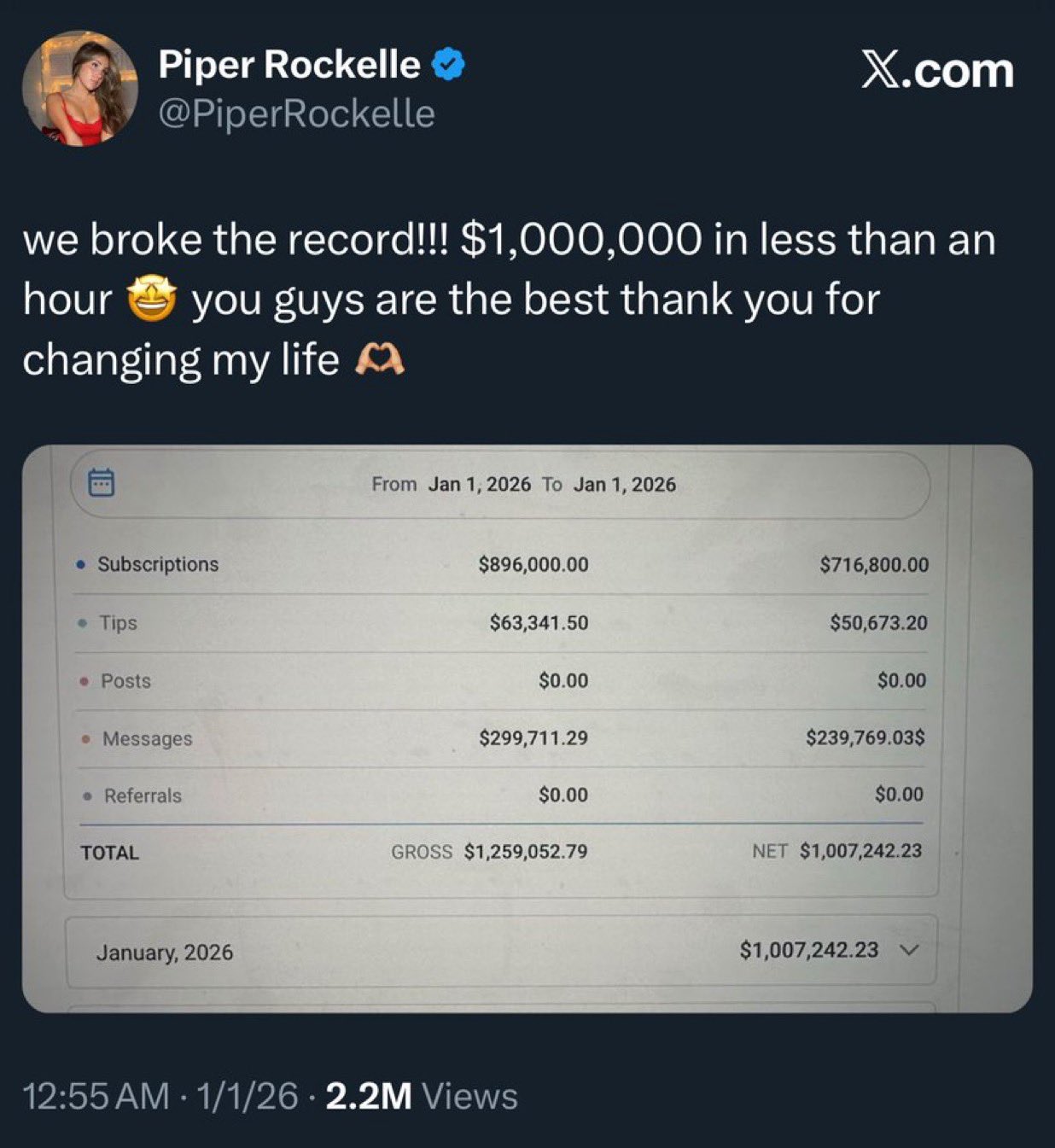
Piper Rockelle — best known for scripted, reality-style lifestyle videos that documented her teen years — has sparked widespread conversation after launching an OnlyFans account shortly after reaching adulthood and claiming she earned $3.4 million in the first 24 hours.
Rockelle turned 18 in August 2025 and opened the account on January 1, 2026, after promoting the launch in advance. Within a day, she posted what appeared to be platform screenshots showing a total that quickly spread across the internet. She later removed at least one post in which she claimed to have made $1.4 million in the first hour, and many users questioned whether the figures were genuine.
It’s important to note that OnlyFans does not publicly verify creator earnings, and screenshots can be difficult to authenticate. So while the numbers are being reported widely, the exact total remains unconfirmed outside of Rockelle’s own posts.
What Rockelle says the money came from
Alongside the headline-grabbing total, Rockelle’s breakdown suggested the majority came from subscriptions, with additional revenue from tips and paid messages — the three core income streams on the platform. The claims fueled immediate chatter because they imply an unusually large paying audience on day one, at a scale typically associated with the highest-earning creators.
Some online commenters celebrated the financial success as a business win for a creator taking control of her adult career. Others raised concerns about the nature of the audience — particularly because Rockelle’s fame was built while she was still a minor and her content was marketed to younger viewers.
Why the reaction has been so intense
The controversy isn’t about legality — Rockelle is an adult — but rather about an uncomfortable cultural overlap: a creator who became famous as a child now monetizing an adults-only platform immediately after turning 18.
Critics argue this can create a “countdown” dynamic where parts of the internet appear to wait for child stars to become legal adults. Supporters counter that adult creators should be free to choose how they earn money, and that blaming the creator ignores deeper issues about platforms, audiences, and the lack of clear guardrails for young influencers transitioning into adulthood.
That tension — autonomy versus exploitation — is exactly why the story is moving beyond celebrity gossip and into a broader conversation about kidfluencing, parental management, and how online fame reshapes a young person’s options later in life.
A quick recap of Rockelle’s rise
Rockelle started posting videos as a child and grew into one of the most recognizable youth creators of the last decade, building a huge following across YouTube, TikTok, and Instagram. Her videos often followed a glossy, “day in the life” formula: pranks, challenges, friendship drama, and relationship storylines designed for a young audience.
Her brand also expanded into a rotating group of teen creators known as the “Piper Squad” (also referred to as “The Squad”), a format that helped boost engagement and turned her channel into a youth-influencer ecosystem.
The legal and documentary backdrop
Rockelle’s name has been tied to controversy for years, largely connected to allegations made by former members of her creator group about their experiences working around her brand and management. In 2022, a lawsuit was filed by former squad members against Rockelle’s mother, Tiffany Smith, alleging mistreatment and unfair compensation. Smith denied wrongdoing, and the dispute was later resolved through a settlement in 2024.
The broader saga was also explored in Netflix’s docuseries Bad Influence: The Dark Side of Kidfluencing, which examined allegations and wider concerns around the business of child influencers. The series amplified scrutiny around how child-led online empires are built — and who benefits most when the money starts flowing.
In a separate, long-form profile, Rockelle has spoken about wanting to take more control of her life and brand as an adult — including the process of shifting ownership of her company into her own hands. (You can read that reporting via Teen Vogue’s profile.)
What we can (and can’t) confirm
There are three facts that appear consistent across reports: Rockelle is now 18, she launched an OnlyFans account on January 1, 2026, and she publicly claimed extremely high earnings immediately after launch. The part that remains uncertain is the precise total — and whether the screenshots reflect finalized revenue, gross receipts, projections, or another dashboard view.
Without independent verification, it’s best to treat the $3.4 million figure as a claim, not a confirmed financial record. At the same time, the speed at which the story spread highlights how creator-economy numbers — even disputed ones — can dominate the news cycle when the person involved is a former child star.
The bigger story behind the headline
Rockelle’s OnlyFans launch is trending for more than a shocking dollar amount. It’s a flashpoint in a long-running, unresolved issue: the internet still lacks strong, modern protections for kids whose “job” is being watched.
Traditional child entertainment has formal structures — permits, schooling rules, labor limitations — but kidfluencing often exists in a patchwork. The result is a generation of creators who grew up on-camera and then reach adulthood carrying an audience that remembers them as children. When those creators pivot into adult monetization, the public reaction can be swift, emotional, and deeply divided.
Whether Rockelle’s claimed earnings are perfectly accurate or not, the debate around her launch is likely to continue — because it’s not just about one creator. It’s about the modern influencer pipeline, and what happens when childhood fame becomes an adult business overnight.

Make Swikblog your go-to source on Google for reliable updates, smart insights, and daily trends.