
The London Marathon 2027 ballot has opened, and this year’s entry window carries unusual weight. For thousands of runners, it is the first step towards one of the most famous finish lines in world sport. For organisers and London itself, it may also become a test case for whether a major marathon can grow dramatically without losing the public support that makes it work.
The ballot opened at 9am BST on Friday, April 24, 2026, and is scheduled to close at 4pm BST on Friday, May 1, 2026. Applicants can enter through the official TCS London Marathon website. Results are expected to be sent by email in early July, giving successful runners several months to prepare for race day in April 2027.
For most people, the ballot remains the simplest way to apply. It is a random draw, so entering early does not improve the chance of success. The important part is submitting the application before the deadline, using correct personal details and checking all confirmation emails carefully.
Why the 2027 ballot is getting more attention
The 2027 edition could be unlike any London Marathon before it. Organisers have been exploring a one-off two-day format that could allow around 100,000 participants across the weekend. That would be a major increase from the usual single-day structure and would make the ballot especially important for runners who have missed out in previous years.
The idea is not just to add more people to the course. The proposed structure would separate parts of the elite and championship programme while still keeping mass participation races on both days. One day could give greater focus to women’s elite, championship and good-for-age fields, while the other would include men’s races and another large public field.
That matters because visibility in marathon running is not only about who wins. It is also about how the event is presented to spectators, broadcasters and casual viewers. A two-day programme could give organisers more room to tell different sporting stories, while giving ordinary runners more possible places.
But bigger is not automatically better. The London Marathon has become successful partly because it feels like a shared city moment. Streets fill with supporters, charities use the day as a fundraising engine, and local communities become part of the course. Stretching that atmosphere across two days could create a bigger celebration, but it could also test the patience of residents and businesses along the route.
The £400m question facing London
The financial argument is one of the strongest reasons the proposal is being discussed seriously. Organisers believe a two-day event could raise more than £130 million for charities and create about £400 million in wider social and economic benefit. For hotels, restaurants, transport operators, local traders and charity partners, a bigger marathon weekend could mean a significant uplift.
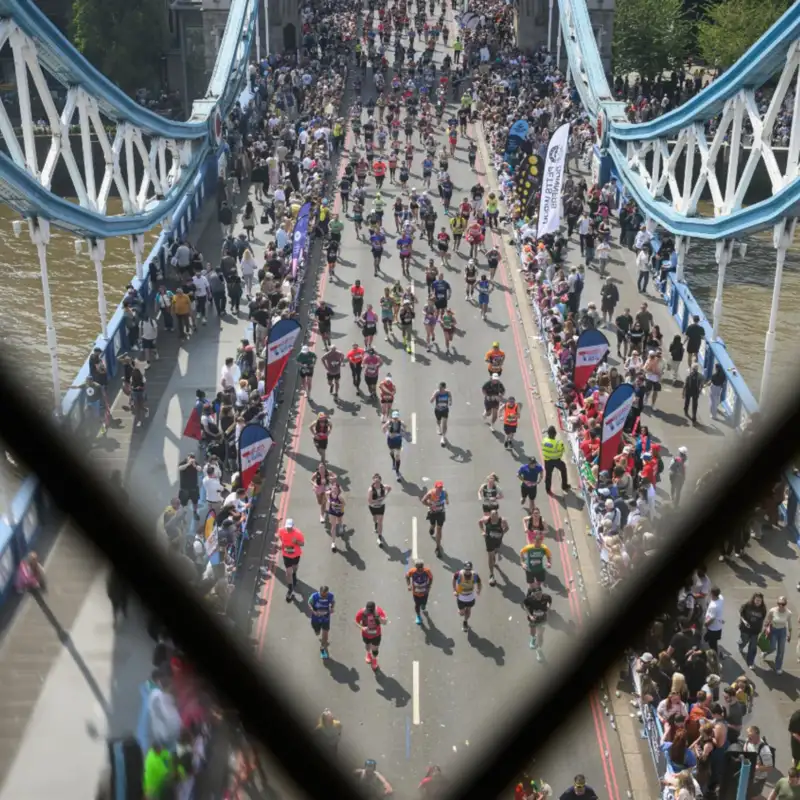
Still, the practical demands would be huge. London’s marathon route already affects areas including Greenwich, Blackheath, Woolwich, Charlton, Tower Bridge, Canary Wharf and central London. Road closures, bus diversions, crowd control, medical cover and policing all need careful planning for a single day. Repeating that operation across a weekend would require deeper coordination between race organisers, boroughs, emergency services, Transport for London, the mayor’s office, broadcasters and landowners.
This is why approval cannot be treated as a formality. A two-day London Marathon would need to work for runners, but also for people who are not taking part. Residents still need access, emergency vehicles need routes, businesses need clarity, and spectators need safe transport options. If those pieces do not fit together, the event could face criticism even if the race itself succeeds.
That balance is central to the debate. The London Marathon has spent decades building goodwill. It is admired because it combines elite racing, public participation and charity fundraising in a way few events can match. Any expansion must protect that reputation rather than simply chase a larger number.
What runners should do now
Anyone hoping to run in 2027 should enter the ballot before the May 1 deadline and avoid waiting for final decisions on the two-day proposal. Even if the expanded plan is approved, demand is likely to remain extremely high. More available places may improve the odds, but extra publicity could also bring more applications.
Runners who are serious about taking part should consider backup options. Charity places are often the most practical route for those who miss out in the ballot, although they usually involve a fundraising target. Good-for-age and championship entries may suit faster runners who meet qualifying standards. Running clubs may also have limited allocations, depending on eligibility and local arrangements.
Applicants should also be alert to fake entries. London Marathon places cannot be safely bought from strangers online, and unofficial resale offers should be treated as scams. The safest approach is to use only official race channels, recognised charities or approved entry routes.
The months after ballot results are also important. Successful runners should start with a realistic training plan rather than rushing into high mileage. Beginners in particular need time to build endurance, manage recovery and choose shoes, nutrition and race-day kit that suit them. The London Marathon is famous for its atmosphere, but it is still 26.2 miles and demands proper preparation.
For unsuccessful applicants, the story does not end with the ballot email. Charity routes, future ballots, volunteering and shorter London Marathon Events races can all keep runners connected to the event. The popularity of the ballot is frustrating, but it is also proof of the race’s status.
The 2027 London Marathon ballot is therefore more than an entry form. It sits at the centre of a wider decision about access, scale, fundraising and London’s ability to host one of the world’s biggest running weekends. If the two-day plan goes ahead, it could create a historic edition with more runners and more money for good causes. If it does not, the ballot will still remain one of the most sought-after tickets in mass participation sport.
For now, the best advice is simple: apply on time, use official channels, and prepare for strong competition. The 2027 race could become a landmark moment for the London Marathon — but the first step is getting into the ballot before it closes.
You may like: ANZAC Day 2026 Dawn Service Times and Parade Routes Across Australia

Make Swikblog your go-to source on Google for reliable updates, smart insights, and daily trends.