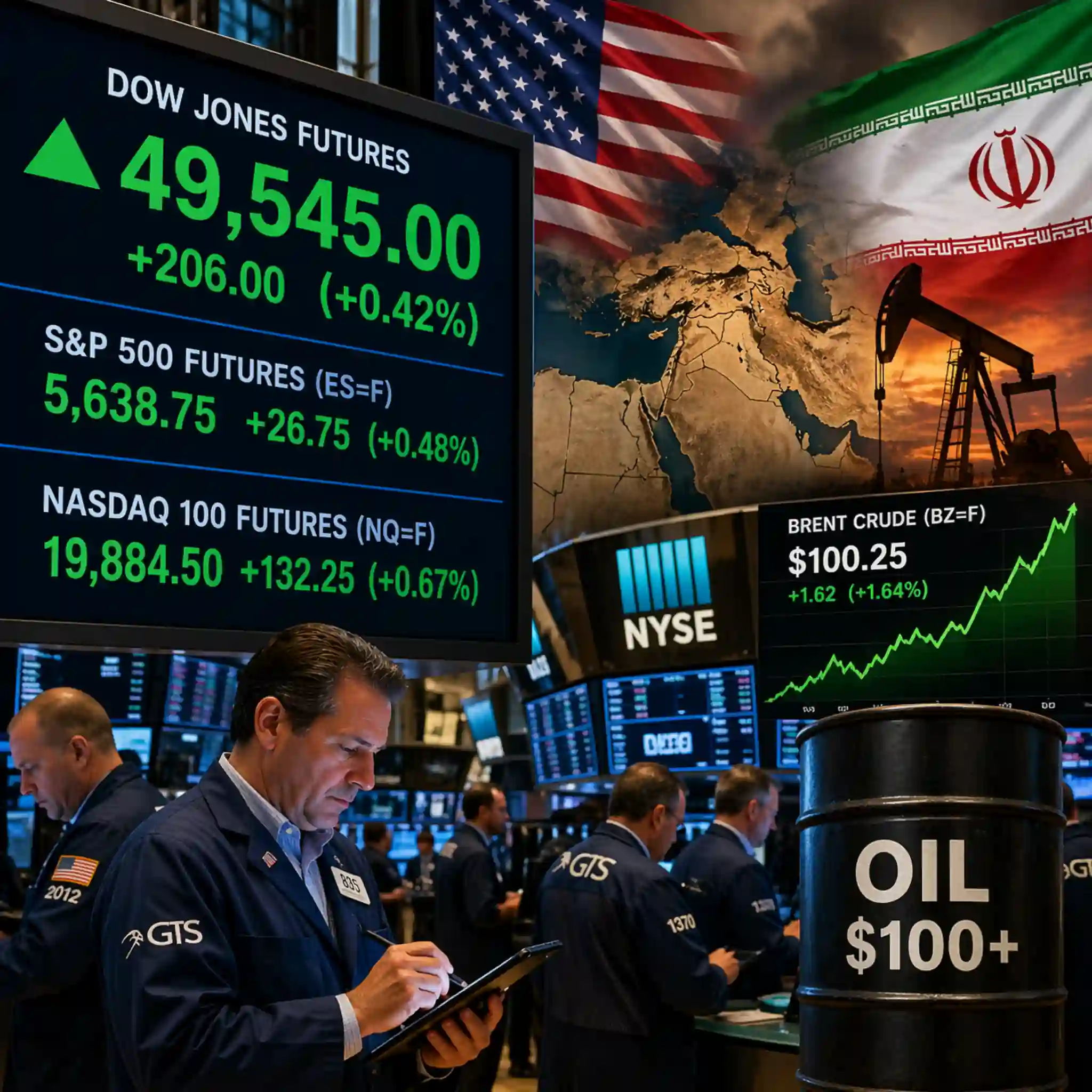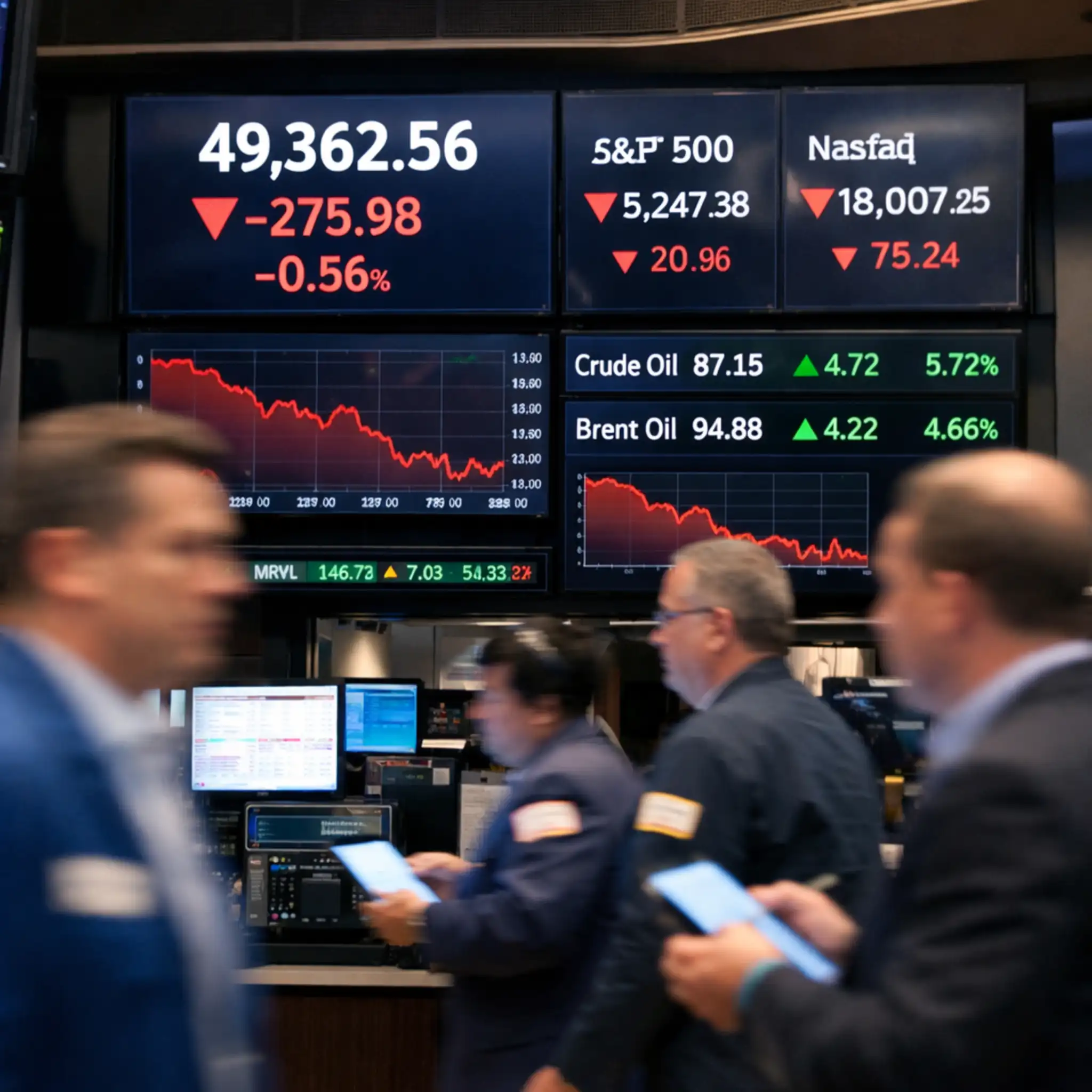

U.S. stock futures pushed higher early Friday, hinting at a steadier open after a bruising stretch that punished Big Tech and rattled crypto markets. The tone improved as traders weighed whether the week’s selling had overshot fundamentals, even as fresh doubts lingered around how much spending the AI race will demand from the largest companies in the market.
S&P 500 futures were trading higher early Friday, extending gains in premarket action.
| E-mini S&P 500 Futures | 6,851.75 |
| Change | +31.00 (+0.45%) |
| Session Open | 6,785.50 |
| High | 6,870.00 |
| Low | 6,751.50 |
| Previous Close | 6,820.75 |
| Volume | 291,471 |
| Open Interest | 19,19,237 |
The move higher followed Thursday’s sharp equity pullback, with futures stabilizing as traders reassessed tech-sector valuations and the broader risk outlook ahead of the U.S. market open.
In premarket trading, futures tied to the S&P 500 were up around half a percent, with Dow futures and Nasdaq-linked contracts also pointing to gains. The bounce followed sharp declines in the prior session, as investors trimmed exposure to high-growth names and leaned into a more defensive posture. Friday’s early move looked like a pause in that repricing rather than a full reset.
Tech is still the story. The sector’s mood remains fragile, and the market is showing less patience for aggressive investment plans that are not matched by near-term profit visibility. Amazon sat at the center of that debate after outlining a major jump in 2026 spending tied to data centers and AI infrastructure. Investors broadly accept that AI will require enormous buildouts, but the immediate question is who absorbs the cost while revenue catches up.
That push-pull played out across the complex. Some chip and infrastructure-linked names found support on the view that AI budgets ultimately flow into semiconductors and networking. Yet the larger conversation has shifted toward discipline: management teams can talk about “strategic” capex all they want, but markets are increasingly demanding proof that the spending converts into durable margins, not just bigger headline revenue.
Bitcoin’s rebound helped sentiment—but didn’t erase the damage. The world’s biggest cryptocurrency climbed back above $65,000 after sliding toward $60,000 overnight, a move that steadied nerves across risk assets. Even so, the week’s turbulence left a mark: traders are still digesting the kind of sharp drawdown that can force deleveraging, especially when liquidity thins and volatility spikes.
Crypto-linked equities tracked the improvement, with a notable bounce in Strategy as bitcoin recovered. The episode underlined a familiar dynamic: when crypto falls hard, the most levered or most sensitive proxies often overshoot on the way down—and can whip back just as quickly when the selling eases. The bigger test comes when markets try to hold gains through the next wave of macro headlines.
Rates, the dollar, and oil sent mixed signals. U.S. Treasury yields dipped to their lowest levels in roughly three weeks overnight, a move that can support equities by easing financial conditions at the margin. Oil, meanwhile, edged lower with traders weighing geopolitical headlines and demand expectations. The U.S. dollar was steady, reflecting a market that’s not yet ready to make a single, confident bet on the next macro regime.
In commodities, the pressure wasn’t limited to energy. Gold held below $5,000 an ounce as volatility remained elevated and traders adjusted to tighter risk settings in futures markets. The week’s turbulence has had a spillover effect across leveraged positions, where higher collateral requirements can amplify short-term moves by forcing reductions in exposure.
Europe’s shock headline: Stellantis. The automaker warned it will take a charge of more than €22 billion as it scales back its electric-vehicle push, sending shares sharply lower and adding to a broader sense that the global EV story is entering a tougher phase. The shift is being framed less as a single-company stumble and more as a reminder that demand assumptions, pricing pressure, and policy risk can collide quickly in capital-intensive transitions.
The Stellantis move also landed into a market already sensitive to “capex credibility.” Whether it’s AI infrastructure in the U.S. or EV investment in Europe, investors are increasingly wary of long-dated spending arcs that depend on optimistic adoption curves. When those curves flatten, writedowns and strategy resets can arrive fast—and markets tend to punish the uncertainty before they reward the cleanup.
All of that leaves Friday’s rebound in an awkward place: it may be a rational snapback after heavy selling, but it’s happening in a landscape where volatility is still high and confidence is still fragile. The next few sessions will be watched for whether buyers can hold support beyond the open—or whether the market slips back into the pattern that defined the week: rallies that fade, and risk that reprices on the slightest disappointment.
For more detail on the premarket setup and the week’s tech-driven moves, you can read the latest market rundown from Yahoo Finance.

Make Swikblog your go-to source on Google for reliable updates, smart insights, and daily trends.