US stock futures edged higher Tuesday, signaling a tentative recovery after a bruising sell-off driven by escalating tariff threats and renewed fears that artificial intelligence could upend major sectors of the economy.
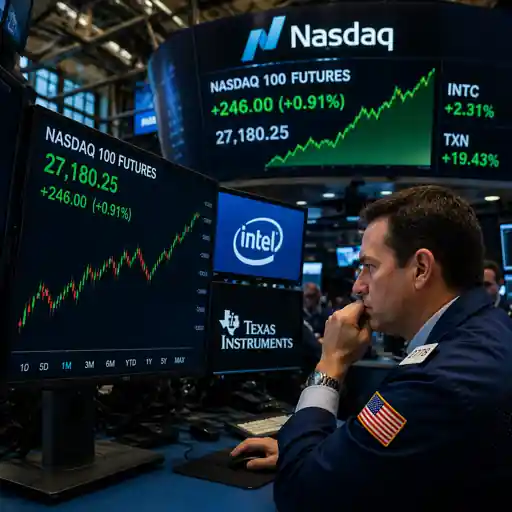
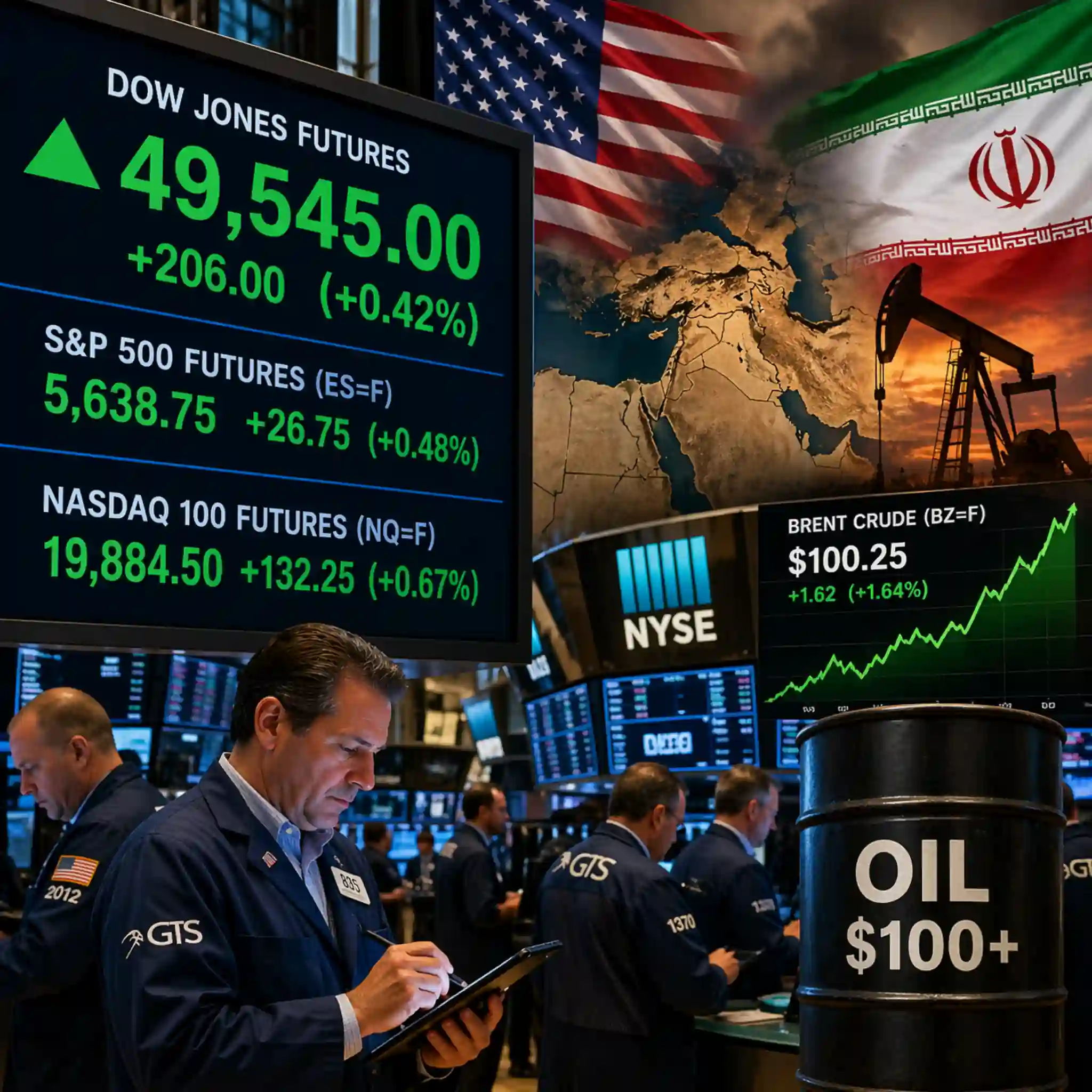
Futures tied to the Dow Jones Industrial Average rose about 0.2%. S&P 500 futures added 0.2%, while Nasdaq 100 futures gained 0.3%, suggesting investors are cautiously stepping back into risk assets following Monday’s broad-based retreat.
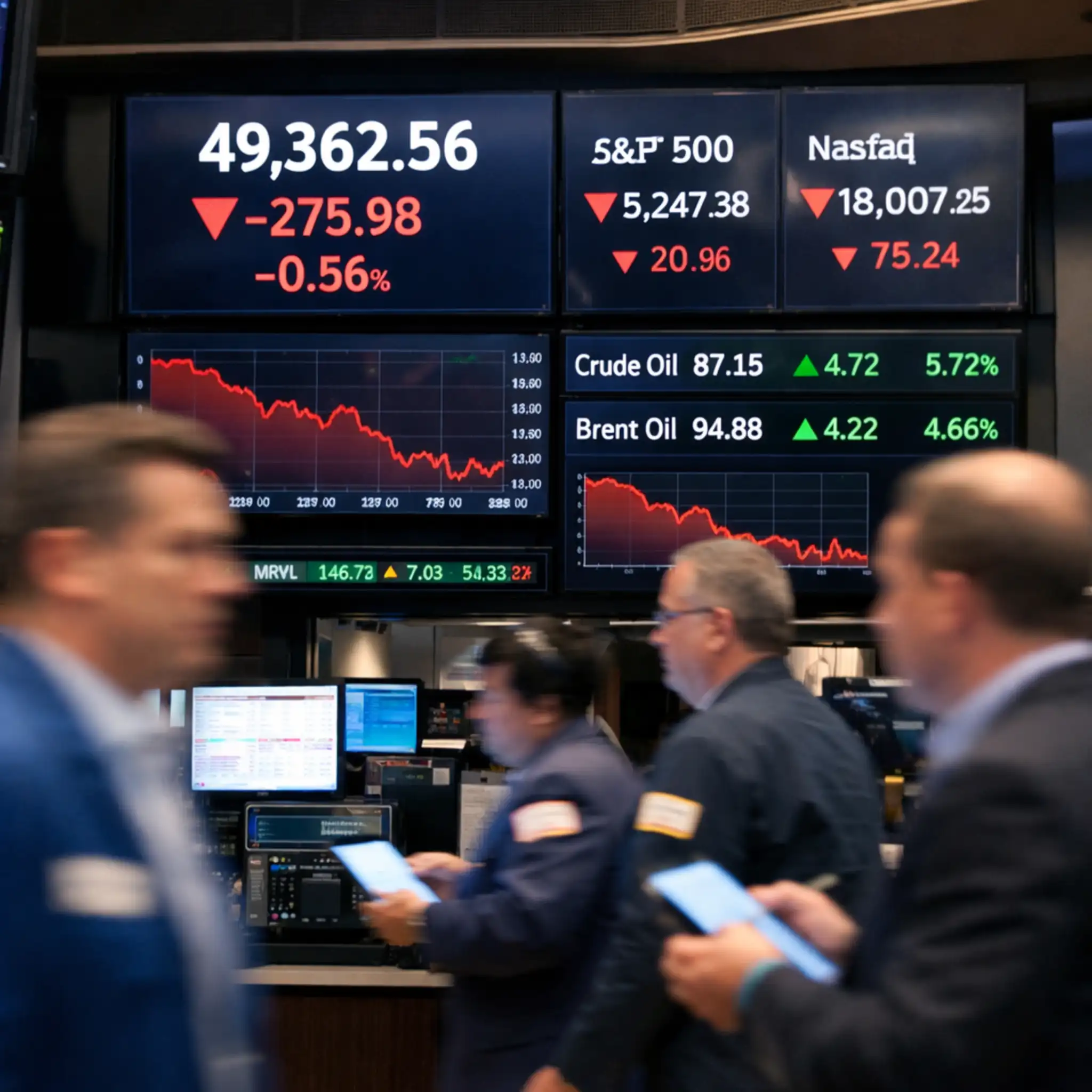
The modest rebound follows a sharp decline that pushed all three major indexes lower to start the final stretch of February. On Monday, the Dow led losses, sliding 1.7% to close at 48,804.06. The S&P 500 fell 1.0% to 6,837.75, while the Nasdaq Composite dropped 1.1% to 22,627.27.
Tariff Escalation Rattles Markets
Market volatility intensified after President Donald Trump raised newly proposed global tariffs to 15%, up from an initially announced 10%, following a Supreme Court ruling that had blocked portions of his earlier trade measures.
The policy reversal injected fresh uncertainty into global trade flows. Over the weekend, Trump warned that countries attempting to challenge the tariff framework would face even steeper levies.
Analysts said the rapid shifts in policy left businesses, supply chains, and global trading partners in a “confused state,” with uncertainty clouding corporate planning and investor sentiment. European lawmakers have already paused progress on a key trade agreement with the US as they assess the potential impact of the higher rate.
The renewed trade tensions weighed heavily on Wall Street at the start of the week, even as some Asian markets reacted positively to the uniform 15% tariff rate, which in some cases replaced higher duties previously imposed on certain economies.
Hong Kong’s Hang Seng surged 2.5%, led by gains of more than 3% in e-commerce giants. Seoul hit another record high, powered by strong advances in semiconductor heavyweights. Meanwhile, European indexes were mostly weaker, with Germany’s DAX down 1.1% and France’s CAC 40 slipping 0.2%.
AI Disruption Fears Deepen
Beyond trade policy, concerns over artificial intelligence continued to drive sector rotation and volatility.
Investors are closely watching developments from leading AI firms. Anthropic is hosting a major event featuring product updates and new enterprise tools, developments that have already triggered sharp moves in legacy technology names.
Reports indicate Anthropic is offering current and former employees the opportunity to sell shares in a secondary transaction that could total between $5 billion and $6 billion. The sale is being conducted near a valuation of roughly $350 billion, following a recent funding round that valued the company at $380 billion post-money.
The rapid scaling of AI capabilities has sparked anxiety among investors about potential displacement across cybersecurity, data services, and enterprise software providers.
IBM was among Monday’s steepest decliners, plunging more than 13% amid concerns that AI-native competitors could threaten parts of its data business. Market strategists also flagged Nvidia’s upcoming earnings as potentially pivotal.
“If Nvidia goes down like Palantir went down, the market could really have a big pullback,” said one portfolio manager, highlighting how heavily investor sentiment is tied to AI momentum.
Earnings and Data in Focus
Investors now turn their attention to key catalysts that could shape the near-term direction of equities.
Tuesday’s economic calendar includes fresh consumer confidence data, offering insight into whether households are absorbing the latest trade and inflation headlines without curbing spending.
On the corporate front, earnings from Home Depot are due Tuesday, followed by closely watched results Wednesday from Nvidia, Salesforce, and Snowflake — reports that could test the strength of the AI-driven rally that has defined much of the past year.
Commodities and Currencies
Energy markets edged higher despite broader equity volatility. Brent crude rose 0.4% to $71.49 per barrel, while West Texas Intermediate gained 0.3% to $66.31.
In currency markets, the euro ticked up to $1.1792, and the pound strengthened to $1.3492. The dollar slipped against the yen, trading at 154.68.

Make Swikblog your go-to source on Google for reliable updates, smart insights, and daily trends.