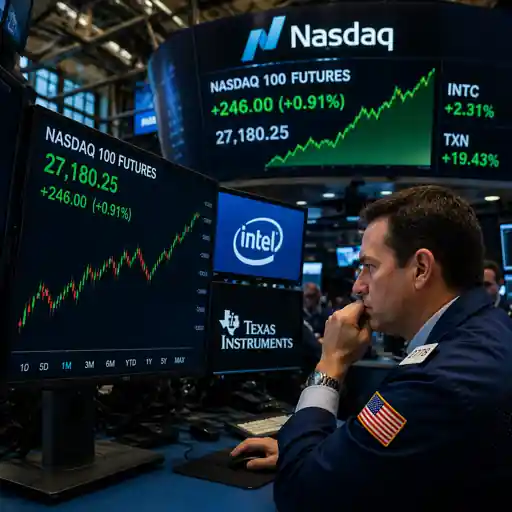
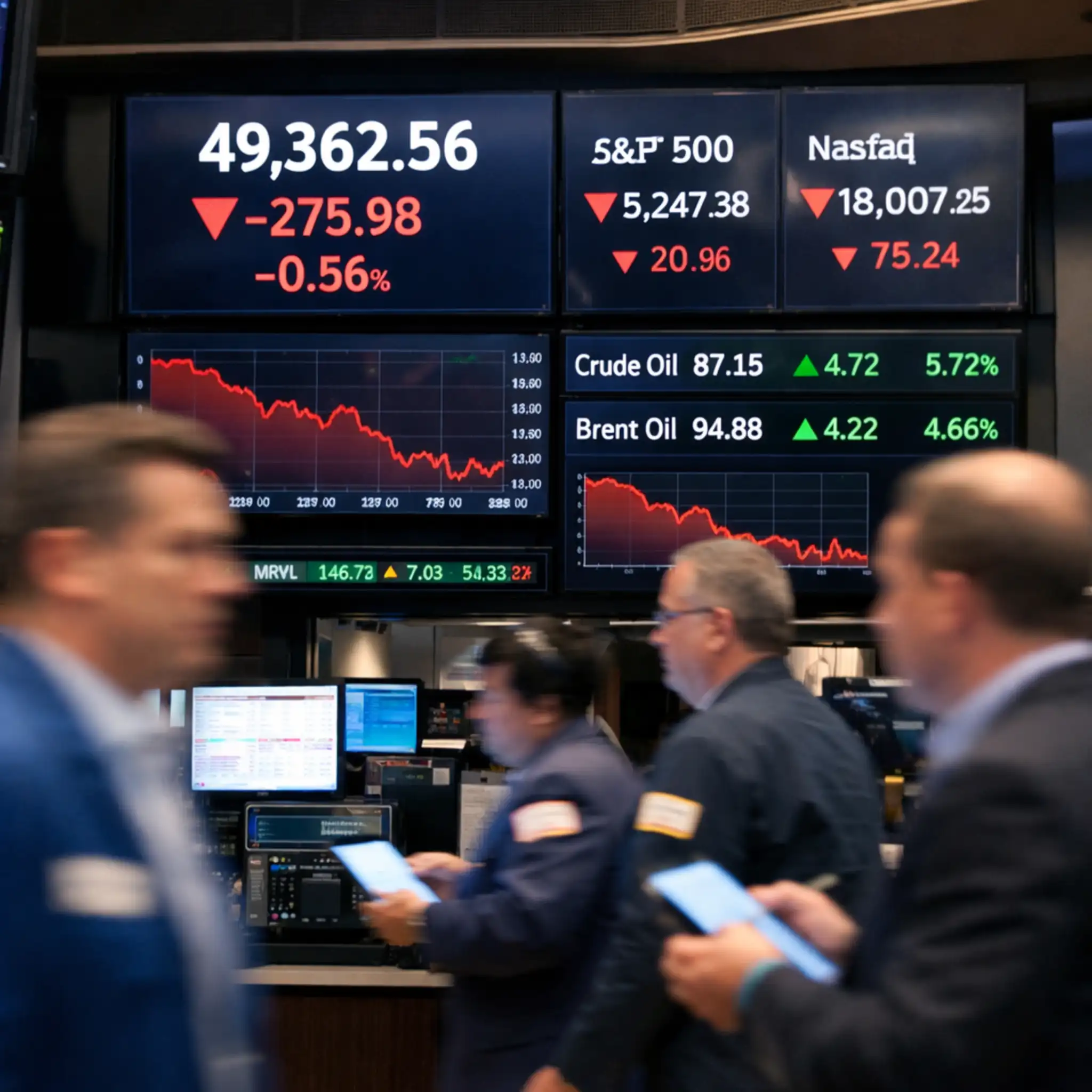
US stocks pushed higher on Wednesday, with major indexes extending gains as anxiety around artificial intelligence investments cooled and investors combed through fresh signals from the Federal Reserve’s January meeting minutes.
The S&P 500 (^GSPC) climbed roughly 0.8%, while the Nasdaq Composite (^IXIC) advanced about 1.1%, leading the charge as technology shares regained momentum. The Dow Jones Industrial Average (^DJI) added close to 0.4%, reflecting more measured gains in less tech-exposed sectors. The move followed modest advances a day earlier and suggested investors are regaining confidence after weeks of volatility tied to AI-related spending concerns.
Technology stocks, particularly software names that had been hit hard during the recent pullback, showed signs of stabilization. While debate continues over whether massive AI investments will translate into durable profits, Wednesday’s rally indicated that some of the immediate fear premium has faded. Market participants remain focused on whether AI-driven capital expenditures will meaningfully reshape corporate earnings and competitive dynamics over the long term.
The Federal Reserve’s January meeting minutes added another layer of nuance to the day’s trading. Policymakers appeared divided on the trajectory of monetary policy, with several members indicating that further reductions in the federal funds rate would likely be appropriate if inflation continues to trend lower in line with expectations. The tone of the minutes reinforced the idea that rate cuts remain on the table, though not without debate.
Markets are currently pricing in at least two rate cuts in 2026, and traders are looking ahead to the upcoming Personal Consumption Expenditures (PCE) index for clearer direction on inflation. Labor market resilience and wage growth remain under close scrutiny, particularly amid ongoing discussions about how AI adoption could influence employment trends.
Corporate headlines added to the day’s momentum.
Wendy’s (WEN) surged as much as 17% after activist investor Trian Partners disclosed it is exploring strategic alternatives for the fast-food chain, including a potential buyout. Trian holds roughly a 16% stake in the company. The move follows a challenging stretch for Wendy’s, which reported a 10.5% decline in US comparable sales in the fourth quarter and has seen its stock drop more than 40% over the past year.
Moderna (MRNA) jumped over 6% after the US Food and Drug Administration reversed course and agreed to review the biotech firm’s new flu vaccine. The vaccine uses the same mRNA technology as Moderna’s COVID-19 shot. The company said it is seeking full approval for adults aged 50 to 64 and accelerated approval for those 65 and older.
In the semiconductor space, Analog Devices (ADI) rose following stronger-than-expected earnings. The chipmaker projected second-quarter revenue of approximately $3.5 billion, above analyst expectations of $3.23 billion. Demand tied to data center expansion and AI infrastructure helped offset macroeconomic headwinds.
Energy markets also provided support for equities. Brent crude rose over 2%, trading near $69 per barrel, while WTI crude advanced toward $63.80 as geopolitical risks persisted. Negotiations between Russia and Ukraine appeared to stall, while tensions between the US and Iran added to supply concerns. Iran’s military exercises in the Strait of Hormuz — a critical passage for roughly 20 million barrels of petroleum per day — underscored the fragile geopolitical backdrop.
Gold prices rebounded sharply, climbing back above $5,000 per ounce, up roughly 2% on the session. Silver and platinum posted even stronger percentage gains, reflecting heightened demand for safe-haven assets amid geopolitical uncertainty.
On the macroeconomic front, US industrial production expanded 0.7% month over month in January — the strongest gain since March 2025 — beating expectations of 0.4%. Manufacturing output increased 0.6%, signaling resilience in the goods-producing sector. Year over year, industrial production was up 2.3%.
Housing data showed mixed signals. Housing starts reached an annualized rate of 1.4 million units, up 6.2% from November and exceeding forecasts. However, the pace remains 7.3% below year-ago levels, and builder sentiment continues to reflect caution amid interest rate uncertainty.
Gasoline prices remained below $3 per gallon nationally for the 12th consecutive week, according to AAA data, though seasonal increases are expected as the spring driving season approaches. The national average stood at $2.92 per gallon, roughly $0.24 lower than a year ago.
Despite Wednesday’s rally, broader performance comparisons highlight a challenging start to the year for US equities. While the S&P 500 has slipped about 1% year to date, global markets excluding the US have returned roughly 8% over the same period, marking one of the widest relative gaps since the mid-1990s.
As investors digest Fed signals, corporate earnings, and geopolitical developments, attention now turns squarely to Friday’s inflation data. For now, easing AI anxiety and renewed rate-cut hopes have helped Wall Street steady itself — but the next catalyst may quickly reshape sentiment once again.

Make Swikblog your go-to source on Google for reliable updates, smart insights, and daily trends.